Link to published article: The Garden of Eden
The Seychelles has been a dream destination of mine for as long as I can remember… or, at least, as long as I’ve known how to sail. This mid-Indian Ocean archipelago represented the epitome of top cruising destinations and I remember sitting of the shores of Mozambique, looking east, dreaming of a future when I’d get to weave my own track through her waters.  I wasn’t quite certain if this dream would ever come to fruition because at the time I’d only been a coastal sailor, never venturing far from the sight of land. Regardless, I often imagined what the country would hold for me: Crystal blue waters shimmering over glittering diamond white sands, endless islets and atolls teaming with sea birds and land turtles, a steel band beating a tune as I turned fresh-caught lobsters on a fire, my toes buried in the sand. I am not sure if it was from a book that I pulled these images or the rumours of a fellow traveler; however they got there, the images were imbedded deep in my sub-consciousness. Now, firmly entrenched in the cruising lifestyle with six years of open-ocean sailing behind us, I was finally going to get my chance to see these images firsthand.
Cruisers often seem to travel in a flock. Perhaps it is some collective force of nature or the under-appreciated inclination for human sociability, but there is an undeniable gravitational force that pulls people together. Watching the fleet of boats transverse the Indian Ocean these past few years, it seems a random pattern of a southerly route followed by a northerly route from the Asia to South Africa; this year the majority of boats that we knew were heading south for Mauritius and Rodriquez but we weren’t to follow them. The Seychelles had been on my radar far too long to pass her by. We would cross the Indian Ocean this year, and I was determined that the Seychelles would feature in our route planning.
While arrival in a country after a long passage is always an emotive experience, seeing the peaks of the tall mountains rise up on the horizon was a particularly emotional moment for me. Here she was, the Seychelles at long last, unfolding herself in front of me on the very ocean that had separated me for so long.  Having spent the past six months in a country made entirely of low-lying atolls, it was quite a sight to see the tip of Mome Seychellois, a 905-meter granite rock, rise up on the horizon. The detail of earth and humanity began to fill the blank green tapestry of the mountains as we inched towards Mome Seychellois and Trois Freres: The rich smell of dirt combined with the acrid smell of the tuna processing factory, the sound of chatty shorebirds mixed with the repetitive hum of rotating wind generator blades, a smattering of colourful roofs materializing from the canopy of trees as ornaments decorating the hillsides. I was abuzz with the same ecstatic enthusiasm of a young child licking her first ice cream cone – this was my first taste of the Seychelles and it couldn’t have been any sweeter.
Having waited so long to get to the Seychelles, it was ironic that we would work so hard to sail to her shores and fly immediately out. That said it had been a long time since we’d been home and family was calling. Tickets had been booked well in advance and the departure date was upon us – our time in the Seychelles was going to be short and sweet. We pulled in, played for a week and flew out. Given my anticipation to get here, I could appreciate our agent’s response when we petitioned for the boat to stay during our month departure: “What? You’ve just ARRIVED in the Seychelles and you already want to LEAVE the Seychelles? WHY would you do that?” Us: To visit family. “But, then why wouldn’t you leave from another country?!! Why would you choose to leave from THIS ONE?” Implied: You must be crazy! We were nervous. She was going to reject our application on grounds of national pride. While I understood her line of inquisition — we were leaving a dream holiday destination for a holiday elsewhere — we had already committed time with family and held tickets in hand. With a series of disapproving grunts and shake of the head in disapproval, she stamped our documents and dismissed us.
The next month saw us indulging in almost every shoreside pleasure available to us — something that England has in abundance. My standing joke was that I was going to eat as much cheese and drink as much wine as I could manage to consume, either leaving the country feverishly addicted or my long-standing cravings completely spent.  We enjoyed time with family and reconnected with longstanding friends and fellow cruisers we’d shared company with in previous seasons. It was fun to ride the trains through the lush countryside and wander through quaint British villages, sail dinghies on the Solent and drive a RIB to the Isle of Wight, picnic in the manicured parks, dine in the pubs, grog up with the family, rock out at a concert and chase a rolling block of cheese down a hill. Above all we were reminded that while the cruising life is rich with reward, life ashore is rich with diversity.
A month after flying out we were back on creole soil, cravings satiated and addictions firmly rooted, this time with a month in front of us to explore the fabled Garden of Eden. What I didn’t appreciate then and do now is that the Seychelles is very different from my picture of a cruising paradise. 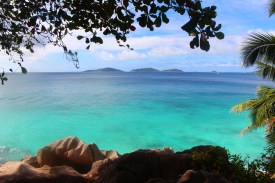 It is worthy as a sailing destination to be sure, but not in the way I’d constructed in my head. The building blocks were there: the white sand, the clear water, the reggae music and the creole seafood. What was missing was the countless isles and the limitless possibilities. For all 115 islands that make it up, the Seychelles has a relatively constricted cruising area. There are three main islands, each with a collection of smaller marine reserves attached to it, that are the sum of cruising grounds for the majority of sailors. The rest of the hundred or so islands are uninhabited or protected marine reserves, most of these lying in the outer islands at a considerable distance from the inner hub and exposed to the weather.
I am and am not one fundamental thing: A planner. I am a Gemini with a drive for change without an interest in detail. The combination means that I do things at the spur of the moment without forethought or planning. I fly on a whim and learn on the way. This has many drawbacks but the advantage is the comedy of learning things in situ. The Seychelles is famous for a few things; well known to anyone that does a quick Google search of the country. I, however, having spent countless miles of hard work to get here never once researched the country to see what it offered. I had a dream, therefore I had drive – that was enough to draw me. As a result, the heart of the Seychelles unfolded itself to us in a series of comic moments, details of the country that I was to learn about over the course of our stay.
The first was the Coco de Mer. For the ungoogled, the image of the Coco de Mer is of the voluptuous derrière of the female figure, and it was everywhere. The female bum greets you on arrival at the airport, it fills the curios stalls in the streets, it is printed on postcards and every brochure of the country, it is even stamped on a page in our passports. There is a collective national fascination with the female reproductive anatomy. You can have a carved wooden statue, hold a key ring, wear a t-shirt, drink from a shot glass — all of a woman’s ass. Having just arrived from six months in a highly conservative Muslim country, the brashness of it was refreshing. The Seychelles was sexual, and they were proud of that sexuality. Or so I thought.
It took me a week, but I was to gradually learn that the Coco de Mer was, indeed, a coconut. It was endemic to the Seychelles and a rich part of its history. 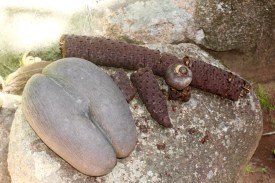 It was this nut, visually so representative of oversized human genitalia, that created the myth that the Seychelles was the Garden of Eden – scratch that apple, the nut was proof of the origin of mankind. For what it is worth, at half a meter in diameter and 20 kilograms in weight it is the largest seed found anywhere in the world, the male tree does hang a very long penis from its branches and the female does produce the most delicious looking derrière. Had I done my research, I’d have known a decade ago that it was trees on hillsides and not seashells on sandy shores that the Seychelles was known for. The Garden of Eden beckoned me, but to understand why I had to look toward land and not the sea.
The second of our comic relief moments was the granite. What I didn’t realize prior to arrival is that the country was full of rocks. Big, big rocks. In fact, I’d spent over a decade fantasizing about the Seychelles and not once had I appreciated that it was rock rather than sand that made the country famous. 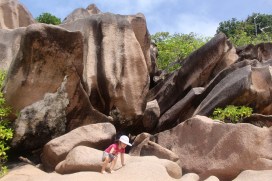 How did I miss that 41 of the 115 islands were built on a foundation of granite? Was it just oversight that made me ignorant of the exceptional fact that the Seychelles was the only mid-ocean granite islands in the world?! Expecting idle days anchored off low-lying islets with our heads poking around coral gardens, our reality was days spent gaping up at huge mountain peaks, over sheer rock cliffs and at boulder-crowned beaches. Rather than idle, our time was filled with vigorous hikes up steep rocky paths, walks through wooded forest, cycling up hills, meandering around boulder-strewn beaches and rock hopping above the surf.
Another misconstrued notion was that we’d spend all our time in the water. For one, it was cold… or at least, cold in comparison to the sauna-like waters of the Maldives. It took a week to acclimate to the 28-degree water temperature. Once that was corrected, it took time to work a strategy for tackling the big surf. It wasn’t big as in dude, ride that wave big. It was big as in doc, bust out the neck brace big. 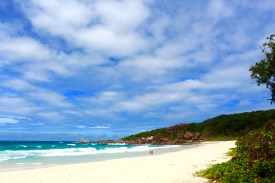 The waves that rolled into the bays were short and powerful, but once you worked out the set you could tackle a suitable approach – body surf four then race out before the next two rollers came and knocked you out in a body-crushing, ego-shattering washing machine. Outside of the in-your-face beach break, there were no obvious reefs to snorkel or charted dive sites to explore – ironic given the sites were fill with as many big rocks underwater as big rocks above water – and both were activities we expected would consume our days. What distinguishes the diving in the Seychelles are the unique granite underwater formations that make a spectacular underwater landscape but the sites weren’t easily accessible and required local knowledge. As a result we didn’t get time underwater as hoped, but we got plenty of time tumbled through it.
It was the third of the comic lessons that filled much of our children’s interest, and fulfilled their sex education. It was the first time the kids had seen a land tortoise and as the heaviest tortoises in the world at a whopping 300kg, they made quite an impression. They were held in open pens in parks, botanical gardens, beaches and bars. 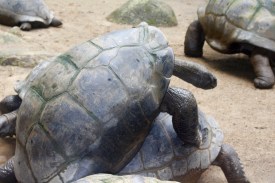 They were free roaming and also found in the backyards of local homes as they were often kept as family pets. We watched them eat, sleep, bathe and just as often, mate. There was one particular batch that seemed particularly inclined. The kids fed them their afternoon rations for a week and every day, like clockwork, we’d bear witness to their repetitious and droning copulation – clearly they too felt they were livin’ it large in the Garden of Eden. With the innocence of youth, each time Braca watched the act he told us they were “marrying each other;” it was a honeymoon destination indeed!
Having had my fill of rocks and nuts, we quickly became restless. We’d done the required gape at the country’s natural wonders: We’d pet the giant land tortoise and rubbed palms on the erogenous nut. Now we were keen to explore the country by sea but we had one problem – we didn’t see a labyrinth of reef-encrusted islets sprawled out around us. When looking in detail at the charts, the list of destinations within reach extended to three names, Mahe, Praslin and La Digue, all a short hop between each other. Basically, we had a month to play aquatic hopscotch.
Initially my enthusiasm fell flat as the experience fell far from my expectations — there was nothing intrepid about this experience at all. It was a land full of tour agents catering to tourists. There were lots of charter boats moving daily on their week tour of the country and the beaches were filled with sunburnt foreigners, but there were very few long-term cruisers exploring the area. After a few days of shaking my head in puzzlement, I readjusted my expectations and redefined what our time in the Seychelles was about: 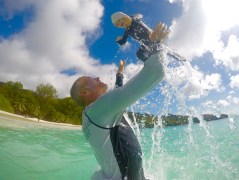 We were not going to hunker down with the indigenous population, use sign language and guess translation. We would not traipse across land left virgin to the traveler’s eye. We were going to take a holiday like the rest of them. Regular routine was cast out and we postponed schoolwork and put boat jobs on hold. We pulled out our sunblock and our beach toys and spent the days rolling about in the surf and lazing in the sand. We partied with the bareboat charterers, socialized with the holidaymakers, and entertained locals onboard in a revolving door of new faces. We rented bicycles to explore the villages, walked well-laid paths through native forests, surfed the shore breaks, and ogled at the breathtaking scenery around us.
We started our holiday in Mahe, the largest and most populated of the islands. With 90% of the country’s population living in Victoria, the smallest capital in the world, we had good grounds for observing the engaging confidence of the Seychellois. Their manner is forthright and confident, their personality gregarious and outspoken, their dress daring and bold. In social circles this was charming but in official circles we found it arrogant and blunt. While we tried to distance ourselves from as many administrative agents as possible, we welcomed locals onboard with open arms – this brought many entertaining evenings and some of our fondest experiences. One discussion that stands out was the local concept of self in relation to community. 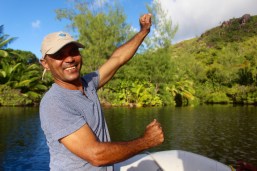 As our friend Ronny informed us, “to say a name anywhere in my country is to know the face” – a beautiful description for a country where everyone knew everyone. I compared it to my own community where even neighbours are strangers. “We care little for money here,” he added, “it is time and family we value. In this country, no one is ever alone and no one is forgotten.” Poetic. Regardless of the actual authenticity for the majority, it was a good reminder of the value often lost in Western culture where everything is fast paced, family distanced and friends forgotten, and money matters most. I find myself reminded again and again by local speak how it is the present that we live for in a world where family, friendship and community connection is paramount. When we invited Ronny for an evening onboard, we didn’t host one – we hosted a group. There were three generations amongst us and friends were included. Nor did they come empty handed; wrapped gifts were brought for the kids, beautiful shells were brought for us and the fish they pulled in that night was all donated to us. It was an incredible show of community, hospitality, warmth and camaraderie and I will always value the insights they shared and the friendship they offered.
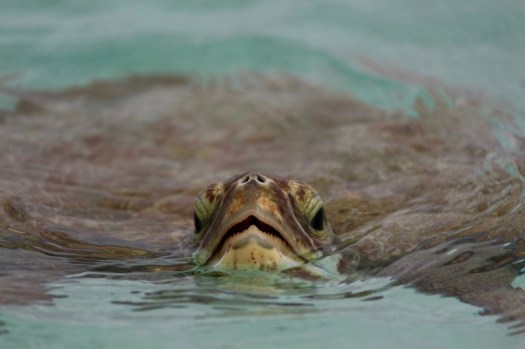
From Mahe we followed the glossy brochure prompt to the neighbouring island of Praslin in search of the “best beach in the world,” page 8. 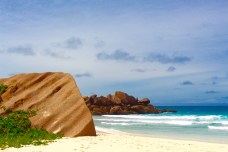 It was a bold claim and I was keen to verify it for myself. Indeed, there was something to it. The large granite boulders that fringed the white sand beach resulted in a breathtaking panorama, the backdrop filled with tree-filled mountains and turtles that broke the surface of the water around us. It was here that a generous local tested our perchance for defying the law by offering us a sapling Coco de Mer. A generous offer and a tempting one, attracted as I was to the thought of my own palm-fringed deck, but one we had to refuse.
Given my agreement with page 8 of the brochure, I thought I’d follow its next suggestion on page 12: “It is not advisable to visit La Digue as a day trip only. There are so many beautiful spots to visit and so many interesting people to meet that we insist you spend a few days at least on this magnificent island regardless of your length of stay in the Seychelles.” 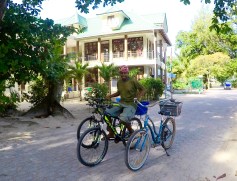 With an advertisement like that, who could miss it?! We tucked ourselves into the tight little harbour in the center of town and enjoyed all that the island offered – charter yachts inches from port and starboard side and the socializing that came with it, bicycles to tour the island (it was that or tour by oxcart as vehicles are exempt from the island), creole meals and the festive atmosphere that defined the relaxed little island. In a fast moving world, this was the epitome of chill.
After four weeks of aquatic hopscotch, our little stone thrown at random determining if we moved ahead one space or back two between Mahe, Praslin and La Digue, we hit the end of our cruising permit and were ready to move on. Our key question was: Where to? Having diverged from the flock we were keen to return to it, a regrouping that would set our course south to Madagascar. But my sonar was bending my head to the west and all primal senses were driving me towards the shores of East Africa. It was not a common route; at this time of year the wind and current make moving south difficult and most of the yachts intending to exit the Indian Ocean by the end of the year need to get southward in order to round the Cape of Good Hope. We also need to pass this cape and we couldn’t understand a feasible way to make both East Africa and Madagascar happen this season. However, on close inspection it looks like the current splits at the border of Tanzania and Mozambique and the winds might be favorable if we stuck close to the coast, dodging behind the wind-shadow of Madagascar. In fact, going west to Tanzania might save the battering that wind and sea would give us if we tried to reach Madagascar directly. Besides, we weren’t the only wayward stragglers. We had cruising friends in Tanzania and we had cruising friends heading that way – either the route was feasible or we weren’t the only ones stupid enough to attempt it. Either way, we were going to find out. A week prior to departing the Seychelles we did a typical Atea gybe. We scrapped our plans to head south towards Madagascar and decided to continue our trek west. Onward we sail to East Africa – she has held me in her clutches before, as I am sure she will do yet again.
Images: Seychelles at Long Last
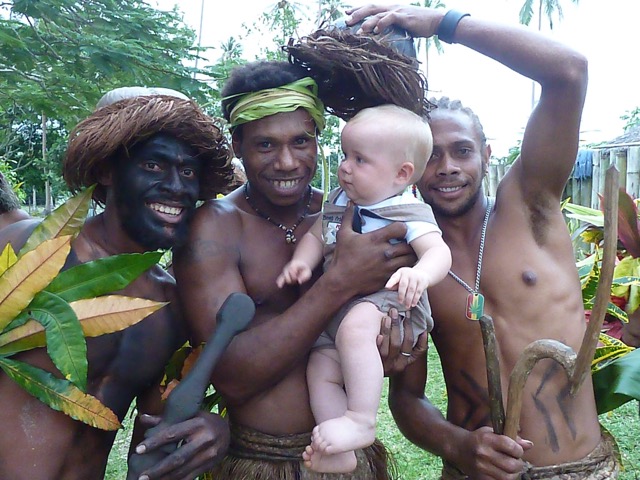


 I am more than willing to do so on a small remote island hundreds of miles from home. Indeed, we have done so on many occasions and have returned to find them fully entrenched in local activity – dragging a cardboard car across the sand or playing naked in the shallows surrounded by a dozen kids. Doted on and adored, the villagers take your child into the fold with no hesitation or reservation. If you want the key to the door of local acceptance, travel with children. I left my Russian friend on the beach with her pity and her misconception. Perhaps she will come back one day as a mother herself and gain a totally different insight into the local culture.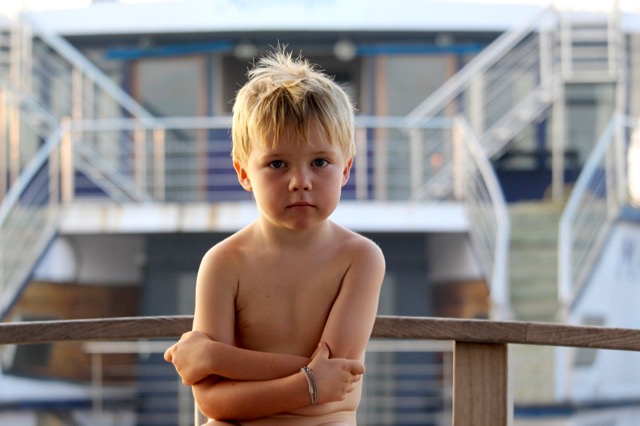
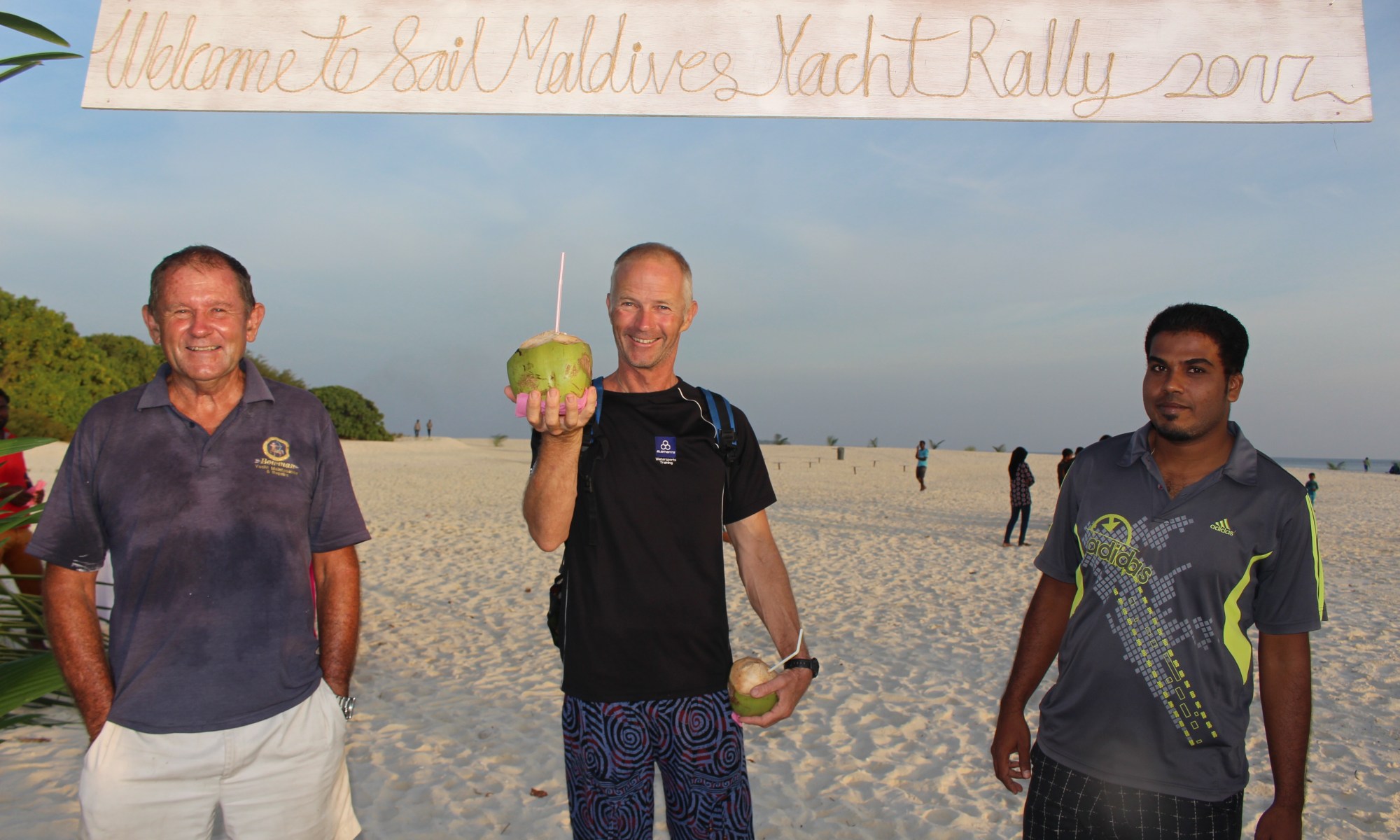
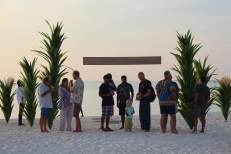 I like to think I have a bit of pirate in me, daring to fly my own battle flag, but I lowered that weather-beaten rag from the cross-trees and signed up for the 2017 Sail Maldives Rally. There were two driving factors the decision to join: One, it was essentially free and two, it promised an extravaganza unlike anything the country has ever seen. Swashbuckler or not, who could miss a good party? A promotional article published by the rally’s marketing director, Sarah Harvey, stated, “This is the largest mass-participation event the Maldives has even seen. Imagine 100-plus yachts cruising the Maldives’ waters… This will be [an] unforgettable event and the whole country is getting ready to welcome the participants from around the world.” Furthermore, the article boldly touted, “By joining the first ever Sail Maldives yacht rally you’ll be playing a part in making history, since it is the first time anything like this has ever taken place in the Maldives.” We were going to be Mavericks. We were in.
 There was only one problem: Where were the participants? We were down to the official start date and there were only three yachts on the list and one, I knew, had already dropped out. Considerable marketing had gone into publicizing the event and there had been a lot of queries by interested cruisers; surely a percentage of those would take the bait. The rally rolled the start date back a month, hoping that late February might ensnare a larger school in its net.
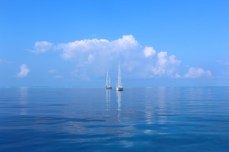 The day of the second official start date, just two yachts were lined up. The start was again delayed to wait for yachts held up in Sri Lanka and purportedly on their way. Over the course of a few sunny, lazy days we watched the horizon and waited. Finally, far from full capacity, the nod was given and the 2017 Sail Maldives Rally officially kicked off at double our initial number.
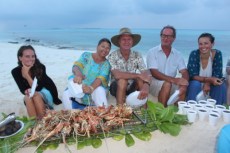 “The sailing community is like a family, everyone likes to share their experiences with fellow sailors from all around the world.” We could build inter-yacht connections without being lost in a mariner’s metropolis and have genuine experiences with locals without drowning out the authentic in a whirlwind of ogling photo-hungry tourists. Continuing, Adeel adds, “I thought of creating an event where sailors can gather together in the Maldives, have a great holiday and explore the beauty of the country. There is no better sailing destination anywhere else in the world.” With 30°c above water and 30°c below water, with 1,190 tiny islands sprinkled across a territory surrounded by 99% seawater, guided by an in-country host such as Sail Maldives Rally, there truly is no cruising destination like it.
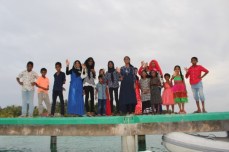 Having spent several months in the country on our own, I realized what an honour it was to be shown customs that we would not have been privy to outside of the rally; rather than quiet reserve, we watched band after band of local drummers kicking out rhythmic beats and writhed with men and women on sandy shores to a movement never seen before and elaborate costumes we will never see again. The rally also introduced us to islands either prohibited to foreigners or too convoluted to attempt to enter on our own. The atolls can be geographically restrictive and difficult to transit without local knowledge. The anchorages are often deep (25-30 meters), the passes shallow (2-4 meters), and the lagoons filled with an impenetrable labyrinth of coral bommies. Because of this, many read the notes of other cruisers and follow an established path year after year. In joining the rally, we were shown islands otherwise banned and accepted into communities unused to foreign tourists. As participants we were privy to a side of the Maldives previous cruisers had never experienced, all thanks to the Sail Maldives Rally.
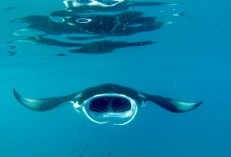 Some yachts continued to follow the rally and the village events, others ventured off to explore the underwater scenery and search for the manta ray and whale shark found in the region. The central Maldives is a world renowned dive destination and for those of us who like to be submerged under 30 meters of water; this was our spot. The central atolls are the country’s hub of tourism and resort after resort lay perched on every visible patch of sand, running their wooden tentacles out into the sea. Live-aboard dive boats crisscross their aquatic tracks throughout the surrounding sites. Breaking up the group to accommodate the yachts was a good tactical strategy and allowed everyone time to follow their interests and explore at their own pace.
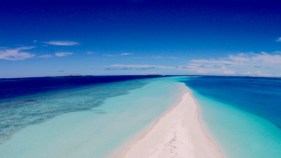 I believe we got the best of both worlds. Our eyes were opened to local custom and culture through community events and we developed some tight bonds with local Maldivians, while at the same time getting the freedom to roam the atolls at our own pace and discover a side of the Maldives unique to us. With the rally we experienced full and fast, without we enjoyed slow and select.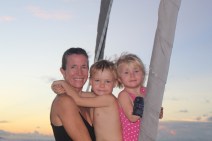
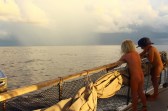 Friday, 28th April: 02° 47S, 72° 53E, Log 165, DTG 1158: Today was defined by more motoring in very light winds and continued current against us. Chagos lies 70 miles off in the near distance, harbouring all our cruising mates from the Maldives. Ah, how nice it would be to pull in for a surprise visit!
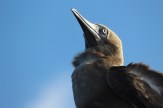 relationship by frantically hooting and screeching them off the wind indicator and from the solar panels at full volume, madly waving and rudely gesturing on deck. They fully ignored our ridiculous, benign efforts. It looks like we will have to replace yet another wind indicator and scrub a lot of poo off our decks.
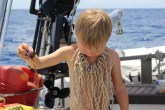 At one stage King Neptune honoured us with a visit, marking the equatorial crossing we’d actually done in the Maldives but had been too distracted to give proper celebration to at the time. This time King Neptune Junior presided over the ceremony, blessing the family and our ship for a safe passage onward in the Southern Seas. Our passage notes over the next few days read:
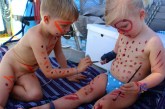 The last twenty-four hours yielded a 85-mile slog. We could be optimistic and say at least it is an increase over the day before. Nothing much to say, it is all a bit Groundhog Day by now. Windless, and so ever sweat-in-my-butt-crack hot. To make the most of the heat we held Desert Day onboard, with Ayla dressed up as a coyote, Braca as a snake, myself as camel and John (yes, there is a story here) as a dung-beetle. Games and activities all supported the physical melting conditions onboard.
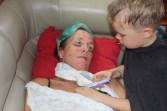 We’ve taken to calling our days out not by the day of the week, but by the theme of the day. On this passage, we celebrated Desert Day, Medical Emergency Day, Doctor Day (because fixing wounds was so much fun), Tropical Reef Day, and Oh-My-Graciousness-We-Are-Almost-There Day. Creating themes is a good break from routine for all of us and allows each of us to stretch our imaginations by creating outfits, scenes and objects to suit the occasion. As for coping with confinement as an adult, there is no better way to keep entertained than to get lost in the imaginary world of a young mind. It is fun to see just how much child bubbles to the surface when void of the business and preoccupation that plagues so much of our adult lives.
 others the sun is screened behind a line of moody squalls, casting dramatic rays of yellow, orange and red across the sky. I also watch the moonset with equal awe – sometimes a bright, clear disk and at others cloaked in a shroud of cloud. Over the course of the past two weeks we’ve sailed through nights so black that every imaginable star shines brightly overhead and shooting stars periodically blaze a path overhead, and we’ve watched the moon fill in and blanket out the stars, brightening the sky and the water below it. I guess it feels different out here because there is nothing but you and the environment; there are no buildings or street noise or smog to mar the view. There is no quick, distracted glace towards the horizon before a distraction pulls you away. It is you, the sea and sky, and all the time in the world to sit and absorb it. Or maybe it is just too much time on our hands…
 After 1258 miles at sea and no outside contact, within five minutes a large dolphin sweeps across our bow, a flock of terns fly overhead, a boat is sighted on the horizon and behind it – Land Ho!
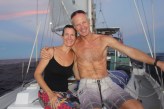 We do it because cruising isn’t a holiday, it is a lifestyle. It comes with all the ups and downs of everyday life in its own unique forms: The long hauls, the slow miles, the late nights, the growling storms balanced by the travel, the adventure, the discovery and the freedom. Is it all worth it? I know my answer.
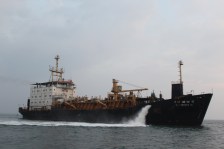 Images of ghost ships emerged from the haze around us, visible only within a three-mile radius. I sighed a farewell to the open ocean as I took a gulp of carbon monoxide and we drove Atea into the haze. If it was this thick offshore, I feared the industrial minefield that lay ahead of us. We entered the busy channel that lead into Kochi harbour and already the assault had begun. We bobbed past gigantic tankers and cargo ships that came in and out of view by only a small margin of error, past dredgers churning up the thick mud and fishing boats chasing us down for a packet of cigarettes. Either by distraction or camouflage, we sideswiped Atea into a large red channel marker masked behind the reddish tinge in the air; we were certainly out of our element for such a tactical error to occur. We needed to change our internal gears quickly from the quiet peaceful isles of the Maldives to the energetic fervor of India – and fast. This was going to be an entirely different experience and I held apprehension and excitement in equal measure.
 I was wary of an extended trip to India. It was a country in which you had to train yourself like an Olympic athlete for an event: you had to sharpen your senses, dull your sensitivities, harden your gut and learn to blend in like a chameleon. I was my sharpest and strongest as a young woman and I knew I didn’t have the mental or emotional strength to take it on. Yet here we were, on a whim, sailing towards her shores with several sets of valid and invalid visas stamped in our passports. I was about to open my eyes to a country I’d long held a fear-driven reverence for.
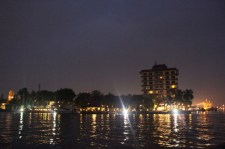 Rather than the congestion of a featureless concrete city, the old colonial town unfolded itself with a lit promenade, a line of Chinese fishing nets in front of historical seafront buildings. Bridges crossed the waterways that ran into a network of canals and everything surrounding it was lush and green. People milled along the walkway and little ferryboats ran people between the scattered islands. My excitement boomed. What lay before us defied every preconception: Kochi was a beautiful port city and I couldn’t wait to get ashore to explore.
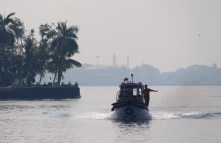 After an issue of incomprehensible instructions, extended periods of silence and long pauses between statements while trying as best we could to exude friendliness and confidence through the volley of questions and repeated reviews of our documentation, they finally backed away as a launch containing another boatful of officials arrived. I’ve never before been so pleased to see customs and immigration. We eagerly waved them onboard and made way for their hundredweight stack of paperwork. We spent the next two hours smiling, bobbing our heads and signing the multitude of required forms. By 8PM we all agreed that all remaining forms (we were still only half way through) could be completed the following day and we handed over our passports – a fundamental mistake – and bobbled our heads in agreement that we would meet first thing in the morning.
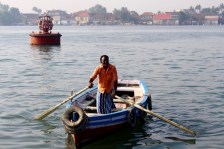 It was a poetic introduction to India as we sat in the leaking dugout with a wizened old man in a mundu and watched him paddled us furiously against the current with bent back. As we pulled up to the jetty we were greeted by our hired strong-arm, Nasar, and a small fleet of police who refused us landing without a tourist card. Not only did we not have the requested permit, we couldn’t even hand over our passports as we’d unwisely surrendered them over to immigration the night before – a rookie mistake for any seasoned traveler. And so we sat trapped in our wayward raft in the building heat while Nasar – a man who stood in the middle of the boxing ring for us and we’d not even introduced ourselves to yet – and the head policeman verbally duked it out. The comedy of events was on its last string as our representative won the fight and we were guided literally ten paces across the street and into the immigration office, Police officer’s hand on one shoulder and our guide’s hand on the other.
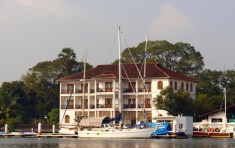 There we were greeted by India’s small collection of cruisers – a fleet of four. While past history realized a more vibrant cruising scene, difficult bureaucracy and shifting cruising circuits draw in fewer visiting yachts. Not that the marina could have held more than a half dozen boats given only its outer berths draw more than two and a half meters; the rest of the twenty-odd berths sit on a large bank of mud. We nestled Atea’s keel in this sludge and we all settled in. This was to be our home base while we were in India and at first sight it was a welcome one.
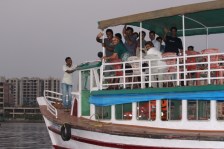 We were warned of this and told we would quickly tire of the constant barrage of noise but I delighted in the exchange of smiles it brought. Kochi ranks first in the total number of domestic tourists visiting Kerala and this was obvious to us without even leaving the marina – boats full of curious onlookers would pass by in a continuous stream throughout the day. We would first hear the blare of loud Indian music, then a few dozen faces would pull into view, cameras attached, then blink, smile, click in or direction. I would send the kids running to the rail to wave enthusiastically and we’d invariably receive the same in return. Smiles begetting smiles – who wouldn’t choose it? My favourite times were when the boats of would-be Bollywood dancers would pass us, all hands dancing at full throttle, often the party already going hard at 8AM in the morning.
 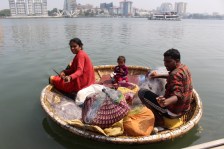 The energy, festivity and playfulness of it were contagious, even if I was only into my first cup of the day. I also enjoyed the constant movement of fishing boats that passed by us, some with a single or pair of men in a traditional wooden dugout and others with an entire family floating on a small reed sphere. Sitting on the deck we were able to watch the drift of local life drift past us, and on occasion were able to pass on the odd toy or teddy to a raft with young child balanced in it as their parents worked hard to pull small fish from the water or crab from the mud.
 A week after arrival we were asked to cat-sit while the owner flew off to South Africa. We took the job on eagerly. Not only did we want the cats as close to our defenses as possible, but it was also a reasonable job for an enthusiastic three and five year old to contribute to. Unfortunately, the arrangement didn’t turn out so well as both charges disappeared under our care. Not only had we lost the marina’s most successful ratters, but we spent the next month berthed directly next to the owner. Fortunately, he took the loss with grace and didn’t punish us for negligence.
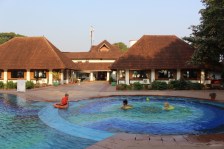 The hotel staff soon recognized us as long-term guests and accepted us as temporary adoptees. One evening Ayla and I were socializing in the on-site girls dormitory – a series of bunk beds, a television and a communal closet – when we found ourselves locked in past curfew at the ripe hour of ten past nine. To get home, I had to scale a fence and then haul Ayla over the barrier. It won us novelty points and firmly seated the friendship. A few days following this, the young women took me shopping for local attire. It was fun to get swathed in silk and rolled in cotton, again delighting and entertaining the staff, and it was fun to be surrounded by the laughter and feel casually entwined in the culture.
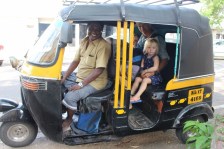 In short time we found a few drivers that we connected with and they became a central part of our experience. Not only were we there to explore the city and surrounding areas, we also had a list of boat jobs to do. So, tucked into the back of a three-wheeled rickshaw, we got a good dose of back alleys and out of the way spots that are off most tourists radars. We became close to two drivers in particular: the first was our heavy-weight customs ally, Nasar, and the second was the delightful Binu – in personality on as opposite sides of the scale as you can get. Binu was relaxed and polite, hard working and punctual, and most importantly, not a liability on the road. Nasar was heated and temperamental, erratic and inclined towards road rage, but he was well m
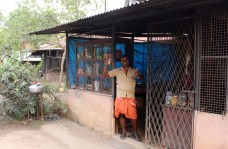 eaning, had a big heart and included us open armed into his family. By nature of driver and vehicle safely, we tended to opt for one or the other depending on the task at hand. For local trips we chose Binu because he lived close by and for extended journeys we picked Binu because he would get us there safely. Out of loyalty, we chose Nasar. Nasar’s most common phrase was “it is no problem in my country,” which took us a while to understand he didn’t mean India in general but his neighbourhood specifically. We put him to the test a number of times and invariably he was correct – it was either cheaper, available or achievable in his country every single time. For all things that requited covert execution, he was our go-to guy.
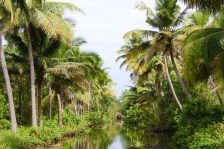 He drove to the backwaters where we took an old punting boat through an intercostal network of waterways that extend 900 miles up the length of state. He drove us on multiple trips to the customs and immigration offices for visa extensions and together we established a regular route between the marina and local hospital for a series of blood tests and treatments for Ayla. Methodically, Nasar and Binu and their rickshaws wove themselves into the fiber of our life in Kochi.
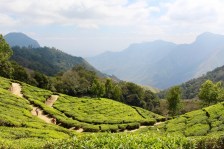 the diversity of the state and the warmth and vibrancy of its people. It is a region that defies all my expectations of India with its network of rivers and lagoons, highlands and lowlands, dense forests and backwaters and beaches. For me, its charm was in the physical and the constant assault on the senses: Our ears were filled with the pop of fireworks from the churches, the crackle of firecrackers from the temples and the chant echoing out from the mosques. Our eyes were filled with flutter of colourful saris, fruit piled in street side carts, the cast of the fishing nets on the water, and beautiful colonial Portuguese and Dutch architecture spread throughout the city. And of course, our mouths, filled with the spicy sweet taste of southwestern Indian cuisine. But top of my list are the people – warm and welcoming, energetic and engaging – forever putting a smile on my lips.
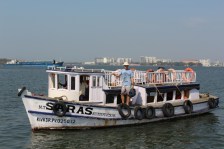 I’ve seen a small section of the country and have been blown away by its beauty. Both John and I felt sad to come to the end of our time and sail away, neither of us feeling we’d gotten enough time in India. Our farewell, however, turned out to be an unexpectedly short one and less than twenty-four hours later we were back in India, sadder still, due to engine failure. Again, we had the pleasure of a lengthy clearance process but by then we were familiar with the faces and knew the ropes. We counted the days absored in Indian bureaucracy. Collectively, we’d spent nine out of forty-five days in the company of the Indian officials:
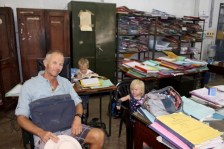 The quote that resonated throughout the process was “the moment you shout is the moment you loose,” and we felt this particularly valuable advice. Don’t loose your cool or you have just dug yourself a deep, deep hole. We’d spent six weeks with our keel in the mud and felt we’d spent enough time in the hole. After our unexpected two week extension, we and our engine were finally ready to say our goodbyes and set Atea free to the wind.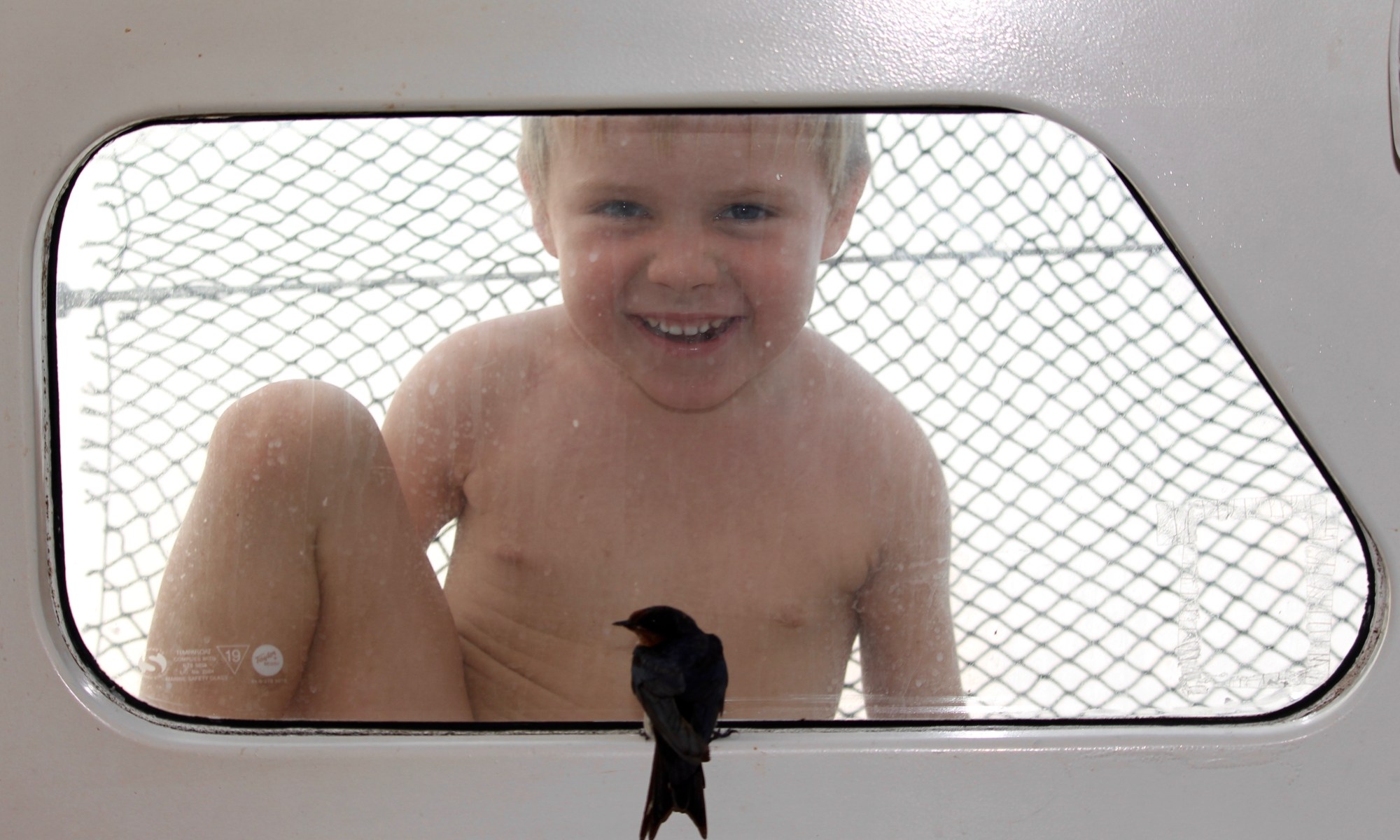
 We spent a week of hassle getting the appropriate visas re-issued, after the hassle a week prior of getting them issued in the first place — an effort that not only cost us money, but precious time. We were headed to the northern atolls in the Maldives when we discovered the visas we had on hand were only valid for arrival by airplane; entry by boat required a different category of visa. The only place this was issued was in person in Mále, so after a number of far-flung impractical ideas we turned the ship around and headed back to where we’d come from.
 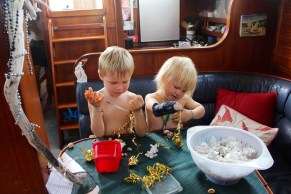 or one, we departed the Maldives on the 21st of December and Christmas was quickly descending on us unawares. Quite unlike my fellow associates madly scrambling to stockpile presents and negotiate parents and in-laws, we were at St. Nick’s countdown and hadn’t even hummed a holiday tune. While we were delayed, we were also prepared. We’d sent the kids out prior to departure with a bucket to fill with shells and I’d found a suitable sick of driftwood that was now safely stowed on deck. It wasn’t going to be a recognizable effort to anyone outside my clan, however inside it was the makings of a very traditional Christmas.
 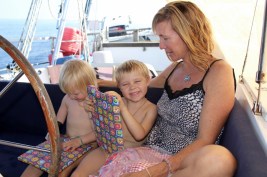 Of new traditions, this year we began giving the kids a passage present on their first day at sea for any offshore voyage. It works well to build their excitement and has become quite a fun ritual. This time the kids delighted in an assortment of treats: a magnet set, a storybook, an origami book and a mini basketball and hoop. Championships may take some time to come, but indoor practice is a good say to burn off some energy.
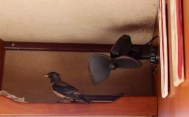 Wind came in the night, and we finally put Lucy [the engine] to rest and raise the sails. There is such beauty in the silence, and the gentle roll of the waves. We now have a dead slice of tree tied to our maststep bedecked in broken shells and the incessant tune of Jingle Bells in our ears. The jingle of the bells must have called in the birds, as a large seabird somehow managed to swoop through our aft hatch and now sits in our cabin. Let’s hope it doesn’t leave us its own White Christmas.


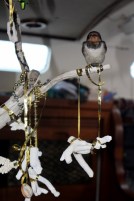 Four birds invade our cabin throughout the day, comfortable as guests. The last is insistent and re re-enters as quickly as I take him out. He perches on our Christmas tree, content. Not until he drops a little poop on our floor do I decide to move him out again, for the fifth time. But he returns, this time to the forward cabin. I slide my finger up to his belly and he hops on, as if he and I are old friends. I carry him out again; he knows the routine. This time he changes tactic, and flies into the steering wheel as if to say, “I’m the one who owns this ship.” If he stays in the cockpit, I’m happy with the deal.


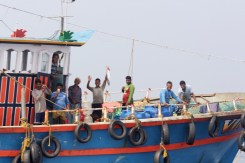 miles distant, isn’t visible. The sun is shrouded in haze and the sky is covered a murky light. I pop up on deck 10 minutes later to check our surroundings and the tanker to our port is now invisible to us, hidden in the haze. It is busy today; the normal 15-minute check is down to 5 as ships and fishing boats appear in in patches with much more regularity. Fishing boats chase us down out of curiosity. All hands crowd the rail to wave hello, and after pleasantries they slow their speed and the distance spreads.
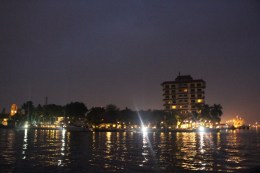 I was greatly surprised, therefore, when we sailed into the entrance and a green colonial city unfolded itself in front of us. Chinese lanterns swung and lights glittered in the trees as people strolled down the promenade under them, crossing over small walking bridges that laid across narrow canals that lead back into the city. Old Chinese fishing nets of yesteryear lined the waterfront set against centuries-old Portuguese buildings. As we sailed deeper into the harbour entrance I was buzzing with excitement, eager to explore the beautiful city that lay before us.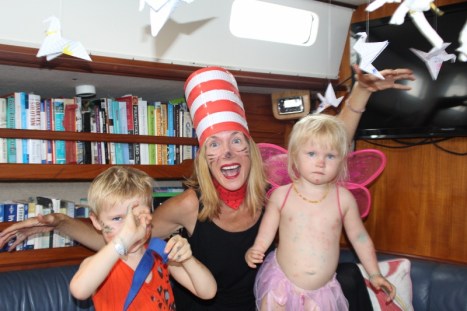
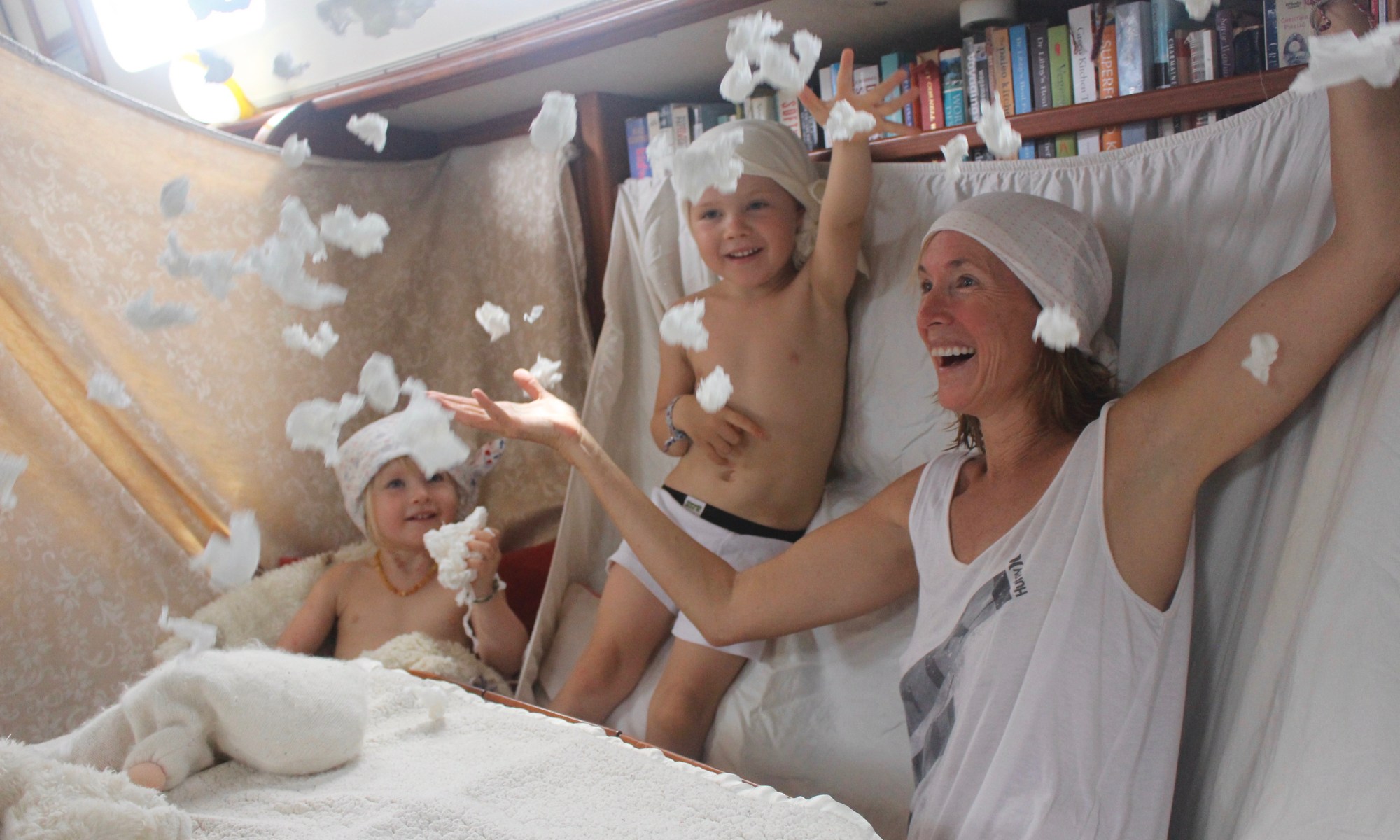
 Five years and two ANAK ANAK later, we’ve learned the value of simplicity and the importance of urgency as cruisers. I’ve seen too many prospective cruisers delay ad infinitum, “next year” being the one that dreams would be realized. Each year the same boat sat in the same slip, and the same bum sat behind the same desk. I’ve seen too many boat owners delay because they’ve overcomplicated their end goal – to cast lines and set sail. “Just one more [X], and then we’ll be off…” played over again and again. This is further compounded with additional family members, each having their own ties that need to be severed before starting to plot the chart. When it comes to cruising with kids, we try to follow two simple concepts: do it now, and do it simply.
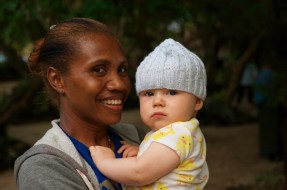 And we did it. We brought both baby and boat together. We bought a sailboat the same week we found out we were pregnant, moved onboard and three months later we were started our first cruising season. We departed New Zealand bound for Tonga at sixteen weeks pregnant. We have now sailed through two pregnancies and have two children onboard and I couldn’t have planned it any better. To be a mother and father cruising with kids is the best of both worlds.
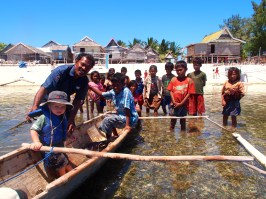 When it comes to the topic of cruising with children, there is debate about the appropriate age to take a child to sea. I’ve often held the gaze of a parent in disbelief at mention of the long ocean passages we’ve taken with our children onboard or the length of time we’ve been away. Our son was six months old when we took him to sea for the first time, his first voyage being a ten-day passage from New Zealand to Vanuatu. Our daughter started cruising at nine months off the coasts of Thailand and Malaysia. Yeah, we’ve spent some time cruising with children onboard and I have to say, it is a pretty fantastic way to raise kids.
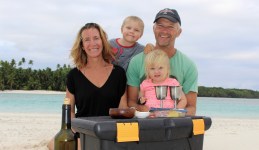 To many who are removed from the reality of cruising it may seem an implausible concept: big seas, confined spaces, young children and no external escape. I have to confess I prefer raising children at sea to raising them on land. With one full time parent caretaking home and child, and the other absent parent entrenched in the corporate grind, shore life brings a significant separation in time, routine and responsibilities. Research points to the importance of parental engagement in the first years of life and there is nothing that amplifies that time together better than a family afloat. We wake together and remain together every hour of the day, seven days a week. The children get equal time with both parents and the parents get the support of a true partnership in parenting. We get to travel, explore, and discover and at the same time appreciate the full experience of family and parenthood. What shore-based environment can beat that?
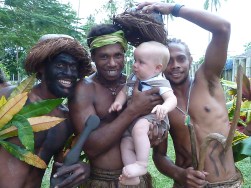 While there are great opportunities given to children that go cruising, there is also an inherent risk that is often overlooked. As would-be sailors start to scheme their ocean travel and plan their exit strategy, they may look at their children and contemplate the much-debated topic of age. The question they ask shouldn’t be “Are they too young?” The question they should ask themselves is “If we wait, will they be too old?” There have been many cruising plans foiled by teens that cannot adjust to the shift in lifestyle; either the teens resist so much that the parents never pull out of port or the family makes all the sacrifices and get away only to be thwarted by teenage sabotage. My recommendation for those who don’t want to wait for retirement and want their family to go with them, the sooner you cast off lines the better.
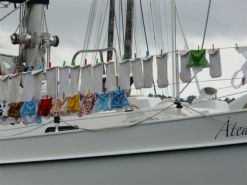 I We opted to travel with an ANAK onboard: simple plans, simple structure. I hung a netted bag from the aft rail and towed all things soiled behind the boat for a few miles. Afterward, I would plonk the solid-free garments in a bucket with some laundry detergent, rinse with fresh water and hang in the sunshine to dry. Presto! However you go about managing routine, the point is this: there is complication, and there is simplicity. When traveling with kids I can immediately think of my winning choice.
 On a yacht, things slow down. Time that may be taken up in play dates, technology, outside obligations and internal preoccupations ashore becomes less fragmented and more focused. You experience a tunnel vision of sorts, where the outside clutter filters out and you hone in on the important things: Your family, unfiltered. Now, when I talk about keeping things simple, I am familiar with how complicated life can be regardless of design. With a two-year old born with a congenital hand condition and a four-year old T1 diabetic, we aren’t cruising on a silver cloud. We have had a number of crises thrown at us that could have crushed our dreams had we succumbed to the pressure. However, we value this lifestyle for its purity and beauty, its intensity and its simplicity and have held onto the bigger picture through life’s sharper edges.


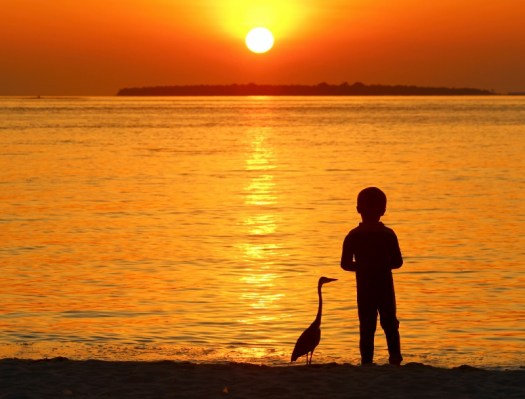 Click here for more images of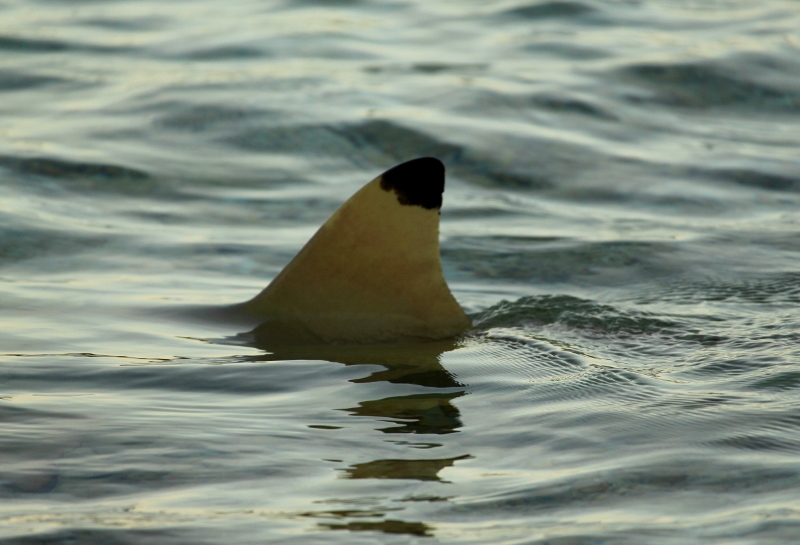
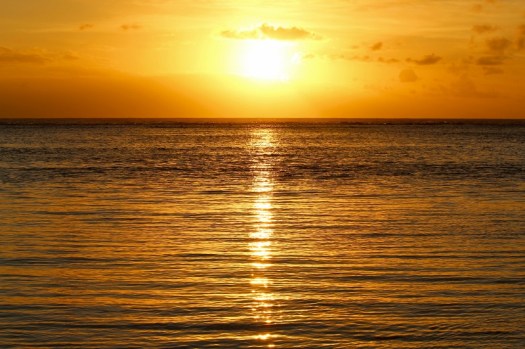
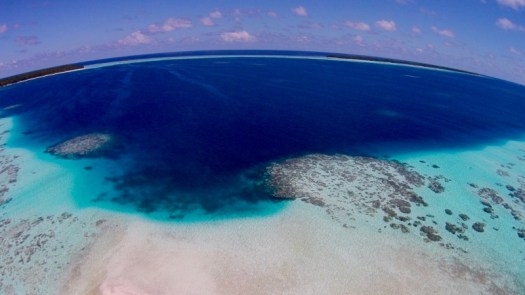 To view more photos of Chagos, click on the link:
  To view more photos of wildlife:
  To view more photos of personal moments:
  Atea
Atea 