Eastern Spirits and Western Angels

We are in the country of spirits and as a child, when living here with my family, I remember stories of friendly ghosts inhabiting the houses of my schoolmates, evil spirits causing harm to workers in my father’s warehouse, water spirits invading the bedroom of our closest family friends. Of those who believed, it wasn’t only the Thai’s who had grown up on tales spouted through the generations; expatriates with experiences of their own came to independent conclusions and began dutifully placing offerings in the spirit houses that sat inside their homes. I, for one, neither believe nor disbelieve. I entertain the notion, however, that a Thai spirit has come onboard Atea to disrupt our balance. Whether benevolent or malicious, I believe it is up to interpretation and I try to look at what we’ve been given rather than what has been taken.

As I look back at 2015 our time has been generally been split evenly in fourths between Malaysia, Thailand, the United States and New Zealand. In that year, we lost a child due to miscarriage in both Malaysia and New Zealand; Ayla underwent major surgery in the US and Braca is now in intensive care in Thailand. Perhaps a Thai monk is in order to appease the spirits, or perhaps I owe thanks to my guardian angel for our good fortune. A response to our Facebook update on Braca’s condition resonates with this sentiment. In it my friend Gini stated, “I understand the Thai hospitals and doctors are world-class… I am amazed and encouraged by how your family has been so blessed with very scary health and welfare occurrences time and time again. The angels really take care of you and there is no reason why that will ever change.” There are so many ways to look at a situation; this is the first time we have had travel insurance. We could have been mid-passage. We could have been in a third-world country with poor medical care. Realize this and we can say how very blessed we are.

As many of you know we are now residents of the Bangkok Hospital in Phuket. This has come as a total surprise as at the moment we should be midway between Thailand and Sri Lanka, away from the business and busyness of society and lost in the silence and solitude of the sea. We have spent the last two months working overtime on overdrive, madly preparing and crew for a year in the Indian Ocean. We have spent $30,000 on the boat to ready her, countless days and endless expense buying provisions in preparation for remote regions, downloading hundreds of charts, upgrading equipment, the list goes on. The boat has been turn upside down, reordered, dumped on again and resorted in the flurry of preparations that had become our daily routine over the last two months. The months preceding this were spent on planning and organization, getting visas and caites in order, lining up local representatives in required countries, bolstering and purchasing insurance for both body and boat, our cash flowing like water. It has taken a lot of dedicated, hard work to get us to this point and at the very moment of completion all plans have been dashed on the rocks as a moment of crisis takes over the months and months of preparation and planning.

We’ve had increasing concern for our son Braca but have been unable to identify the issue. Over the course of a few weeks our normally exuberant and delightful son slipped towards a temperamental and lazy four-year old to a weak and to lackluster grump, sliding further in the last few days to an emaciated and exhausted inpatient. At first John and I reveled in his growth as his body slimmed down to a trim, long-legged stature; I attributed his mood-swings and bouts of anger to the testosterone spurt known to come to boys around the age of four. Gradually his appetite decreased, his energy dissipated, his temperament became moodier and more difficult. He started loosing his interest in play or engagement with others. Our worry started to mount but we couldn’t get Braca to admit to any discomfort. We took him to a clinic where he was diagnosed with vitamin deficiency; I felt it was more than that but continued to prepare for our journey while keeping a close eye on him. We cleared Thai customs and immigration and moved Atea to the westernmost departure point; the boat was ready but we were not sailing out until the final piece was in place: Braca.

On the day of our intended departure I whisked Braca to a reputable International Hospital, clear that we needed medical sign off before we departed. They checked his vitals and ran standard blood tests; all came back regular. The doctor found lesions in his throat, which he felt explained loss of appetite and as a result loss of weight and energy. He ran abdominal x-rays that revealed severe constipation. I left feeling optimistic with a handful of drugs and an easy cure, reporting back to John that we’d paid money to be told our son was full of shit. However, by night he was vomiting and his inclination to sleep all day still a concern, compounded by an abnormally heavy, deep rhythmic breathing pattern which certainly raised the alarm.

After researching the doctor’s analysis we felt the assessment was not represented by his symptoms. We ran our own list of symptoms against possible causes, knowing that non-professional self-diagnosis always provides the most dramatic results. Braca’s list was long: weight and muscle loss, over ¼ his body weight down to 14 kg; lethargy and loss of interest; mouth sores and bum rash; frequent urination and constant thirst; constipation; loss of appetite. We came up with a list of four: Depression, Addison’s Disease, Diabetes, Cancer.

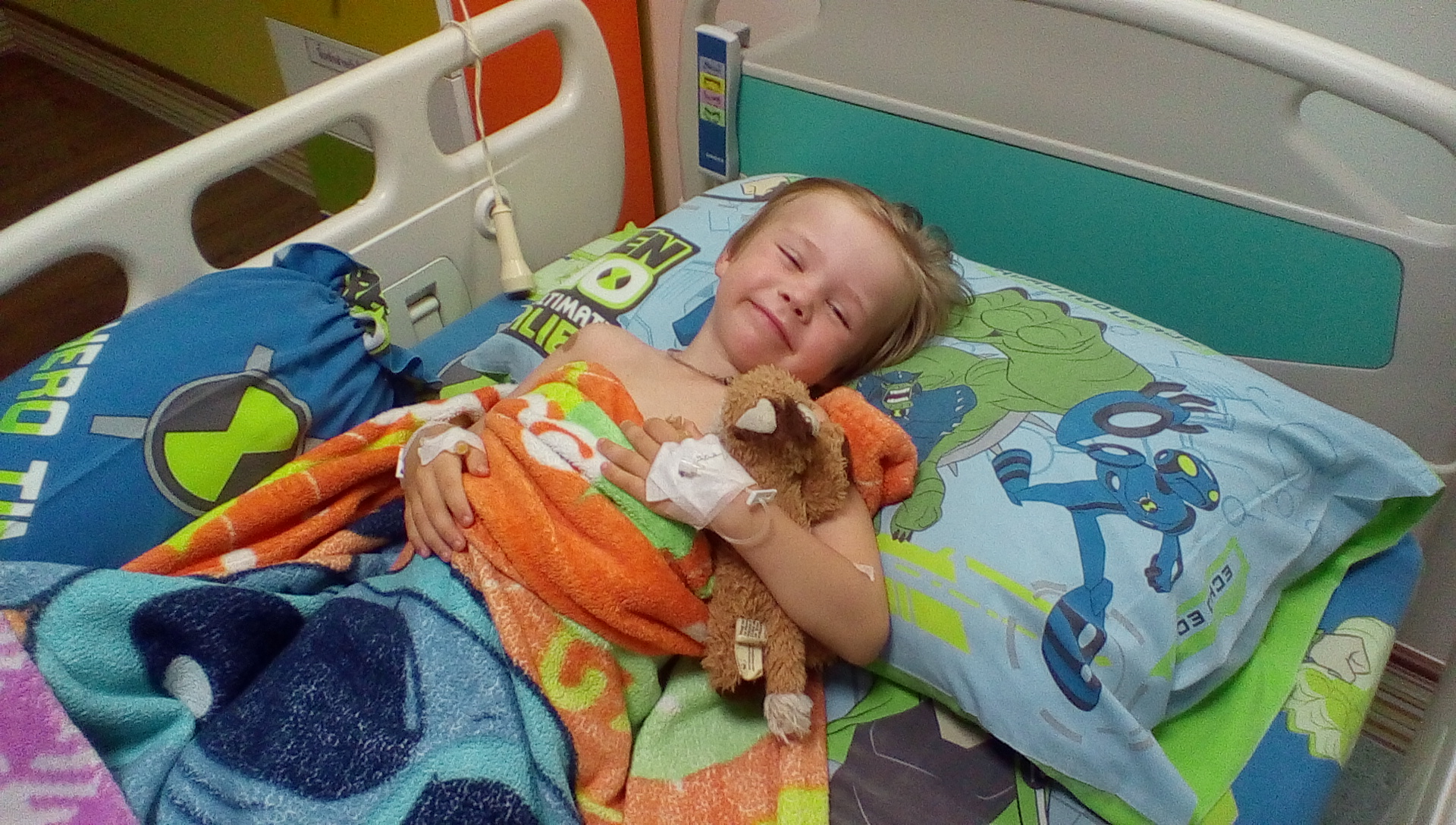
In the morning we about-faced and returned to Ao Chelong, rushing ashore illegally to get Braca to the Bangkok Hospital in Phuket. It took no time after a quick examination for the doctor to recognize that Braca was in a critical state and things ran fast from there: IV drips, blood tests, ultrasounds, admittance to ICU. We’d gone from a surge of testosterone to vitamin deficiency to mouth sores to chronic illness in the space of a few weeks. Each prognosis was worse; it was a relief to finally arrive at the right conclusion.

To understand our predicament fully you have to appreciate a few of the circumstances. For one, we had gone through a lot of transitions and Braca was adjusting to changes in condition, environment and weather since leaving the United States. We also have a son who absolutely refuses to admit discomfort, illness, or unease. Since birth he has rejected a sticker for its resemblance of a plaster. I’d repeatedly asked how he has been feeling and he refused any confession, saying only “I’m FINE mom. Just leave me alone!” There is a beauty hidden in this frustrating trait. When admitted to hospital, the nurses in Intensive Care produced a chart with a series of ten faces, each expression progressively pained. Point to 1 and you had a grin from ear-to-ear, point to 10 and the head was sobbing into a puddle of tears. When he was admitted, lethargic and eyes half-mast they held the chart in front of him and asked him to identify the face that best matched his state. He took awhile to respond and after studying the faces he finally pointed to number 2: A cheerful grin on a very happy face. They suggested a few other expressions but he shook his head and pointed again at number 2. A few hours later, after he had exceeded his tolerance level for needles and jabs and was in a flurry of tears, they produced the chart and asked him to assess his pain. He pointed to number 2. The nurse again provided a few other suggestions and he doggedly shook his head and held his finger on number 2. This was repeated several times and he never varied once from his choice – a cheery grin on a happy face. Is there a better example of looking at the bright side in times of hardship? At age four Braca is teaching the world a lesson: Even in times of strife there is always a smile to be found.

John and I started this blog when we began our first season on Atea expecting it to be filled with stories of our travels along the way, opening our experiences to those interested along the way. We didn’t expect it to become such a personal narrative of our intimate and private affairs. In following us through times of play and pleasure as well as through struggle and more unfortunate circumstance, we’ve shared so much more than hidden jewels sprinkled far out at sea. Our high points and low points have taught us that life is full of surprises regardless of the most meticulous of plans. It has shown us that adventure comes in all forms and that even hardship brings beauty. Look at a little boys smile in the most dire of times and you know that life is all about perspective; regardless of events, rainbows can always grace our horizon.

Like a Fish Out of Water

As we look back the last six months the term “like a fish out of water” comes to mind. As a family we’ve been uprooted from our small steel home and deposited in an increasingly alien environment, reliant on others for our survival – all the while looking back enviously at those still swimming around in the pond. We are slowly but surely working our way back toward the edge. Very shortly, with one final effort, we hope to jump back where we belong and swim out into the blue.

This year has been a fast reminder that no plan is ever set in stone, and that regardless of effort things just never turn out as you quite expect them. We rolled into 2015 expecting to travel eastward to Malaysia, Borneo and the Philippines, but good sailing friends caused us to start looking westward. Soon Pacific plans were exchanged for Atlantic plans and we started looking at the Indian Ocean to get there. An unexpected third pregnancy early in the year caused us to abandon cruising plans and turn our sights from isolated atolls to the security of medical care. With a pregnancy pulling the strings and work contacts providing the anchor we found ourselves drawn back to a place neither of us expected: New Zealand in the winter.

By March Atea was dry-docked in Pangkor and we were wrapped-up in Auckland and it was cold. Very cold. Or at least that is how if felt after being spoilt and acclimatised to the Malaysian heat. As the winter approached we shivered in our woolly hats, huddled around heaters and sniffed our way into our new normal. John was strapped back into his work harness and I was adjusting to the domestic scene as our shore lives started to be reestablished. We settled into a rented house as our own home was under a tenancy agreement, with a six-month work contract ahead of us. All this was done in preparation for another child, but all for naught as we lost the baby early in pregnancy – after all this re-planning, resettling and readjusting, we’d lost the reason to be ashore.

As ever, it is the children who adjust with most ease to a new environment. While John and I do luxuriate in first world indulgences, we find that a few short weeks purges us of our cravings and we are ready to head back out to sea. For the kids the adjustment is quick and the past quickly forgotten – a valuable lesson in living in the present. Whether it is adjusting to a new house, a new culture, new friends or new routines, they are the first to find the fun in it and live fully in the current moment. This is a thing John and I struggle to do as we yearn for wide open spaces, flexible routines, constant change and adventure. Each season we’ve fallen more in step with the cruising lifestyle and we find our time ashore more constrained, our shore life an encroaching foreign territory. Slowly we find our comfort and our desire resides in a life afloat, and it is this pull that calls us back to sea.

By June we lost a second pregnancy due to another miscarriage and I was sick of loss, let down and a confined domestic scene. After four months in New Zealand, I was in need of change, the sun, and a new chapter. I flew myself and our youngest members to America while John stayed behind to finish out the work contract.

On my departure the intention was a two month separation: I got time with my family in California and some sunshine to boost the spirit, John couch-surfed with friends for the two remaining month of his contract. We were to reinstate our family and reconvene our cruising life at the end of September but a one month extension on John’s contract was soon offered and he accepted, a little extra money to boost the next cruising season a good thing. Plans were made and tickets purchased for a mid-October departure – all sights set for a return to Atea and an Indian Ocean adventure. As they say, “never count your chickens before they hatch” and true to the saying our plans, once again, unraveled.

For us in California, a two-month holiday turned into a four-month temporary residency. Whilst on holiday I was advised to look into local specialist hospital, Shriner’s Hospital for Children, for treatment for Ayla and I began the process without ever expecting it would go anywhere. Boy was I wrong! Not only did things happen, but they happened quick. Within a week of the application being accepted we were in consultation; within a day of consultation Ayla was under the scalpel. Surgery happened before we’d had a chance to consider the implications of it, but the opportunity for Ayla outweighed all other considerations.

And here we are now: A week before John’s departure and another five weeks for us to go before our fifth season begins. We’ve been closely watching our friends swim westward on the wide reaches of the Indian Ocean, straining against the confines of society’s net for our freedom. That said, it was not an easy ride for many of them. One boat was wrecked on an uncharted island, one lost their mast but lost no lives, one lost their mast and abandoned ship, one was struck by lightning, one was blown up on a reef. Plenty have reported minor breakages from breaking waves and strong winds, yet despite this carnage we are eager to dive in and resume our own journey.

I’ve no idea how best to predict this next cruising season. I know our intentions, but if this year has reminded me of one thing it is that all plans will soon be under a redesign. But that is immaterial; change is inevitable. What I do know is that we will be out there pursuing our passion, following our dreams and living our lives as we most enjoy it.

Rum Punch Days

It is a laugh to report on our recent travels after my previous post that focused on the difficulties of the cruising lifestyle. That particular rant is certainly not representative of our current experiences, as our days are filled with highlights that tumble on top of highlights. Sure, we’ve had a few setbacks: We’ve flown our newly purchased drone into our rig and dropped it into the ocean, with half a dozen flights under our belt. We noted loose engine belts and found a crack in the water-maker mounting bracket, and spent a week on a water ration. Our refrigerator broke – twice. We spent one night in the middle of a thunderstorm and watched lightening strike the water around us, the world flashing electric blue, both horrified and completely thrilled by the experience. But all in all, our days are mostly filled with picture-perfect postcard settings, lazy days and rum cocktails.

We’ve spent the past three months exploring southwestern Thailand. This period seems less an off-track adventure and more a long extended holiday. Cruising in Thai waters is cheap and easy. Distances are short but there is variety depending on destination. If you use Phuket as a reference the following applies: Hop south and you are out of the general reach of mainstream tourism, free to pretend you’ve found a paradise not yet exploited. Head west and you are in in water so clear and you can see your reflection on the sand below, spending your days waterlogged, sun-kissed and beer-filled. East brings you into a labyrinth of sea caves and hongs that send you scurrying about with torches in total darkness, Pussy Galore and Bond-like, swimming or paddling through narrow winding passages until light finally breaks on the other side. Once through the cave and into the interior of the island, you are surrounded by thick jungle exposed to the sky from above. North offers a step away from mainstream tourism into quiet island getaways with tourists seeking to get a taste of a slower Thailand. Hit the hub, Phuket Central, and you are bustling for elbowroom amongst pink-skinned tourists, drinking cocktail concoctions out of buckets and gawking at bare boobs and lady boys.

Thailand is special for many reasons: the climate, the beautiful beaches, clear temperate water, the exceptional food and exceptional people, the inexpensive lifestyle. But for us in particular Thailand offers a social circle unique to previous seasons. I received more friend requests on Facebook after our first week in Thailand than on all our previous years of cruising combined. While using social media to gauge your level of social welfare has many inherent pitfalls, it is an example of how quickly friendships have been made this season and how many other cruisers we’ve been able to share company with.

What makes this particular group of cruisers unique is the collection of babes on boats (of the pintsized variety). Kid-boats: You avoid them like the plague. Unless of course you are infected yourself in which case you stalk them and hoard them like precious commodities. On pretense it is because kids enjoy kid-company. In truth it is to relieve oneself of the parental role of engagement. After weeks of being the only go-to for your child’s fantasy world, it is great relief when you can push them on another as a diversion. In addition, it is only those who have kids who invite those with kids onboard – and evening beverages is a staple for sanity on any ship. Given weeks of toddler games that leave you of crawling on all fours or tied up in rope, you really need both alcohol and adult companionship as a means of escape.

Regardless of reason given, it has been a pleasure to cruise in such a tight-knit group and have that connection with kindred spirits in foreign ports. Adventures jointly sought and holidays celebrated as a makeshift family unit have been a defining part of this season. As this year’s cruisers head onward and Braca’s flotilla of playmates dissipate, it will be interesting to see what dynamic a new influx of yachts bring.

January is a defining month as boats that intend to cross the Indian Ocean begin their migration. In typical Atea fashion, we enter the year with no set plan. Loosely, we’d discussed a trip that sends us north of Borneo into the Philippines. As we spent time with yachts heading across the Indian Ocean, our sights turned westward. To our surprise, unplanned influences look to direct us on a path independent of research or planning.

We have officially invited our third crewmate onboard.* Let me preface this with an earlier conversation that went along the lines of, “yeah, I’d be open to another,” at which time the conversation was decidedly more theoretical than practical. After firmly deciding that Atea would head west to Sri Lanka as soon as possible, medical advice has recommended that we don’t attempt a third pregnancy at sea. All significant test dates line up with the more remote regions of the trip, and given my age the BOLD FACE RECOMMENDATION is that we do not travel after 34 weeks – which would put us somewhere near East Africa. Such a timeframe would mean a race to the finish line, so to speak, to make it to South Africa by the beginning of August. We have decided that we will not choose the fast-track option and will leave an Indian Ocean crossing for another season.

As I write, each day we are committed to a new plan. While this indecision was starting to do my head in, I realize that all possibilities are good ones and we merely struggle to make the optimum choice – which of course changes depending on mood, amount of sleep, the state of chaos or calm onboard. So, wherever tomorrow takes us we will end up in a good place. If that decision happens to move us onward from Southeast Asia, we take with us a season full of friendships, paradise held in our fingertips and, of course, a belly full of rum.

_______________________________________________________

* Please Note: We lost the child during the second month of pregnancy. I chose to include the comment about our third as it was part of our experience and I wanted this little soul represented in our season. Little sweetheart – you are missed.

Malaysia by Sea

We have finally completed our transit of Malaysia’s western coast. We entered Malaysian waters as a family of three and exited her northern shores as a family of four. Of the ten months that Atea was temporary resident, we have cruised a two months of that time.

Of general impressions, it is a culturally fantastic place to visit however not ideal from a cruising perspective. Her waters are a murky, dirty brown and littered with rubbish. Beaches are equally scarred by a waterline filled with plastic debris. The skyline is hazy and thick of smoke from burning palm plantations. Yachts typically day hop up the coast because a maze of fishing traps make night passage hazardous and the horizon is a cluster of lights from the hundreds of trawlers pulling up anything with a gill or fin. We’ve stopped any attempt at fishing out of compassion for the little marine life left. The heat has been repressive, Ayla suffering the most. She had three bouts of heat exhaustion before we identified the cause of her illness and now sleeps with a fan inches above her head.

From a tourist perspective however, there is much on offer. Most of the tourists are from near and far reaches of Asia and I’ve enjoyed being immersed in the mix, standing out in my whiteness like a sore thumb. It is predominately Muslim and days are punctuated with the call to prayer. While as a tourist we are not expected to dress in full cover, it is still a courtesy to cover shoulders and legs – a hard won courtesy in the heat. In several towns the mix of religions is evident and what stands out is the multi-cultural cohesion: Mosques, churches and temples are evenly dispersed down alleyways and ethnic diversity is evident in the wide range of cuisine options. We toured Malaysia through our bellies, guided by our appetite.

Remote anchorages dominated our previous cruising seasons and we spent our time in either isolated bays or small island villages where locals relied on subsistence farming and fishing and resources were scarce. Atea always left homeport fully stocked for the duration of our trip, cubbyholes stuffed with a year’s supply of canned and dried goods. This season has been very different. We boarded Atea where we would be spending the initial part of our season rather than facing the long distances we’ve undertaken in years past to get to our cruising destination. We are planning on spending the first six months sailing up and down the Malaysian and Thai west coast, exploring local sites with nothing more than day hops in front of us. There is no need to stuff Atea to the brim with staples as food will be cheap, delicious and in ready supply. Given the large Indian population, we are filling our bellies with roti cani, tandoori chicken and green curry, in addition to local Malay and Chinese cuisine. Markets are filled with a wide range of fruit and vegetables and grocery stores are stocked with local and imported goods to satisfy multinational cravings. Food, for the first time in our cruising history, is easily stocked and easily replenished. I used to have a secret stash of treats, doled out on special occasions. Now it feels like a lavish lifestyle to eat as the taste buds desire.

This rule used to follow for alcohol as well. Where it was once our “liquor reserves,” it is now a stockpile. Langkawi is a duty free haven and the tax cuts make it a cruiser’s Mecca. Boatyards offer a good place for mariners to base themselves for haul out and refit, and parts are available at good rates. It is also Mecca for the alcoholic. Top shelf booze runs $10 a bottle, and there is no limit to quantity or variety. Beer runs $2 a can, and we purchased it by the truckload. Wine is the only category of liquor that is consistent with New Zealand prices, so we are skint on cork but loaded with anything 80-proof and up.

If you are a yacht owner or an alcoholic, Kuah is a must. If you want a taste of cruising in the Med, Telaga offers you the flavour. If you like history and art, Penang offers a maze of vibrant colour that lines the boulevards, where street art abounds…if you are not too distracted by all the delicious smells from food trolleys to see it. The Fjords south of Langkawi are stunning skyscrapers of rock projecting from the sea, scenic and quiet and beautiful. The mangrove forests east of Langkawi are winding arteries of river, nourishing the abundant wildlife that feeds off it.

While I mention the things that Malaysia lacks from a cruising context – murky water, clogged and cluttered – there are amazing attractions on offer that are not accessible to the average tourist. Of course, charters are available to take tourists out to the sites, but they are powerboats that run at high speed and in a cluster. What they miss is the magic, the beauty of solitude. It is the freedom to stay where you want, for as long as you want that defines the cruiser’s ambition. It is the joy of finding a place on your own and discovering its quiet and its noise: Deep red sunsets setting to the silence of fallen wind and tide, a million bats floating out at dusk to cover the moon, eagles that swoop and rise again with fish in talon, dodging each other in flight, monkeys lapping up water at the shores edge, playful and flirtatious for none but you as witness. These are only a few of the moments we’ve shared with the inhabitants of Malaysia over the course of the past few weeks.

For those who wonder why you’d take a yacht 20,000 miles through fine and foul weather when you can hop on an airplane for a fraction of the price – this is the point of cruising. You can never fly to where you can sail, and you can never buy what you can get when you work for it. My previous post highlighted “The Other Days,” which in truth are few and far between. It is These Days, self-sought and not offered in travel brochures, which breathe the soul into the life of cruising.

Pontification and Circumstance

We are living the dream. Really, this is it! White fluffy clouds and white sand beaches, freshly caught fish grilling on the barbeque and spiked coconut drinks served with little pink umbrellas. Bum swinging in the hammock, soft breeze flowing over bare feet, suntanned arm resting on the handrail. Eyes lazily gazing at pink speckled sunsets. Quiet mornings where the only sound is of a distant seabird dropping soulful echo in your ear. Bliss. This is what cruising is all about – the stuff landlubbers’ dream of and sailors boast about. Idyllic days spent on your haunches hakuna mata-style, all no worries and glowing happiness.

We have these times – really, we do! The only caveat is that of these days that sailors have and landlubbers dream about is that these moments are apportioned by The Other Days. And The Other Days happen just as often. These days look like this: Sweat pouring down backsides whilst crammed into tight, enclosed spaces, furiously cursing your boat, the heat, the sea, the salt, your partner, your mother, and your mother’s mother. You’ve a spanner and wrench in hand that might do the job, only if you can figure out what needs to be done. And you’d better figure it out – because you are the only name listed in the directory for handymen. If not, you have a hammer as back up so that you can, at the minimum, fix your frustrations if not your faults.

Let me take a moment and pontificate. In particular, I feel an urgent need to pontificate about rosy-glassed pontificators. There are so many first person narrations and third-party reiterations told in cyber chat, blog posts and magazine entries that preach of the goodness, almost akin to godliness, of those committed to aquatic travel. There seems an unspoken commitment to gloss over The Other Days. We’ve universally become ambassadors for The House of Travel and we are each madly selling package tours.

I was recently forwarded an article titled, “After Living Abroad for a Year and a Half Now…” that goes on to list ten points as to why an eight-year-old child has finally become enlightened by way of shedding herself of the entrapments of shore to live life afloat. She has cast aside her flash house, her new car, her TV, her plastic toys, her local friends, and her traditional education with no pain, remorse, or regret. She no longer knows about stress, having freed herself of all first-world entrapments. Brave warrior – she can now soar high and free. But…. but… really?! I have been a juvenile world-explorer. I am now raising a juvenile world-explorer. In both first and second instances, I understand the sacrifice that is asked of children when we take them out to sea. Every day is not filled up with sunshine and seahorses, baby turtles and rainbows. Sometimes the rainbows are just days of rain. Sometimes the sunshine is just melting heat. Sometimes instead of seahorses and turtles, you get dead coral and barren reef.

I like The House of Travel, and I do not want to offend. I wouldn’t dare illuminate the Dark Side of the cruising scene; that might alienate me from my peers. But I am prepared to reveal what happens on The Other Days; those days we really wish we were somewhere else. I have provided the Top Ten as follows.

1. Resources: You’ve access to every specialist required for the job, as long as you can pull that particular hat from your drawer. Otherwise, you may want to find that hammer. Or finance a new boat. On a yacht, the directory for services looks like this:

  • Plumber:       Mr. & Ms. Self              1-800-GOODLUCK
  • Electrician:   Mr. & Ms. Self              1-800-GOODLUCK
  • Seamstress: Mr. & Ms. Self              1-800-GOODLUCK
  • Mechanic:    Mr. & Ms. Self              1-800-GOODLUCK
  • Nurse:           Mr. & Ms. Self              1-800-GOODLUCK
  • Tour Guide:  Mr. & Ms. Self              1-800-GOODLUCK
  • Money-Juggling Account                 1-800-MPTYPOCKT

Every moment of each day your alter-identities are on stand-by. You’ve ten pagers attached to your hip, buzzing simultaneously, demanding immediate attention. At no time are you not on-call – it is a permanent state of affairs for every sailor. It is for you, the expert, to assess the emergency situation and respond to calls on level of urgency. All the while wondering, in the back of your head, why can’t we just go cruising? Why wasn’t this part advertised in the brochures? At no point did I receive a Cruising World with a model poised on the front cover with her bum-in-the-air, head-crammed-in-tight-space, back-burnt-and-twisted, profusely sweating middle-aged saltwort with a bubble of swear words above her head. This is the wrong kind of bikini-clad!

2. Duplicity: Everything has a back up, because everything breaks. And eventually every back up is used so you rely on the Directory of One, a pot of glue, your favourite swear word and, as last resort, your trusty hammer. When you’ve just bought two of every system onboard, at inflated marine prices, it is demoralizing to replace everything system by system to end up with a quick fix that only does half the job.

3. Replenishment: In a land-based home environment, if your bulb burns out you drop in at the corner mart to pick up a replacement. No problem. If the handle of your garden hose breaks you pop in to the local hardware store and buy another. No problem. You’ve just pulled the last square off your loo role and hop to the cupboard to find an empty plastic wrap. No problem, TP just a quick pop to the diary. All these are 15-minute jobs, completed without thought as you grab your car keys and drive on automatic pilot on an effortless errand. However, each of these insignificants whilst cruising can eat up entire days, and even then it may end in task incomplete. First, you have no car. No problem – catch a bus. If you happen to be anchored anyplace large enough to have public transport, you spend half the day sorting out taxi ranks and bus stops, to find out that the route you have taken has delivered you to a random mystery suburb. Second, you don’t speak the language. You gesticulate madly until someone smiles and points you in a direction, and you wander in circles until it finally dawns on you that local culture is to placate and appease. After a half dozen of these courteous navigational suggestions you finally clue in: They didn’t understand a word you said but it was more hospitable to appear helpful. Third, you finally navigate yourself to the right location to find out that they closed five minutes prior to your arrival for a protracted siesta. Or every staff member fell communally ill and the place will be closed for a week – directly corresponding with the day you arrived and the day you intend on leaving. Or it is a national holiday, a religious holiday, a wedding, or the birthday of a distant relative of the owner’s neighbor’s best friend. Regardless of the reason, you’ve just mimed and hitch-hiked your way across town to hear, “Sorry, please try again tomorrow.”

4. Space (-less): You’ve shopped around and done the research and found yourself the perfect boat. You’ve taken her on her maiden voyage and have fallen completely in love. She is perfect. You leave homeport, high as a kite. Make the most of those first years, as her glory fades. Little by little, season by season, your lady ages. Soon you are looking over at the boat anchored next to you, in lust. When that moment happens you will know you’ve contracted it. Forever after, you will suffer from a condition called 5-Footitis. No matter what, at some stage, every cruiser realizes that your boat is just a little too little.

I get it when my friends express amazement and, silently, pity when learning that we are raising a toddler and infant on a sailboat. Space is tight. Toys are kept minimal. Braca has learned that only one set of toys comes out at a time because there are no corners for typically toddler chaos. There are no “silent spaces.” Ayla has adjusted to sleeping with the roar of an engine or toddler in her ear. Literally. We eat, sleep, play, and work all within a 50-foot space. Fifty feet divided by two bedrooms, a kitchen, a bathroom, a dining and living room, a work shop/engine room, a few cupboards and a closet, divided again by four active bodies, equates to half a cubic square per person at any given time. I get why friends look at me in a “thank god it’s not me” expression. At times on passage it is akin to living in the world’s smallest apartment, locking the door and throwing out the key.

5. Connoisseur’s Courtship: Cruising brings you to an entirely different level in your relationship with food. There are many people who have a great affection for food, but no one has ever courted food like a yachtie. Our relationship is physical. We don’t buy it at the grocery store and toss it in the fridge. We search for it like we are on a quest for long-lost treasure. We map it out on parchment and spend limitless time playing Hide and Seek. Rarely is a one-stop shop on offer. You have to search the town for a fresh market, a canned-food supplier, a butcher, a baker, a cheese shop, and a liquor store. Food is collected in bits and bobs. We are the modern day foragers and gatherers.

After spending all this time searching for these nutritional treasures, there isn’t a vast fridge to shove it all into. You have to select the bare minimum temperature requirements of each item and sort it accordingly. With a fridge and freezer each the size of a miniature beer cooler, competition for cold air is fierce. What doesn’t go into the fridge must withstand humidity and heat. Often a provision run must last months, so the lifespan of your fruit and veggies is critical. As a result, you coddle it and wrap it in cotton wool. We spend days searching for it and once located, attend to it like a first-born. Ancient methods of preservation are learned and implemented. Eggs are tended to and lovingly rotated each day, like Mother Hen, done so they will last months unrefrigerated. Carrots and green beans are individually washed and dried and wrapped into bags, the cycle repeated daily to protect it from moisture and rot. Potatoes and apples cohabitate, extending their freshness for weeks. Onions are individually wrapped in kitchen paper and only the dirtiest potatoes are selected as they take the longest to age. Bay leaves are tucked into all the bulk stores, fending off weevils and other unwanted pests. All this time and attention may sound endearing and sweet, however it is a relationship born out of necessity.

6. Decadence: Speaking of culinary affection, let me quickly touch on the topic of decadence. Point five, discussed above, solely focuses on foods of basic necessity; not foods of luxury and desire. Of the latter, I would like to wake up one morning and have a bakery at my disposal, all hot dough and buttery croissants, rather than spend the half hour the evening before bashing flour with my knuckles. I often crave a cappuccino with a frothy flower served in a delicate ceramic cup, the daily newspaper set to the side. I want to look at a menu with vast selection, dine on the chef’s special, and follow it with the devil’s pick in sweet delights. Superficial desire, I know. But the appeal becomes heightened when the option for a café or fine dining has been taken away.

7. Slow: Some days are just slow… too slow. Some days are on instant rewind and repeat. Somehow you’ve auditioned for the sequel of Groundhog Day and landed the lead role. Your days become a repeat of the same routines: A morning swim and a play on the beach, a siesta at noon, boat maintenance (because there is always boat maintenance), followed by sundowners with whoever straggles into your anchorage that day. Quiet nights. I miss the noise of city life. The loudness. The business. The pace. I miss live music, small pubs and rugby matches. I miss old faces. Not the geriatric kind of old faces, but the familiar old faces of long established friends.

8. Weather: Life is very much ruled by the weather. I know that grey days get people down wherever you are. But when you are stuck in a floating box in a downpour, it gets all the more oppressive. Cruisers usually pull it off because long days of rain are not the norm during the dry season in the tropics. But when bad weather hits, you better be prepared for it. It takes no time to learn that you never leave your yacht with the hatches open – better to come back to saloon filled with stifling hot air than a cabin full of water. Most often you cancel your agenda as there is nowhere to go in torrential downpour. If you do decide to be ambitious, it is inevitably awkward. You hunker down in the dingy and get pelted as you race ashore, then lumber along with gear in hand as you splash your way to your destination. Regardless of tactic, when you get where you are going you are soaked to the bone, wet as a tramp, wondering was this worth it?… wherever you head to, they’d better be serving beer!

9. Budgeting: When you board a boat with the intention of being a long-term cruiser, you slip back into the financial position of a teenager with a minimum wage job. You have cash, but you never seem to have enough of it. Money is constantly being budgeted; priority spending shifts as boat repairs claim more and more of the “reserve.” Cruising funds are further constrained each subsequent year and budgets are constantly revised in attempt to make the money last. Boats by their nature suck money, and each year there is less money available to suck.

10. Temporary Retirement & Re-Employment: You drip out your retirement account so that one day when the rest of your peers are dropping out of planes in their golden parachutes, gunning around town in their Maserati’s, sipping vintage wine in their split-level homes, you are heading back to an office. Older, slower, and grumpier.

While this Top Ten list isn’t exhaustive, I have probably succeeded in making my point: There is a Dark Side to cruising. Cruising is not an exercise in seamanship, navigation and heavy weather tactics. We rarely spend our days battling storms, big waves and nautical disasters. We usually spend our days fighting logistics and minor inconveniences.

Cruising isn’t a long holiday. It is a lifestyle choice. There are incredible highs, and these make dealing with The Other Days worth every moment of it. When back on land I often feel like I am living amidships on even keel – the highs aren’t near as high and the low’s happen less often. While I do love coming ashore and indulging in extravagances and indulgences, I find that when the novelty wears off I am soon looking around saying, “Well, this is a bit dull. What next?” Within a matter of weeks, days begin to blend into each other and months fade away without notice. All the conveniences of home you craved on The Other Days, like cars and cash machines, Google Maps and high speed Internet, seem like adventures worth their weight in pain and sweat on reflection for it made for good stories shared over a grog at sunset. At home social occasions are planned rather than spontaneous. It takes years to meet the neighbours, rather than the quick invitation that goes out with boats you share an anchorage with. Friendships ashore often come after long courtship with social circles rather than the quick acceptance you get in the cruising circuit. Eclectic Camaraderie. I enjoy the feeling of brotherhood and sisterhood that is felt between sailors, mixed by way of culture, nationality, age, religion and financial standing. All of whom share a love of boats and the sea, a passion for nature and wildlife, who are seeking out exploration and adventure. Each willing to put themselves out there to attain it regardless of the sacrifices it takes to get there.

Something To Say About Miracles

We finally arrive in Penang – exactly one year after our intended arrival date, and well past due we share this story.

For those of you who have met Ayla, you will know that she has a condition called radial dysplasia. She has the fourth stage that is defined by the absence of a radial bone and thumb. Often the condition is associated with heart and renal issues, along with a variety of other potential complications. It is only now that we have her with us that I can share her birth story, or more specifically, her en utero story.

I have heard many people say what a miracle babies are and what a complex process their development is, particularly in the womb. I understood this but never really appreciated it. It was truly amazing with my first to follow the month-to-month stages of growth and how quickly complex systems develop.

I got the condensed version with Ayla as we didn’t discover we were pregnant until the 15th week, well into the second trimester. We were sailing up the eastern Australian coast when I discovered a lump in my stomach, of which it took several days for me to convince John it wasn’t a figment of my imagination. We were a few days out of Cairns when he agreed that there was something evident, of which I said “it is either a good lump, or a bad one.” I figured it was either tumour or a baby and I knew right away which I preferred. A few days later we were able to confirm good news, and the following day we got an ultrasound.

It was such an unexpected surprise. For several reasons we thought I was unable to conceive, so to learn that we would be joined by yet another was fantastic news. During the ultrasound we were told that we would be having a girl and that all looked good in the scan. We were jubilant – a daughter for us, a sister for Braca! We returned to the receiving room to wait for our photos and our alarm grew as our wait was extended. Couples arriving after us came and went while we still waited, and we were finally called back into the examination room. There is a funny thing that adrenalin does to shift the space around you. I am sure everything slipped sideways and created a void as voices started to drift off when the doctor started talked about problems that had been found. Further tests were recommended. Specialists were referred. I walked out in a mechanical daze until I was freed by the open space outside to break down and cry. I called my mother and the words I remember repeating were “my baby is broken.”

We spent several weeks in Cairns seeing specialists who helped us understand what Ayla was dealing with. We had a child with a malformed limb with a host of other serious complications that could present on delivery. Her kidneys could fail. She may need heart surgery at birth. She may have mental disability. Blood transfusions.

Fifteen weeks along and we had some major decisions to make. Were we to carry this child to term? Should we head directly to New Zealand and the safety of a medical system we would be supported by? Could we dare carry forward with our plans and spend the pregnancy in remote regions with an at-risk pregnancy? Those few weeks without a plan and so many factors outside our influence was a very stressful period. I cried my full for the sorrow I felt for a child I couldn’t do anything to help, and worried over the possibility of a future with a special-needs child.

In the end, we decided to press on. Atea and crew would sail from Australia through Indonesia as planned, with sights on Singapore as a base for temporary work. We discussed this with the specialists and agreed that we would get periodic ultrasounds along the way. I did some research on potential delivery locations and found a gynecologist in Penang, Malaysia, who shared a birth philosophy that I was aligned with and who agreed to deliver Ayla for us. I owe my deepest, most sincere gratitude to Dr. Narinder Shadan for his support along the way. His responses were prompt, his manner gentle and sincere as well as professional, and his patronage gave me the confidence to carry forward.

We had a magic season – our trip through Indonesia was filled with dances and festivals, celebrations and local hospitality. It was easy to let my worries get lost in the fullness of our lives, and I embraced that. It was easier for me to put the pregnancy out of mind when results of the ultrasounds along the way confused us with a myriad of different results, all worse than the last.

Lombok and the northwestern Gili group provided a significant change to our plans. Through some close sailing friends I was introduced to Julia, a gynecologist-on-holiday who sat down for a consultation with me – it was a very fortunate introduction. We discussed Ayla’s condition and the risks we were taking of a delivery so far from home. She offered to join me during my next ultrasound appointment, as she would be traveling through Lombok and close to the hospital I would be visiting. On the evening, she was there in advance of us – “us” included John, Braca and I and our French friends Marie & Michel and their two children Nali & Niobe, 2 and 4. We walked in like a fortified battalion of misfit tourists. The doctor I consulted with was using old equipment and was under trained, and so Julia stepped in and ran the ultrasound for him. The conclusion was that I needed more sophisticated equipment to get the results we were looking for, and so we were referred to a specialist clinic across town. Off I went trailed by my eight-strong support team.

The results of the second test indicated that Ayla was loosing weight. She was in the 10th percentile and with it our focus shifted to low birth weight concerns. We decided that we had too much at risk to deliver Ayla overseas and made the decision to return to New Zealand for her birth.

But first, we had to get there. We had a floating home half way between points and needed to find a safe place to leave her. We ran through a few, mostly impractical, ideas before settling on a plan. My proposed solution – ludicrous on reflection – was to sail from Bali to Borneo, sail upriver and trek wild orangutan, then help deliver Atea o Singapore. Once there, I’d hop on a plane with a belly fit to bust and a two-year old, leaving John to job hunt in Singapore while I flew to NZ to deliver a baby and return once we’d received clearance. After persuading John to this plan, I realized that leaving him to his bachelorhood while I roamed Auckland knocked up and homeless was, while a wildly creative plan, definitely not a sound one. Eventually we agreed that I could keep the orangutan if I acceded Singapore. We would put the search for a contract in Singapore on the back burner and take it one step at a time. John would return with me to New Zealand to join in the birth of his daughter. If we could return to Atea soon after delivery we would address work options then. If we needed to stay in New Zealand at the request of our doctors we would be in a position to do so.

Having agreed on plan, we then needed to get both ourselves and our boat over 1000 miles to Danga Bay Marina in Malaysia, with 4 weeks remaining before the flight cut off. Women are denied access to airspace a month prior to their due date, which left us with a lot of distance and little time to get Atea secured before we had to fly.

While our pace was quick, we did schedule in a detour up the Kumai River in Borneo to visit wild orangutan in their natural habitat. With few places around the world that offered such a unique experience I was determined to get there (see video on our blog: X). John always teases me that when I am given option A and option B to choose between, I always choose A and B. We were also able to celebrate our son’s second birthday with our fellow cruising mates before signing off on the season. We then followed a quick pace to get Atea to our designated marina and did so with three days to spare. We madly packed bags and boat not knowing how long our departure was for. I expected a quick return and packed accordingly, however prepared the boat for an extended absence to ensure she would be keep well should be gone longer than anticipated. It was a mad few days in sweltering heat getting things ready for our departure. No feet up on soft cushions for the abdominally-enlarged. We worked steady and hard together, with a day to spare for a sight-seeing tour of Singapore before departure. All would have rolled without comment had the airline staff not stopped me at check-in, two short hours before departure, and demanded that I get a medical certificate confirming me fit to fly. Talk about sending a woman into early contractions! We raced out of the terminal to get a stamp of approval from an airline-approved doctor. Fortunately, the checkup was a blitz – I was asked my age and weight, told to flash him my ankle for visual inspection and waived out the door. It was the quickest, most expensive consultation in my life, and I thanked him for it. We were cleared for travel. Holding my belly, we sprinted off to departure count down and boarded our flight just in the knick of time.

The day after our return I had appointments with the specialists to discuss Ayla’s case. It was quickly determined that Ayla had slipped from the 10th percentile to the 3rd and the suggestion was made for an immediate C-section. I was totally unprepared for that recommendation. We had only just arrived, we were sleeping in a friend’s basement and had made no preparations to receive an infant.

We agreed on a contingency plan and monitored Ayla’s weight, however it was quickly evident that she was continuing to struggle and so on my subsequent assessment I was asked to immediately check in for an induction. A long, drawn out two days later, I held my beautiful baby in my arms.

One look at Ayla and I fell absolutely head-over-heals in love. Now, this is the amazing thing about nature: I had spent six months protecting myself and all the barriers crumbled the minute she was placed in my arms. I looked down at the most beautiful face I’d ever seen; blue eyes that reflected my father, graceful fingers that reflected my mother. Johns smile. My nose. I felt so proud of her for the miracle she made happen – she had survived on a single-vein umbilical chord with half the blood supply of a standard birth and she had made it.

It was the right decision that we had returned to New Zealand. We were wrapped up in a medical system that made things happen. As an American it was amazing to be in socialized care within a country with such excellent medical support. Things just happened without draining me of all my sweat, tears and dollars. Within days of Ayla’s birth, she had a full set of detailed full-bodied x-rays, a brain scan, a heart scan, bloods drawn and genetic testing – all reviewed by the top pediatric specialists in the country. I was visited by a Psychologist who offered free support counseling should I need it. Ayla’s pediatric doctor made several visits to check in. After all the emotional pressure of this pregnancy, it was amazing to fly home and fall into the arms of such an efficient medical system.

As always, it is the unknown that is the scariest. I remember a poignant moment when the psychologist called in. After a brief summary, I said how deeply I had fallen in love with my daughter on our first day together. She looked at me with very serious eyes, nodded, and asked, “and how are you feeling about her today?” She was looking for all the things unsaid. But there was nothing other than this floating feeling of elation. We’d made it. Ayla hadn’t been whisked off to an operating theatre or intensive care in her first moments. None of the disasters that we’d feared for her had presented. She had been placed in my arms on delivery and stayed with me every moment since.

And here we are, a few weeks shy of her first birthday. Back onboard Atea in the town we’d intended as her birthplace. I had sent Dr. Narinder an update when Ayla was born and said we’d touch base if we made it to Penang. On arriving, I followed up on that promise and received a reply filled with his typical warmth and enthusiasm. Two days following he came down and joined us at a pub near the marina and we met in person for the first time. He was introduced to the baby we’d hoped he would deliver and we were able to thank him for the support he gave us along the way. Had he not been there, we would have made very different decisions in regard to our movements last year.

While our pregnancy had been a difficult one, no day since her arrival has been. We’d spent six months preparing for the worst and every day since celebrating her progress. During that meeting a comment Dr. Narinder made hit home in a way I had never registered similar comments before. In talking about Ayla, he said what a miracle she was. When I acknowledged him he stopped, held my gaze and repeated, “No. She really is a miracle.” And for the first time I understood just how very, very lucky we were.

Bicycle Spokes and White Rice

We can now officially report that we have “gone cruising.” Dock lines were cast yesterday and we spent our first night at anchor. If feels rewarding to be truly afloat again, with bows pointed to the breeze and salt spray cast across her decks.

It is hot here in September – low 30’s hot, which when breezeless means really, really hot. Matters are worse when smoke fills the sky from burning plantations of palm trees, making the heat seem all the more oppressive. It has taken us some time to adjust to the high temperature but the gauges are tuning and our bodies starting to regulate. We initially stayed in a hotel near the marina whilst Atea was on the hard getting her final work done, the air-conditioned rooms a welcome reprieve. We soon discovered, however, that air-con in these parts don’t have temperature adjustments so we either battle hypothermia or heat exhaustion. I’ve never understood why countries with the hottest temperatures tend to turn their thermostats the lowest – it has always seemed counter-intuitive to carry jumpers around when walking around in the blistering heat. But if you intend to spend anytime indoors the extra layers are necessary. I now understand how Muslim’s can get away with head-to-toe covering when I spend time indoors shivering myself blue.

It took us three weeks to get ourselves sorted for the season, which was the timeframe we expected. While Pangkor may not attract the average tourist, Pangkor Marina does offer a good base to get marine work done. We had high hopes of getting a significant refit done to Atea during her nine months on the hard, but we soon realized that you have to be present to ensure progress. Nevertheless, we succeeded antifouling the hull, polishing the topsides, painting rust spots and the interior woodwork has been rejuvenated. At the last minute we added in an anchor winch service, rudder shaft repairs and a leaking hull valve replacement. After emptying out the bank account, we were finally ready to go. You quickly realize why boatyards are full of foreign cruising yachts. With prices roughly 50% lower than western yards, it is the only place you can afford to have work done… and even then boats quickly consume what money you have.

Of our diet, it has changed considerably since re-embarking on the cruising life. As I reflect through the seasons, the taste and flavour of our meals are highly influenced by the regions we travel through. This one more so than any other. In previous years we have left shore with a yacht stocked for extended periods. Rather than a year of stores onboard, this year we have the luxury of easy access to most foods and we are able to provision as we go. A novel experience. For the first time ice-cream blesses our freezer, which sounds a good thing as in years past the entire space has been jammed exclusively with eye fillet and scotch steak. However, while fruit and vegetables abound, quality meat, breads and cheeses are sparse. The chicken is scrawny and the meat ordered by hue: orange, black or green. As such, a vegetarian diet consumes our meals unless we go ashore. Given meals – good, delicious, full-flavour meals – are a quarter of what the ingredients would cost, eating ashore is a regular affair.

That’s great until you are blessed with a toddler who has little appreciation for spice. As meals in Malaysia are a blend of Indian and Malay culture, very little is served bland in nature. Given Braca’s distaste for meals with a red hot kick, rice is slowing becoming his staple. Ayla is getting her balance of nutrition through breast milk, but Braca has been abruptly deposited into a white rice diet.

We lucked into good company on our first day. We went to the boatyard to greet Atea for the first time in ten months when we saw two small figures madly peddling along the walkway. To my delight, they turned down the ramp to a yacht at the end of the jetty. I went around to introduce myself and was delighted to meet a very chatty and warm Canadian woman and her Australian family. Her two daughters are two and five, the youngest a month off Braca’s birthdate. We laughed at the kit that comes with kids and how ridiculous some of it was in a cruising context – babies on boats with bikes. John and I had debated before leaving Auckland at how ridiculous it was to bring a bicycle and trike (for the baby who isn’t yet crawling!), but this introduction started a ritual of morning communal bike rides and an immediate friendship. “Where are my girls?!” was the first thing Braca would say in the morning and they’d soon be off as a connected threesome. They would be off peddling around the marina, swimming in the hotel pool, hanging out below decks playing games or attending home-schooling lessons. We also took excursions into town, which provided access to local attractions and activities. SV Wandoo made the three weeks in Pangkor Marina a very social, welcome affair.

We have reunited with old friends and met some new, and social evenings on the aft deck have kicked in to a regular affair. What stands out is that at some point in the evening all conversation inevitably turns to “where to next?” Opposed to seasons past where routes all led westward, piracy in the Indian Ocean means that cruisers have to choose alternate plans to what was once the “milk run” to the Med. From Malaysia and Thailand, most boats head southwest through the South Indian Ocean to round the Cape of Good Hope in South Africa on a return trip to Europe or the Americas. A few brave or foolhardy team up to head through the Bay of Bengal and the pirate waters of the Arabian Sea (or finance the safer but more expensive option of shipping the yacht by cargo ship). Others look eastward on a circuit that leads them back through the North or South Pacific. Us? We have no idea. Or more aptly put, we have many ideas but none that we have committed to.

Sight and Taste of the Spice Islands

[As we prepare for this cruising season, we are tidying up from last season: Here is an update from July 2013 that covers the first few months of our trip through eastern Indonesia.]

In deciding to join the Indonesian rally this year, known locally as Sail Komodo and internationally as Sail Indonesia, we chose to do so not because of its logistical perks but for its social benefits. Indeed, the rally does assist in organizing visa permits and extensions. It organizes immigration and customs visits and the like which saves on the hassle of sorting it out individually and the runaround you often get outside of organizational sponsorship. However our key drivers were much less serious than all that; we wanted rum-buddies & poker-pals to share anchorages with along the way. With 105 yachts signed up for the rally, we were certain there would be a few like-minded comrades that we would be able to join up with.

One hundred and five is a whole heap of boats; about one hundred more than we were interested in joining in a poker match. Fortunately, the rally had organized two route options. Option A followed the traditional cruising route and had the majority of participants. Option B was on the ‘road less traveled’ and had received much less interest. When we first discovered the ratio of 6/99 we thought we’d clearly missed something. We spent a day doubting our choice however concluded that nothing could be worse than following a hundred boats around a cruising circuit. When the Indonesian Government laid down incentives we spent a second day debating what we’d missed: $250 in cash and $250 in diesel to switch, but the offer had only persuaded six boats to defect. One follows the tradition route along Flores, the other strikes north to the mythical Spice Islands.

Our decision made, we readied Atea for departure out of Darwin on the 27 of July, two days after our beach wedding. Our route would take us north to the Spice Islands in eastern Indonesia, westward through the little-known diving meccas of Wakatobi and Takabonerate, through the province of Buton and then southwest to rejoin the fleet in the world-famous Komodo Island, land where ‘dragons’ still roam.

After a three-day, rough but fast passage north from Darwin, as we set thankful feet ashore in Saumlaki, our first stop in Indonesia. Two things were immediately obvious: We were welcome guests, and this was no casual cruise. Upon arrival we were quickly wrapped up in a list of welcome ceremonies and official functions and as official guests of the state. Second, the Indonesian people were delighted to see us. As a step off the beaten path, locals were unused to foreigners and Saumlaki is far from a tourist destination. “Hello Mr., Hello Mrs.!” sang out in our ears along with the constant peeping of horns from countless motor-scooters, signaling a warm reception.

While we were used to Braca being a novelty in placed we’ve traveled, Indonesia is a busy populous country and he was swarmed in mass. Braca was bombarded by pinching fingers and phone cameras every step of the way, and he was quickly overwhelmed by the attention. Our poor little trooper was swamped in attention from adults and trailed an ever-growing crowd of kids wherever he went. The locals have a habit of touching or pinching the cheeks and flesh of babies they admire, and whilst Braca stoically endured this constantly, being picked up by adults became his do not cross line. Last year he was gently loved by the Pacific Islanders, but this year his patience had found its limit and he adopted a new habit of screaming his annoyance if picked up by an enthusiastic local. We coined the term “Braca-razzi” from paparazzi for the crowds of photographers who surrounded our son, and whenever the Brac-Pac was in pursuit we followed closely like security guards.

Braca was not the only youngster to be intimidated, however, as we quickly learned that the screaming babes and toddlers running for the protection of a mother’s skirt was due to our whiteness – it was the first time that these young ones had seen blue-eyed, yellow-haired humans. It made me appreciate just out “off the beaten path” we were.

After a week of official welcome ceremonies in the gusty deep-water anchorage of Port Saumlaki, we headed for a quiet stop only 20 miles up the coast which provided an insight to rural Indonesia. We anchored Atea off a beautiful sandy beach and took ourselves in to play on the white sand; before long a few of the villagers who’d spotted our mast wandered down to investigate. As children go, Braca immediately had playmates and we sat with the elder who shared with us stories about his village. We were taken to some charming washing pools in the forest and watched the children splash in the water and the women scrub clothes on the rocks. As the sunlight trickled through the thick canopy overhead, we felt the magic of the moment and the beauty of these cultural exchanges – this was what the lifestyle was about for us, unplanned and spontaneous.

From there it was another overnight passage to Banda Island, center of the lucrative nutmeg trade 200 years ago. Such was the importance of the nutmeg trade that the island was once swapped by the colonial powers in equal exchange for nothing less than Manhattan Island. Today it is a small, quiet but pretty town that sits in front of a towering volcano with a deep volcanic crater that provided us safe harbour. We were anchored stern to the shore alongside our new cruising partners, making new friendships as we adjusted to the dynamics of the rally. Banda has clear waters and great diving to offer, a volcano to climb and a town rich in history so our days were kept full. John took the two-hour hike up through thick bush to the summit of the volcano and was rewarded with a glimpse into the smoking crater, commanding views of the ocean and a sore knee that has not been the same since.

Wakatobi and Buton, our next two stops, lay at the end of a three-day passage westward and showed us the ethical dilemma of the rally. As a government-sponsored event, townships vied for the ability to host the rally and took on responsibility for events and activities to entertain us. It appeared to us that each town tried to outdo the last, as events became grander as we continued onward. Wakatobi offered us fuel and cash to visit and we were not too shy to decline the offer. Thankfully, the warmth of our welcome and the richness of the local events meant that we did not have to question whether acceptance of a gift imposed an obligation – we were grateful to accept both. The feast provided at Wakatobi was fantastic, local dance professionally delivered with plaques and traditional dress offered to us as gifts. Local events were hosted each day and free transportation provided at our beck and call.

Buton posed a slightly different problem, as it was a remote province that was not visited by foreigners and to get there added distance in the wrong direction. We were visited by the governor of the province with a direct plea that we attend his township’s festivities as they had spent six months preparing for our arrival, the “Dance of 12,000 Virgins.” While we had plotted to bypass this in search of some solitude, we felt the pressure to attend – of course we didn’t expect to actually see 12,000 bodies on stage however that is exactly what was delivered.

We were honoured guests to a traditional takoki, which translates to “giant dance.” 12,500 school children had spent the better part of a year preparing for the choreographed dance, professional musicians were brought in and the media was present. We were given “box office seats” in a decorated, designated area – the only covered seating offered to the public. I assume they were expecting a more even distribution of the 100 rally boats, but as there were only 12 yachts on this route the distribution was 1,000 dancers per visiting boat. We felt humbled that so many people had put in so much effort to be part of our welcome, but as the music boomed and the superbly drilled dancers flashed colour and movement as far as we could see, we couldn’t help but be absorbed and overwhelmed by the event. Buton had put on its very best and it was a truly exhilarating experience.

From the pace of back-to-back events and continuous entertainment, it was a welcome relief to leave big townships behind for the quieter pace of remote islands and small villages. Of those, Sagori Island provided an intimacy and closeness with the locals that we were blessed to experience. Idyllic in setting, local children would come out in their dugout canoes for friendly exchange, we would play ashore with imaginatively-crafted games and spend hours hanging out under palm trees with the locals. Braca developed a very sweet bond with one of the girls in particular, and would let no one but her pick him up and carry him around, whereby everyone took to calling her “big sister.” Sadly, it was an exposed and steeply shelving anchorage. When Atea gently carried away the inadequate mooring buoy, John’s prior decision to stay onboard that day saved us from disaster. Sadly we had to leave the island without a proper goodbye to the locals that we’d come to love the most.

Our final stop before rejoining the main rally was at Takabonerate Marine Park, which claimed to have some of the world’s most pristine diving and diverse marine life. We were eager for quiet, lazy days and that’s just what we got. Afternoons filled with nothing but water play, kites and scuba kit, beach toys and paddleboards. There was no village on the island but we were in the company of a few of our fellow cruisers, friends to enjoy a few sundowners with at the end of the day. Takabonerate was a welcome break from the obligations of being an official guest of Indonesia, and it was a break from the admiring – and sometimes intrusive – attentions we received over the past several weeks.

Sail Indonesia has defined the season more than we ever imagined. Once involved in the rally, it was difficult to withdraw to a more normal cruising pattern as the small size of our group meant that we were accountable for attending all of the activities. That said, the events that we were included in were opportunities to see a part of the culture we would have otherwise missed. We were wined and dined and not a cent was asked of us in compensation. We can only assume that the government took this on in an attempt to open the region up to tourism and we were the lucky ones to experience the graciousness and generosity of the locals as a result. I hope our small tokens of reciprocity to the individuals that we met along the way will have them remembering us as dearly as we remember them.

As we head south to rejoin the larger rally group we feel ready to be more anonymous. Perhaps none more so than Braca, whose photo must be on every cellphone in Southeast Sulawezi. Perhaps the locals will not remember the twelve visiting yachts or a dozen trailing officials, but I am sure they will remember with warmth our little blonde white boy, and all the laughter shared along the way. Sail Indonesia may have been sponsored by the state, but we did get to meet the people.

The Seagulls Have Landed

Here we are at long last – home again. As all international journeys go, it has been a long haul to get here.

We departed Riverhaven at 9AM with nine pieces of weight-maxed check-in luggage, five cement-filled carry-on bags, a nine-month old and a two-year old. After negotiating fees for our excess-baggage charge, redistributing weight in our carry-ons and wiping up the urine left at the counter by a near-potty trained toddler, our four-hour lead time to departure was quickly gobbled up. We juggled babies and bags through the international terminal and made the departure gate just in time.

I expected the demands of a long overseas trip to raise some patience-draining moments however Ayla and Braca proved to be capable and tolerant travel mates. We were well into our gin-induced zen state when we realized that we were minus one electronics-laden carry-on luggage. Laptops, cameras, ipods were left somewhere between check-in and the boarding gate and we had a thirteen hour flight to sit and ponder our idiocy and the implications of this digital loss.

We landed in Kuala Lampur at 9PM local (1AM NZ) and dragged eight droopy eyes and one less bag to a hotel near the airport. Whilst the adult contingent was well aware of the collective need for sleep, infant and toddler weren’t briefed on jet lag or the importance of getting on local time as soon as possible. This is not where I mention that John thought he left an additional item on the KL side and dragged a very-awake infant back to the airport at 4AM to scourer the trolleys and carrousel for the missing piece.

Our daybreak action plan was to try and track down our lost bag as soon as possible. After setting the sniffer dogs in motion we indulged in our first moments of the tropics – we donned togs and spent the morning evading early heat in the oasis-style pool. By 10AM we were back at our hotel room, by 10:15 we had confirmation that our bag had been located and by 10:30 we were off again on a four-hour taxi journey to Lamut, our final destination and Atea’s home for the past ten months.

Our current room has a marina view that looks out on Atea’s mast. The reunion has been quite sweet and all looks refreshingly good onboard. The work done on Atea has given her a much-needed facelift, and for me her interior is in equal portions beautifully familiar and intimidatingly small. We will adjust to our reduced space as outdoor time exceeds indoor life.

Alas, the travel dramas we expected didn’t materialize and those we didn’t anticipate have cost us. The kids are adjusting beautifully other than haphazard sleep and we are preparing for a few busy weeks ahead as we prepare Atea for the next season. And somewhere in that time we will need to find space onboard our little capsule for 215kg of luggage broken down to 180kg of toys, 20kg of boat bits, 12kg of Kia’s kit and a meager 3kg for John.

Traveling Vagabond: City to Savannah, Bush to Sea

A fateful meeting at Merrill Lynch in Seattle set in place the key elements that defined the next ten years of my life [Kia Koropp].

As was “the American Way,” I had spent above my earnings and sought out a financial advisor to help me reclaim fiscal balance. During that meeting I discovered a nest egg in my investments that freed me of all my debt plus left a large capital sum in reserve. Four days following that meeting I was on safari in east Africa, and within six months I had boxed up all my belongings and said my farewells with a one-way ticket in hand.

In 2004 I left Seattle on a return trip to Africa. I lived in Kenya as a youth and had always wanted to return as an adult; I finally had the opportunity. In route I visited my birth country, Puerto Rico, hopped on a yacht sailing through the West Indies, and spent time backpacking through Europe and Morocco. From there I joined an overland company that ran land tours through East Africa. I spent the first part of the year as an overland courier running trips through Kenya, Uganda, Rwanda, Tanzania and Zanzibar. I experienced all the classics such as sighting game in the big parks, kayaking down the Nile, trekking the mountain gorilla, diving in Zanzibar. Misadventures included being chased down by a pissed off rhino, bitten in my arse by fire ants, malaria and septic infection, Highlights were sensory overload and opening my eyes to the delights of the amazing African continent.

My next stage was independent travel south through Malawi, Zambia, Zimbabwe, Botswana, Namibia and South Africa. After settling myself into a base in Cape Town, I started to look for my next opportunity for work. I was most attracted to dive opportunities in Mozambique. Connections led me to a mad South African (the pioneer in white shark diving in SA) who was running a dive shop in Inhambane, Mozambique and arrangements were quickly made.

I spent the next year running dive operations in a very remote area of Mozambique, taking sole charge of the dive centre that catered to visitors from Czech Republic. My only colleague was a local who spoke no English, and we managed on a linguistic foundation based on his understanding of Portuguese and mine of Spanish. The Czech business owner and I were equally disadvantaged, and we communicated with gestures and a translator – often ending in misunderstanding and comedy. The diving there was magnificent and I advise anyone with an interest in the underwater world to put this region on the top of the list. With two seasons of whale shark and humpback, manta and dolphin, the area was rich in marine life both in novelty and diversity. I had the honour of riding on the back of whale shark, swimming with humpback, gliding on the wing of manta, and caressing giant moray. I had the pleasure of meeting and befriending local villagers and becoming familiar with their ways. I fell in step with a very different way of life, and I am so privileged for the experience of it.

Deciding that it was time for a new stage in my travels, I left Africa in mid 2006 to fulfill a commitment to sail across the Pacific with a friend of mine. I returned to Seattle and departed in July (6/6/6 – somewhat ominous) on a 32’ sailboat set for adventures on the high seas. We were inexperienced in open ocean sailing and navigated ourselves across 12,000 miles on a six-month passage, crossing from San Francisco to Hawaii, south to the Society Islands, west to the Cook Islands, onward to Tonga and, finally, south to New Zealand.

We arrived in Auckland December 17, 2006 and I decided to extend my time in New Zealand. I spent my first year based in rural northland, then moved into the heart of Auckland city having been issued a work permit and authorization to stay. Auckland felt like both a step back in time and a welcome return to a tech-rich industrialized nation. I was once again in the world of cappuccinos and fine wine. It no longer took me a half-day to get to the markets or to provision the boat; staples were around the corner and I didn’t need to shop for a month’s supply. Fresh fruit ad infinitum, the endless supply of edible gold, was a luxury I had almost forgotten.

In August 2010 I met John on a kitesurfing holiday in Aitutaki. By early 2011 we decided to start two new adventures: Babies and boats. On 5 May 2011 we sailed north for Fiji and Tonga on our 50’ Ganley Solution, 17 weeks pregnant and a return for both of us to a life at sea.

From here our story picks up in our first blog post and takes our readers through our first season in Fiji and Tonga; our second in Vanuatu, the Solomons, Papua New Guinea, and Sydney; the third in the Great Barrier, Northern Territories, and Indonesia. As we prepare for our fourth season toward Malaysia, Thailand and onward, our adventures will continue to be told through posts on sv-atea.com.

Welcome to our journey.