Link to published article: Exploring the Tuamotu Atolls in French Polynesia
As we cleared through the Panama Canal andS.V. Ātea, our 45’ steel cutter rigged sloop, sailed back into Pacific waters for the first time in eight years, I looked west with a sense of despondency. Whereas all our cruising associates had worked hard to get to this stage and looked upon the Pacific as a the beginning of an epic adventure, I looked to it as the conclusion of ours. The Pacific in 2011 had been our beginning, but the Pacific in 2022 was our end: Twenty twenty-two would be the last year of an eleven-year circumnavigation and I was reluctant to take a step towards the conclusion of this lifestyle.
Yet, the best of the best lay before us. The Tuamotus are a string of 78 atolls that lay across the central Pacific, one of five distinct regions that make up French Polynesia. With the Marquesas and Gambier Islands to the east and the Society and Astral Islands to the west, this central group is a string of relaxed, quiet low-lying atolls.
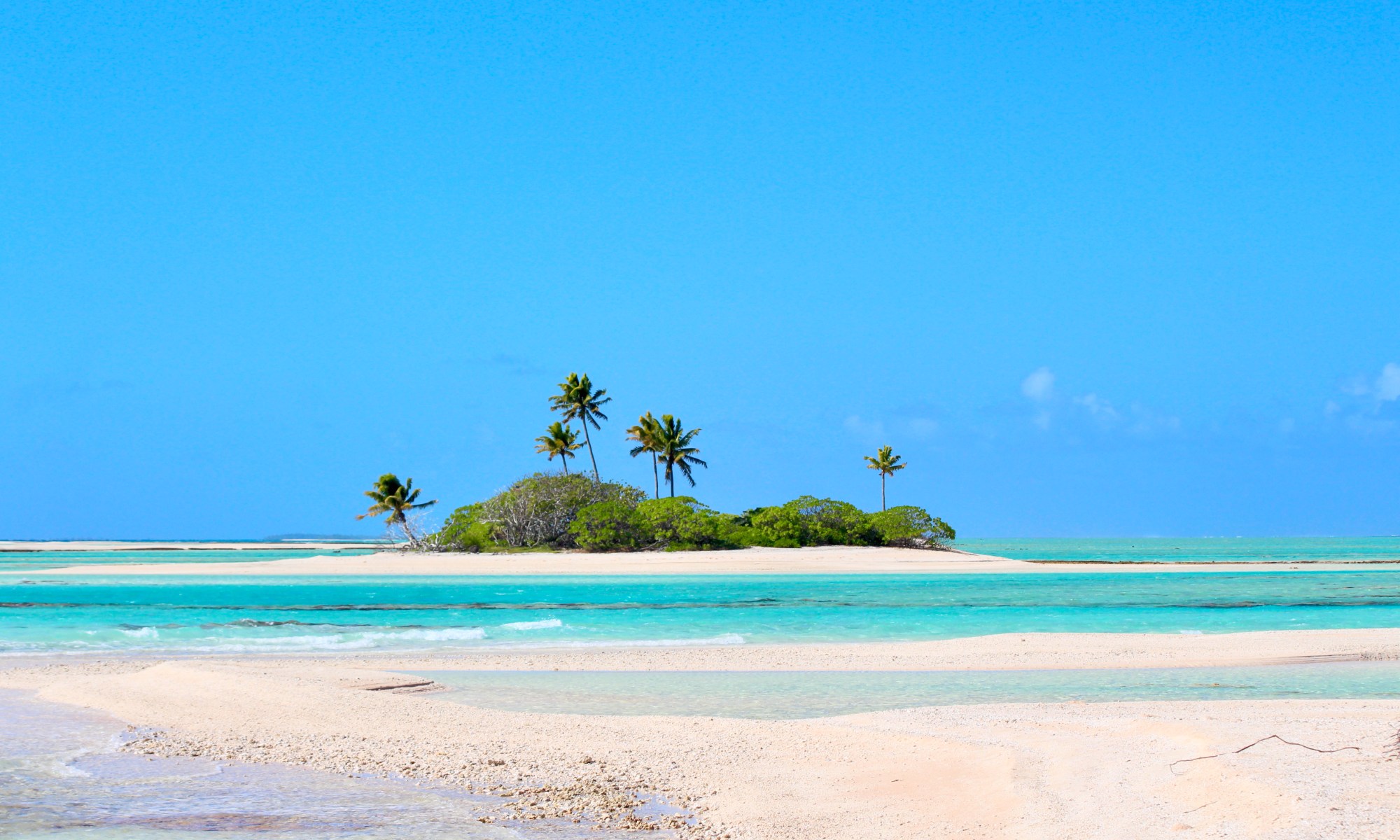
We sailed from the Gambier Islands to our first atoll, Amanu, in early June. Having sailed 500 miles through a continuous sea, it was remarkable to see trees set upon the ocean a mere 5 miles ahead of us. A mid-ocean mirage. Yet there it was, a round ring of coral breaking the surface to provide us protection from the roll of a continuous low swell. As an outer-lying atoll on the southwestern edge of the group, Amanu was a quiet, sparsely populated nook on the edge of an endless sea. In addition to the crab and coconut trees, the fish and manta, a small group of Polynesians lived on this remote mid-ocean outpost. A small village occupied one corner of the atoll, sleepy and slow-paced. We wandered the tidy streets to pass orderly rows of houses, tricycles parked outside property fences and gravestones set inside. We passed a person or two, otherwise the little township held the air of abandonment. The solitude suited us perfectly.
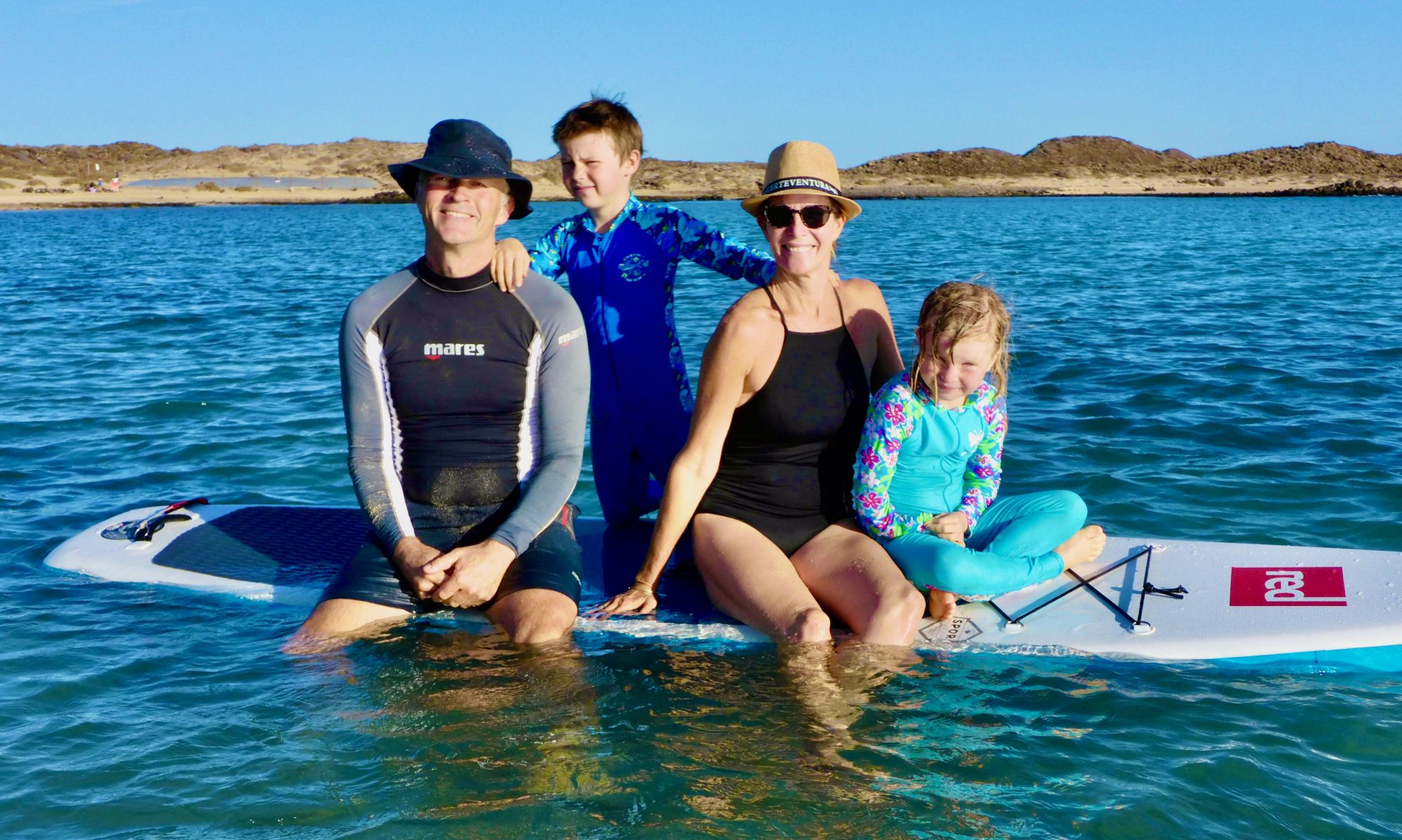
We moved around the inner rim of the atoll, enjoying the peaceful beauty around us. Long rolling waves that’d transited hundred of miles crashed onto the outer reef, washing over to settle like still pond water in the inner lagoon. The tops of palm trees waved gently in the breeze, offering perches for the terns, boobies and frigate birds taking rest and refuge. We walked the shores collecting seashells and made driftwood rafts for our 8-year old pirate and 10-year old brigadier, stick weapons sheathed as they battled for imagined bullion and lost treasure. We snorkelled and enjoyed the colourful bommies surrounded by a healthy population of reef fish and paddle-boarded the drop-off with oceanic manta drifting by below. We built bonfires on the beach out of coconut fronds, pulled down as we dislodged coconuts from their nest above our heads. We enjoyed a slow gin to the slip of the setting sun and gazed up at the fantastic spray of fairy lights sparkling in the complete black that surrounded us as night set in. We were “stranded on a deserted island” with all the conveniences of a well-stocked supply boat, Ātea our all-inclusive Club Med.
Our next few atolls held the same feeling of remote isolation, punctuated by easy company within the small villages tucked into a corner of the lagoon. Amanu, Makemo and Tahanea were all similar in geography as these atolls were further from the more populated Societies. The townships were smaller and the feeling more remote, yet each atoll maintained a distinct uniqueness: Amanu had the feeling of total remoteness, Makemo of aquatic purity, Tahanea of unspoiled beauty.
Tahanea was our golden gem. It is an uninhabited nature reserve, therefore the only resident is feathered, shelled or scaled. The lack of hunting and poaching results in an abundance of wildlife life unfazed by the odd human guest. A few of the uninhabited islets within the lagoon provide hatcheries for three species of booby birds: The red-footed, the brown and the masked booby. To walk through the island to the abrasive warning squawk of a protective parent and the curious eye of a newborn chick is a joy, and the frenzied swarm of the disturbed flock swooping and diving overhead a curious intimidation. Step from the sand to the shallows and you enter another nursery, as foot-long predators swim and skirt around your submerged ankle, the tip of their fin barely breaking the surface. Our timing for Tahanea was very specific: We were there to witness the grouper spawning, and it was this event that we based all our planning around. During the week preceding the full moon in July, the marbled grouper perform their mating ritual: A spiralling whirlpool of fish, rippling currents of metallic colour settling their moulted brown colour alight. This year, however, it wasn’t in July. Nature likes to toss out the unexpected, and despite our well-planned timing the spawning occurred in June this year, a month earlier than predicted. We missed the grouper spawning but, by grace, got to watch red snapper spawn instead in an equally impressive courtship dance. The grouper were still around and in larger-than-normal numbers, but all resting meek and docile on the ocean floor. We came upon a large school of red snapper just inside the pass and followed them for awhile, unaware of the performance that was about to come. Slowly the numbers grew and their swimming pattern became more erratic; rather than one mass, they started grouping and regrouping, circling each other, one chasing another out of the pack. As the school grew and compressed into a tight ball, a female would break out of the group in an ascending dash and a string of suitors would chase tail in a long spiral behind her, a pearlescent flash of colour ripping down their sides in a trance-inducing display. At one point a lemon shark swam through the group, and bold of purpose, the entire school turned on it and chased the aggressive shark away. To hear it I wouldn’t believe it, but that day I watched the many defeat the mighty.
From a brilliant choreographed display of nature, we next sailed for Fakarava to watch the cultural competitions and performances of the Heiva, French Polynesia’s version of the Olympic Games. The Heiva is a month-long festival that honours Polynesian history through song, dance and traditional competitions that occurs every year in July, dating back to 1881 and is the oldest festival in the Pacific region. Fakarava, being the most populated atoll in the Tuamotus, would hold the best example of the Heiva in a more local tradition than the highly popular but overly commercialised displays in Tahiti. And it was so: We joined the week long festivities as both enthusiastic observer and reluctant competitor. We were dragged into participating in the fruit-carrying race, the javelin toss, the coconut husking competition — perhaps we were a bonus in their own entertainment, as we were no equal in any event but was bonding to share in the Heiva and displayed a cultural openness, generosity and hospitality. Fortunately we were not invited to join the Ote`a, a powerful and seductive Polynesian dance that only humiliate any attempt by non-native guests, a shame they spared us. The week was fantastic. While we may not have witnessed the grand staged performances of Tahiti, we participated in a community festival that was inclusive, spirited, and fun, and even walked off with a few cash prizes — a token of support for our participation rather than our achievement.
Fakarava is also home to “the Wall of Shark.” I thought the name a dramatisation, but the description is purely literal: Hundreds of shark, predominately greys, pacing the southern pass in mass. I’ve never in my life seen so many shark in one place, and the thrill of getting in the water with them was a lifetime experience and one I will cherish above most others. With a fearsome reputation for aggression, it was amazing to be side-by-side with so many of them, idle and relaxed. We had local knowledge from cruising friends who’d spent considerable time in French Polynesia so we were able to dive freely amongst the shark, surrounding us in ludicrous numbers. The shark were our total focus during our stay in the South Pass of Fakarava, and we spent as much time as we could diving, snorkelling and swimming amongst them. If I could go back anywhere in the Tuamotus, it would be to return here, to the Wall of Shark, to swim side by side these docile predators.
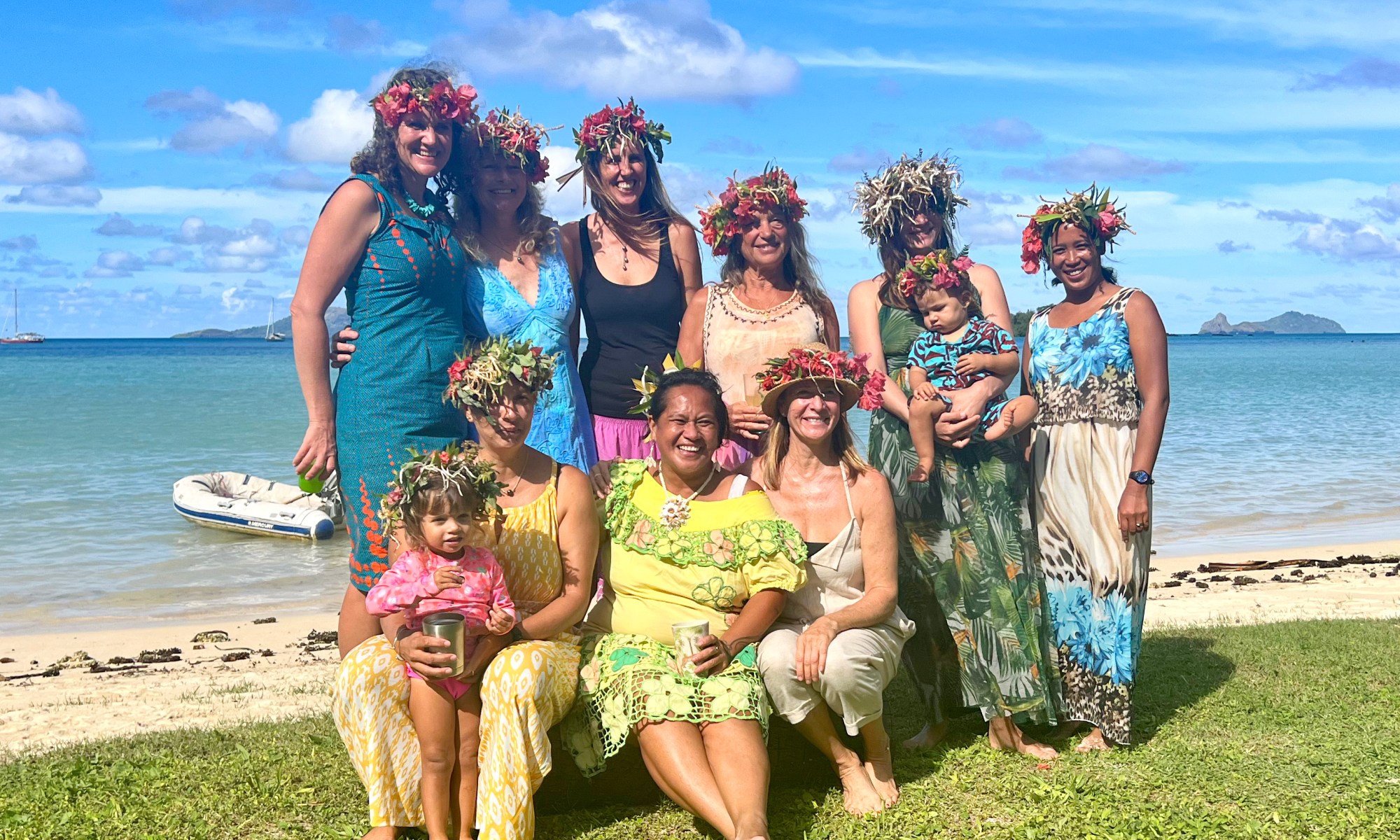
Leaving Tahanea and Fakarava was like pulling teeth; none of us wanted to depart these rich and rewarding central atolls. But mid-season and the Societies lay ahead of us and it was time to weigh anchor and sail west. We enjoyed two short stops at Toau and Apataki and received a very warm welcome at both of them. In Toau we were welcomed by a local family who readily prepared lobster feasts for drop-in visitors, and we found two young bachelors in Apataki who’d laid their stake on a small island for a simpler life than had been on offer in the more westernised and fast-paced Tahiti. Unique to this island was a stone, set just off their homestead, which laid claim to the hopes, dreams and protections of mariners that’d travelled centuries before us. So we dressed up in palm-leaved hats and did our own ceremony for our continued safety and protection at sea, then spent the next several days with our hosts sharing bonfires on the beach, fish from their daily catch, and lobster freely delivered to our boat. While Tahanea was our favourite atoll from a naturalistic perspective and Fakarava from a cultural one, Apataki was our favourite from a humanitarian one. To be so openly accepted, befriended and included with no gain in return is the ultimate human experience. This was our farewell to the Tuamotus.
French Polynesia is remarkable, and the Tuamotus is the pinnacle of its beauty. To be able to explore these atolls from your own vessel offers a freedom that most modes of travel aren’t able to offer. A yacht pulls you from the chaos and delivers you to the calm. It offers the freedom to explore as you choose, where you choose and when you choose. It allows you access to places less traveled, less exploited, less trampled and offers solitude, beauty and nature’s bounty.
To return to the Pacific after spending time in different oceans and all the experiences that came with it, to see the Pacific as a sailor’s Mecca is a telling statement. I thought of the Pacific as an ending, but having just passed through French Polynesia I look back on it as an opening. I am reminded of all the beauty of this great ocean holds: The atolls are unique and isolated, and nature is allowed to bloom, to flourish, and to prosper. The passes are laid with expansive stretches of multi-coloured carpet, filled with large schools of fish and a healthy population of shark, whale, ray, pelagic and reef dwellers. Humpback spray their steamy breath into the air, manta glide past with graceful wings spread wide and the occasional whale shark sidles in for a curious peak. Each a treasure of nature, each representatives of an ecosystem un-depleted yet beseeching us as guardians of this earth to take care, to protect. If there is any place that best sets this example, it is the richness and diversity of the Pacific Ocean.
 Atea
Atea 