Link to published article: Cruising the Pacific Islands of Panama
Hamilton, New Zealand’s largest inland city, comes up short on creativity when choosing its town slogan, “Hamilton: More than You Expect!” It’s like laying a wet rag on a destination. Rather than boasting great claims to harbouring the country’s most pristine landscapes or its greatest historical landmarks, Hamilton’s “more than you expect” leaves a prospective visitor with very little to draw them in. We adopted Hamilton’s slogan for our time in Panama—a country which already holds a reputation for offering a lot. It offers the San Blas islands, home to one of the world’s most intact ancient cultures and it offers the Panama Canal, one of the Seven Wonder’s of the Modern World. My expectations were already sky high when arriving in country to see these famous sites myself. Panama, more than you expect… what “more” could there possibly be?
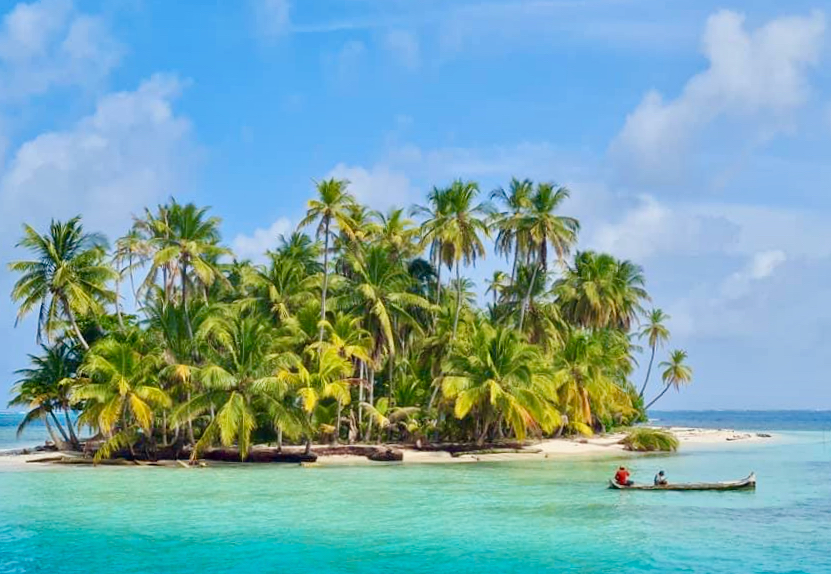
The San Blas islands had long been on my A-list of destinations. Who wouldn’t get that excited jittery buzz from the thought of transiting the Panama Canal? Cruisers we’d spoken to who had made the passage from the Atlantic to the Pacific all rated the canal as one of their top maritime experiences, and I was about to follow in their footsteps. We spent the majority of our time in the Caribbean, travelling up the coast from southeast to northwest through the San Blas islands. We soaked up the tropical sun on palm-fringed white sand cays, bought intricately-stitched molas from traditionally-dressed women with nose piercings and facial tattoos and traded for hand-lined fish caught by men in basic wooden canoes. Bellies full and molas stowed, we left the Caribbean Sea and passed through a succession of five locks spread across the Gatun Lake to pop out on the Pacific Ocean, the famous seventh wonder ticked off our list. When the last lock opened its gate and spat us out into Pacific waters, we felt our tour of Panama was complete. All we had left was to prep and provision for French Polynesia and we’d be on our way.
This was when I realised my naivety. Of expectations, mine had been firmly set: Panama was San Blas and the Canal. Nothing else registered. No one in the cruising circuit talked about the country in any other terms, so it was with great surprise that we discovered the sweet rewards that awaited us on Panama’s west coast. Names started to crop up: Tobago, Las Perlas, Coiba, Las Secas, not to mention Panama City itself. We were chanting, “Panama: More than You Expect” with each new place that cropped up. I had missed the obvious. Panama has a rich and fascinating history and a diverse and vibrant present that spans both sides of the country. I had blindly missed the fact that there was still so much left to see.
We wouldn’t be looking at weather and we wouldn’t be stocking up on food for the boat. As soon as the obvious dawned on me, we shot out of the anchorage and headed out to explore. Our first stop was Tobago, a small island five miles from Panama City and historically a holiday destination for those in need of a weekend respite from the bustle of the big city. During the French and American canal years, foreign diplomats and expatriates would take a short ferry ride over to enjoy the clean water, white sand beaches and relaxed island vibe. It felt only suitable that we would follow this historical flow to Tobago to enjoy the same pleasures as all those that had gone before us. The small town reminded me of a sleepy Portuguese seaside village, as quaint as it is quiet. Christian shrines line doorways, curb-sides, backend alleyways, beaches and rocky outcrops in numbers to match the island’s resident population, denoting an island for the pious. A walk through town takes you up winding dirt tracks to views across the sea to Panama City’s dramatic skyline. A walk in the other direction takes you to a small sand-spit crowded with beach umbrellas and stalls selling rum-filled pineapples and spiked coconut concoctions. We enjoyed the quiet, relaxed isolation offered midweek. The serene atmosphere was obliterated on weekends when Tobago is transformed into a pumping party zone to rival Miami Beach on Cinco de Mayo, the statues of sainthood all but forgotten.
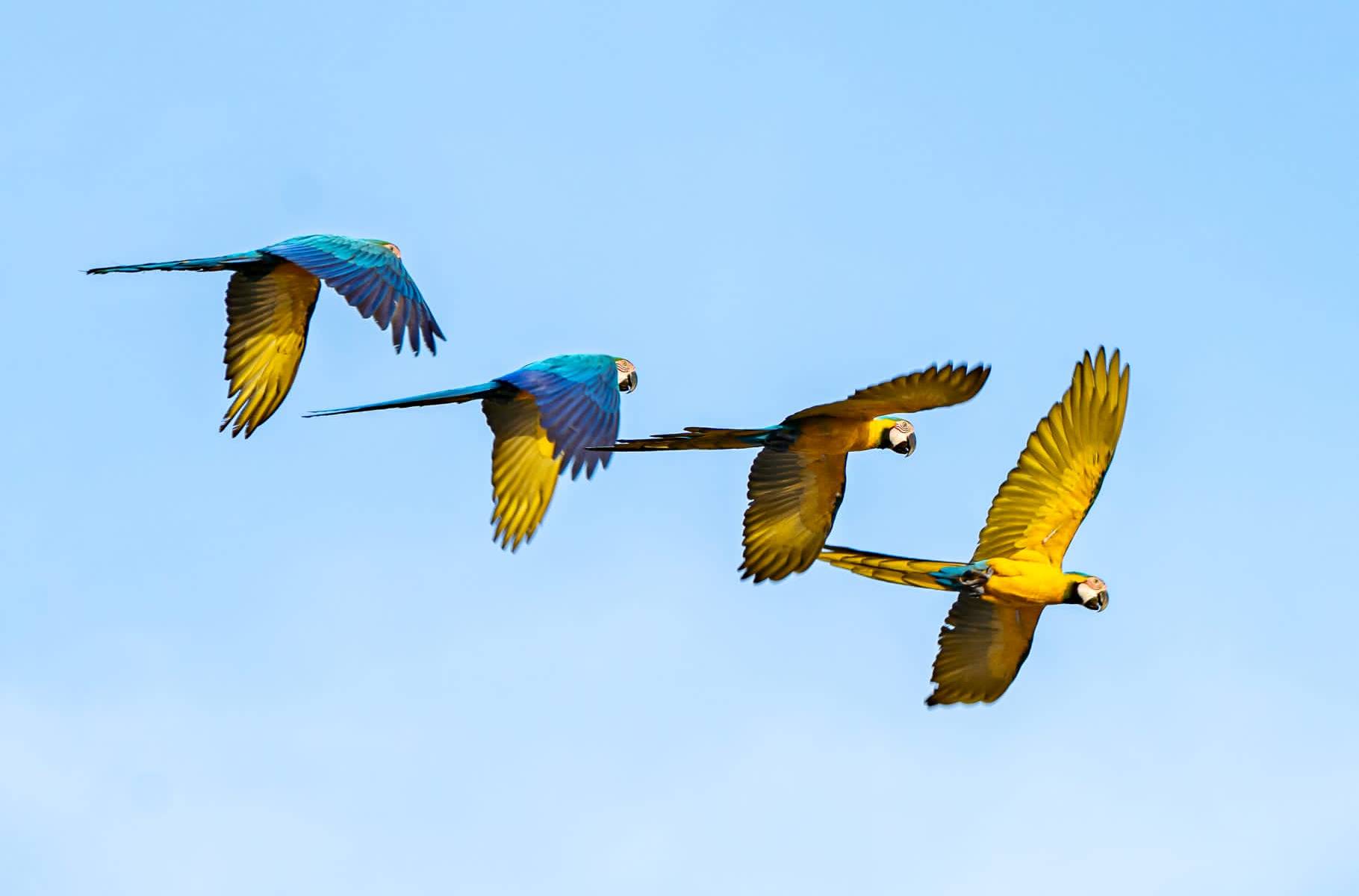
The cacophony of competing ghetto blasters, the moving mass of beach bums and the endless battle for a place in line for a rum cocktail were enough to turn us toward quieter anchorages. We sailed for Las Perlas, a collection of 200 predominately uninhabited islands located fifty miles south from Panama City in the Gulf of Panama. The distance brought us into a completely different side of Panama: Remote, isolated and pristine — weekends included. Rather than the palm-fringed white sand beaches on the Caribbean side, the islands off Panama’s Pacific coast are covered in dense jungle that crowded a shoreline of black sand beaches that offered an unparalleled rugged, wild beauty. As stunning the natural beauty was, there was nothing more splendid than sailing through the boiling water created by a frenzy of mobular rays with a sky full of swooping seabirds overhead. As we dropped anchor, a juvenile whale shark swam under our bowsprit and moments later we were in the water swimming alongside this gentle giant, the most memorable welcome to the beautiful Pearl Islands. We’d come at the right time as the bloom of plankton that filled our bay brought with it the animals that fed off them: Humpback whales, whale shark and rays. We spent our days in the water surrounded by large schools of mobula and cownose rays and the solitary whale shark or humpback that swam with them, our bodies wrapped up in the middle of their feeding frenzy, their dizzying speed and aerodynamic displays an amazing force to behold. When we finally turned our attention away from the sea we were spoiled by an equal beauty ashore. A copse of dead trees nestled into the dense jungle that lined the beachfront provided a perfect nook for a large flock of resident macaws. Their bright red, yellow and blue feathers were a stunning shock of colour against the bleached wood they were perched atop. Below, the beach was blackened by a thick cluster of cormorants, with no one other than ourselves to witness the amazing wildlife that surrounded us both on land and at sea. These islands were, without a doubt, true to their name: The Pearl of Panama.
It was near impossible to pull ourselves away from our secluded oasis and our indulgent self-sought isolation, but a cruising boat is always on a timeframe and it was time to un-velcro ourselves from the soft fuzzy hold that so effortlessly held us. We set our sights on our our next destination: Coiba Island, the largest island in Central America. Coiba fascinated us with its dark history. It had been a penal colony, akin to America’s Alcatraz or South Africa’s Robin Island, where the hardest criminals were vanquished between 1919 to 2004; a place of such harsh conditions that the guards of the time locked themselves in at night to keep themselves safe, rather than the other way around. Prior to that, the island’s last known inhabitants had been removed in the 1500s, leaving the island completely untouched by human interference for 700 years. Coiba is now an uninhabited marine reserve, having been declared a UNESCO World Heritage Site in 2005. With a scatter of buildings left to ruin and access to the island limited, the island and the ecosystem within and surrounding it holds some of the greatest biological diversity in the world. Going ashore is off-limits to visitors so we spent our time exploring its impressive biodiversity at depth. The coral reef is the second-largest in the eastern Pacific and supports a rich underwater biodiversity, and our dives brought us in close proximity to white-tip and hammerhead shark, eagle and devil rays, turtles and schools of jack, snapper and the illusive merlin. Coiba is the Galapagos of Central America’s underwater world and, true to reputation, has the best diving that Panama has to offer.
We continued north of Coiba to the small archipelago of Islas Secas with the best intentions of continuing our exploration of the Gulf of Chiriquí’s rich marine environment, but we were drawn to the raw, untouched natural beauty above sea instead. Of the 14 volcanic islands that make up this small island group, only one has been turned into a luxury 24-guest eco-adventure resort. Other than this single development, this small cluster of islands have been left uninhabited for over 600 years, allowing for the preservation of some of the most pristine conditions both ashore and under water. We stayed clear of the exclusive resort and visited a few of the smaller islets, enjoying the complete solitude. The soft rustle of dense, green bush and slow lap of rolling water was the only outside sound in our small universe, other than the occasional rumble of a passing fishing boat. Outside this periodic and distant disruption, the tranquility inside this serene, remote setting was absolute. We matched the pace of our days to nature’s slow, gentle melody and enjoyed the feeling that Las Secas was ours, and ours alone.
As we wound up our cruise through Panama’s Pacific islands, we grasped how extraordinary this corner of the world truly was. The adventures we’d had far surpassed our ability to count them on our collective fingers and toes and with each new island our chant, “Panama: More than you Expect“ grew louder and more earnest. Our time in country was closing down and we decided to pull out of our isolation and serenity to head for chaos and noise. We needed to move for practical reasons, such as provisioning and clearance, as well as for personal reasons and there was nowhere in Central America better suited to this than the bustle of Panama City.
Panama City was a relatively low-key central hub until the early 2000s when a development boom started transforming the older colonial homes into larger multi-story houses and high-rise condominiums. Trouble in the Middle East and strain on shipping through the Suez Canal led to an increased demand on the Panama Canal and port facilities in Balboa. As a result of the influx of shipping and trade and the resulting multibillion dollar expansion of the Canal, development boomed and the city expanded into what it is today: A vibrant “two-in-one” city that offers a perfect blend of quaint-old and glittery-new. Depending on where you are in the city, it can feel like you are either standing in the centre of a mini-Dubai or looking down the tunnel of time at a centuries-old seaside fishing village. The financial district, or Area Bancária, is built-up and gleaming, with skyscrapers crowding the skyline and the billowing puff and honk of a thousand cars jammed into a square-mile block. The area is filled with modern office towers and banks, high-end hotels, fancy restaurants and name-brand retail stores. Casco Viejo, on the other hand, is located in the historic district and offers a quaint pedestrian-only area filled with winding cobblestone streets flanked by 1600’s buildings-turned-trinket shops. Throughout the old quarter are sprawling plazas surrounded by numerous museums and churches, open to tourist throughout the day. We spent time wandering around the streets of the historic district, enjoying the bustle of activity. We spent hours getting history lessons on the building of the Panama Canal, of life during the Spanish colonial period, the impact of gold and the impact of money to the region. We spent our evenings in less educational but equally valuable ways, sipping margaritas on barstools in draughty rooftop bars and eating some of the the juiciest carne asada from the best restaurants in the city. We filled our time dancing between the new and the old, our days a flurry of activity that was juxtaposed to our relaxed Gulf of Chiriquí experience.
When reflecting on our Panamanian battlecry, there is no way I could have prepared myself for the amount of “more” we got. I assume many cruisers are like us, making the erroneous assumption that Panama is no more than a direct route from the Atlantic to the Pacific, a conduit for the adventure in one ocean to the adventure that lay ahead in the next. What I hadn’t expected was that the Pacific side of Panama is a rich destination in itself. The two sides of the country are dramatically different from each other, yet equally rewarding. When I reflect on our time in Panama, one word sums it up perfectly: More. San Blas is more, the Canal is more, and the Pacific side is far, far more. I’m not sure when the Hamilton theme popped into my head but the more we saw, the more “more than you expect” held true.
 Atea
Atea 