Final Boarding Call for Flight 680

Link to published article: Underwater Oasis

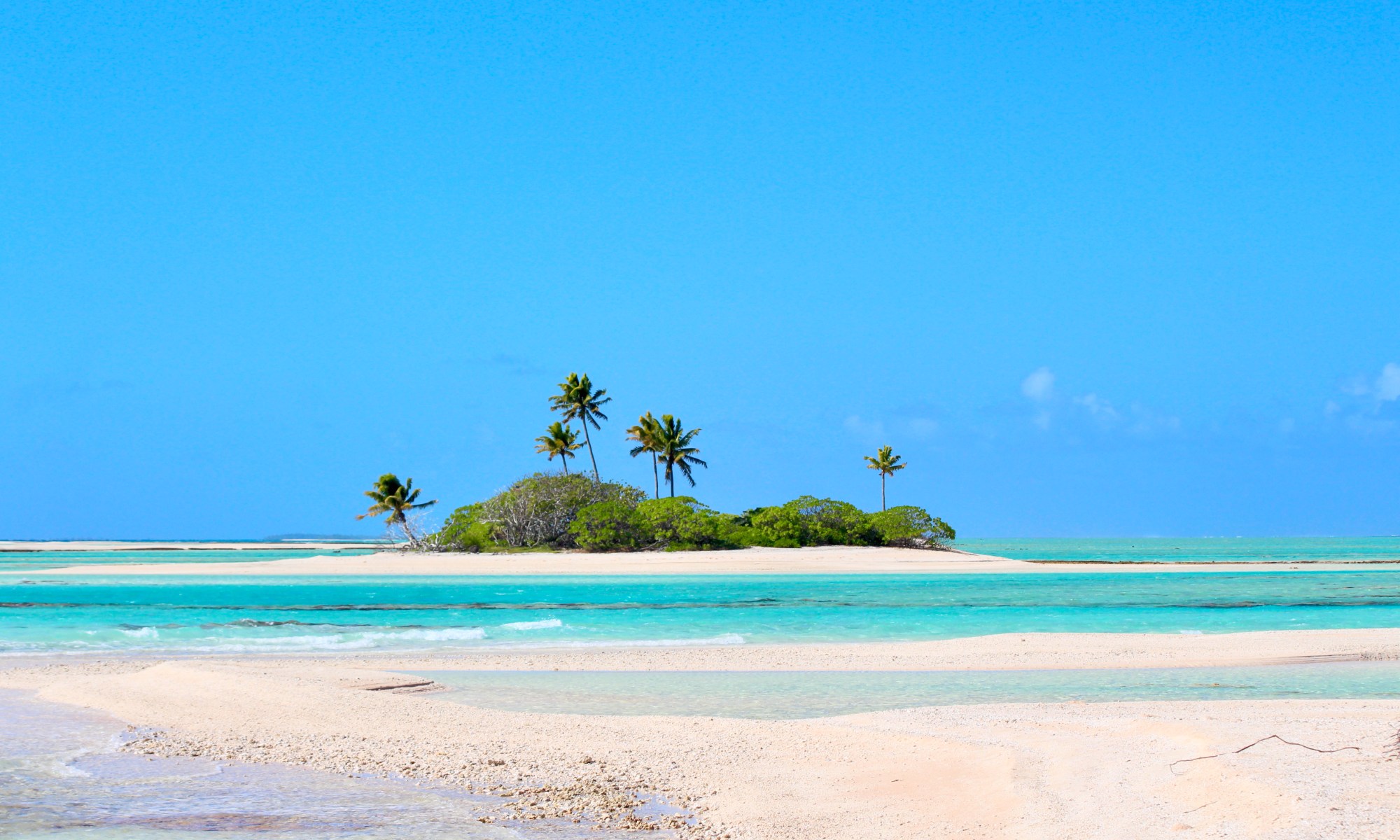
“Ladies and gentlemen, this is your captain speaking. We have begun our descent. For your safety and the safety of those around you, please remain seated with your seatbelt fastened until we are parked at the gate.” The excitement was mounting. We were bound for a mid-Pacific holiday typical of most sun-seekers, with little on the agenda but to dip our toes in crystal-clear water and watch a dusky sun set on an aquatic horizon, rum punch in hand, and we were almost there.

There was one problem: Our destination was entirely submerged under a foot of water. There would be no shimmering black tarmac to provide safe landing or receiving gate for our pilot to taxi up to. There were no baggage handlers to reunite us with our possessions nor steward to wish us on our merry way. To get to our chosen holiday spot, a plane wouldn’t cut it as our mode of transportation. There was only one way in and one way out, and that was by sea. I would have to be pilot, crew and passenger combined to reach my port of call.

Regardless of these obstacles, I was determined to get there. Very few patches of submerged land hold the reputation of Minerva Reef. For South Pacific cruisers, it is the perfect break in a 1,200 mile passage between New Zealand and Tonga. The novelty of setting anchor in the middle of the ocean and watching the seas roll by as your boat remains in a fixed position was something I wanted to experience. There wouldn’t be anything to do but rest and relax in a still pond inside a rolling sea. A day or two would be all we would need before continuing the voyage onward, or so I believed.

Minerva Reef is the modern day Atlantis, if you stretch the facts a little. Its history could almost be the script for Timaeu, if it wasn’t for the fact that Plato’s dialogues occurred over 2,000 years before the events that unfolded on Minerva to draw the parallel. Cut to 1972 and bring forward the libertarian character, Michael Oliver, an American millionaire who decided that Minerva was the perfect location to establish his own sovereign nation. Following Socrates’ ideals, Oliver wanted to create an ideologically structured society, though this could arguably sit within the framework of a self-serving ideology. There was, however, a small kink in his plan. Laws relating to disputed territories state that land cannot be claimed unless it is a foot above sea level at high tide; this was not the case for either North or South Minerva. To claim it, he would have to build it.

The plan Oliver devised was bold. He would take the six-mile wide atoll, dredge its neighbour and fill the inner lagoon until a flat pan of land arose from the sea. A flag was erected, a president elected and money for the Republic of Minvera coined. King Taufa’ahau Tupou IV, Tonga’s monarch at the time, had no interest in forfeiting their access to a territory that had been established fishing grounds for generations. The problem was, Tonga had never laid a claim to it and therefore had no legal rights. Until this point, Minerva was not on the main trade routes and the prevailing winds were unpredictable. The only traffic the atolls received were the unfortunate ships that got blown off course by storms. In fact, it is only due to the reliability of GPS that mariners have recently made Minerva a destination of choice rather than one of disaster. The scattered metal bones of deceased ships are reminders of the hazards of these submerged atolls. Prior to laying a claim, no one had interest in laying a claim. Within five months of its creation, King Taufa’ahau Tupou IV dispatched 90 prisoners to tear down all man-made structures and disperse its 42 inhabitants. The Republic was no more.

All efforts to raise the atoll from the sea only resulted in its ultimate return to the sea. It was the destruction of Atlantis, or so it appeared. One peek below the surface and it is evident that the fabled lost city exists. The termination of human habitation on the atoll is exactly what saved it. As a result of ending life above the water, life below the surface was allowed to flourish. Thick walls of hard coral protect a soft limestone core, and the graceful, swaying arms of soft coral reach up towards the light cast down from above. Swirling and dancing around these graceful technicolored tentacles is the seemingly endless gridlock of marine life that surrounds them: Crustaceans, osteichthyes, selachimorpha and testudines, each resident and migratory group as Greek-sounding as the Grecian fable itself.

When the opportunity came for us to sail to Minerva, we chose Plato’s version of Atlantis over Oliver’s Republic: Rather than raising the land to create a village above the sea, we chose to drop down into a city beneath the surface. We shared the reef with six other cruisers, all of us running around filling our days with aquatic activity and our nights in shared stories and laughter. What would we do the following day? The options were plentiful. Should we stay in our current spot close to the pass so we could dive at dawn and avoid a longer dingy ride to the outer reef? Should we move across the lagoon to the navigation light erected by the Tongan navy to claim Minerva as their own, demolished in 2010 by the Fijian navy, repaired by the Tongan navy and destroyed again by the Fiji navy in 2011 to be replaced by Tonga to reassert claim to the atoll one more. The ping pong between the two countries is dizzying, but the dispute has done no more harm to the island than the defamation of a single steel structure. Should we move to the northeast corner of the lagoon where the rusted wrecks of past ships provide a sanctuary for the lobster that hide within them, and rich hunting grounds for us? A meal as easy to pluck as a tin off the grocery shelf; dinner would be a feast that night. The entire lagoon was a relatively flat plateau of fine, white sand at a depth of 10-20 meters which provided good holding for yachts throughout. We moved because of wind or desire, changing our location to suit the activities of the day. Prior to our visit, I assumed an indistinctive sameness of Minerva, a featureless place where the only change to our scene would be reflected in the movement of the arms of our clock and the transit of the sun around the earth. None in the group expected more than a short stop that, at most, provided a quiet mid-ocean reprieve to store up on sleep before resuming our passage. This notion couldn’t have been further from the truth.

When I imagined my pitstop in Minerva, I expected a silent, remote beauty above water. I didn’t expect to be so exhilarated and consumed by all the splendour beneath. All I wanted of my time in Minerva was to slip below the surface and watch the throng of finned and gilled tenants race by me, caught up in their own slipstream of hyperactivity.  This aquatic metropolis was more densely-populated and multifarious than Tokyo or Mumbai combined. Pacing the walls with us was a heathy population of shark: Grey, lemon, whitetip and even the fear-inducing tiger. Turtles rose to the surface for a breath of air as we descended down the reef, a small shoal of squid performing synchronised movements an arms-length away and octopus cautiously receding into their holes as we poked our heads into cracks in the reef. Leave us on Atlantis much longer, and we’d sprout our own gills.

When we needed a rest from diving the outer reef, we’d pop the tanks off and snorkel around the inner lagoon. The scattered metal ribcages of wrecks provide hides-holes for resting reef shark, crammed nose-to-tail in an effort to seek a coveted spot in their own mini-sanctuary. When the tide pulled out, we had the opportunity to go for a walk on the top of the reef, a two-hour window to put foot on land. We would send relaxed schools of brightly-coloured parrotfish lying side-up in small pockets of inch-deep pools into a flurry of panic, franticly peddling fins sending them into bumping disorganised chaos as they swam furiously in sideways circles. The gaping mouths of giant clam would snap their hinged shell shut, sucking in their vibrant blue, green, purple and orange lips as we cast our shadows down on their rocky holding. In the distance, the small black tip of a fin would zip erratically through the surface of the water, the juvenile shark it belonged to hunting in the tidal traps. Occasionally, we would catch sight of the tip of an olive-green flipper or the flip of a charcoal fin as turtle or ray bolted from lagoon to deep water. Even on an exposed, barren surface, Minerva was teaming with life.

Our short layover quickly turned into an impromptu settlement, the modern-day version of Oliver’s ocean community finally realised amongst mariners. The atoll is completely uninhabited without any formal jurisdiction or official process to follow, so entry to Minerva is as simple as showing up. There are no immigration or customs officials on site, so there is no one to issue a visa or dictate the number of days you can stay. You choose, or the weather will choose for you. As the reef is submerged or exposed depending on the tide, your comfort ebbs and flows with the change in this cycle. In calm weather, high tide becomes a gentle, swaying roll. Sit inside Minerva in a storm, however, and you’ll be holding onto handrails to keep yourself upright. That said, holding tight in this isolated landing may be preferable to taking a beating under sail, so mind the weather and tuck in before the storm hits and Minerva stands up to its reputation as a mid-ocean haven.

As the weeks rolled on, recognition of an error in planning hit all of us in staggered waves: We’d provisioned for a fast passage rather than a long holiday. Had I known, I would have hit Costco with a thousand dollars in my pocket and spent it all on food. Now that rations were running low, I was kicking myself. Why leave if not forced, and the only thing forcing us were cupboards that were thinning out. Begrudgingly, it was time to roll out. We did so with our heads turned backwards, looking towards nothing but an open ocean with a few bobbing masts marking the spot of the vibrant wonderland we were leaving behind.

I could never imagine someone pitching the idea of heading to such a remote location to spend my hard-won holiday time. “This this the final boarding call for Flight 680 to Nowhere. Please proceed to Gate 23.” Yet after several weeks on a submerged atoll I can think of few places that I rank as highly. There are a few qualifiers, however, for anyone looking to do the same: You have to like boats, as there is no other way to get there; you have to like water, as it will surround you for the duration of your stay; and you have to like wet, as all the magic of Minerva lays under the surface. I’d heard from so many other cruisers that I should drop into Minerva on the way past, but no one told me to pack my bags and stay awhile. Let me change the rhetoric. If you are transiting an ocean and a submerged atoll lays in your path, take this advice: Stop, and Stay.

“Good morning ladies and gentlemen. On behalf of myself and the flight crew, I would like to welcome you aboard Navis Ōceanus flight 680 bound for Minerva Reef. It will be a bumpy ride and a bumpier landing, so please fasten your seatbelt at this time and secure all baggage underneath your seat or in the overhead compartment. I hope you enjoy your flight.” While your flight attendant can’t guarantee an enjoyable in-transit experience, one thing I can promise: You will love your destination.

A World of Wonder

Link to published article: Cruising French Polynesia

That I have more than a sentence to say about the Society Islands speaks of how plans are so easily discarded. Our intention for French Polynesia this year was to pass on the known for the unknown. Having been to the Marquesas and the Society Islands in previous seasons, we would spend our time in the Gambier Islands and the Tuamotus. It was a solid plan that suited our desire to explore new places. Solid, that is, until we changed our plan.

Having spent the majority of the season exploring eastern French Polynesia, we sailed into Tahiti for our final week in country. Our time as tourists went by in an endless blur of landmarks, sightseeing, organised tours, choreographed dancers and a constant flow of fruity cocktails. It was very different than our typical slow-paced cruising lifestyle, but we’d been here before and were keen to pack it in and push out. Burnt out from the fast-paced tourist mode, we sailed across to Tahiti’s sister island to slow down the pace. Moorea’s beauty captured and held us — far longer than we intended. Perhaps it was the company. As we sailed the short distance between the two islands, we watched the slow crest and spout of humpback whales making their own inter-island transit. We sailed alongside two large whales for awhile until they dove in union to break surface on the other side of our yacht. To be in their proximity was a rush, and I knew a few days in their company wouldn’t be enough to satisfy me. Our intended short stay turned into four adventure-packed weeks.

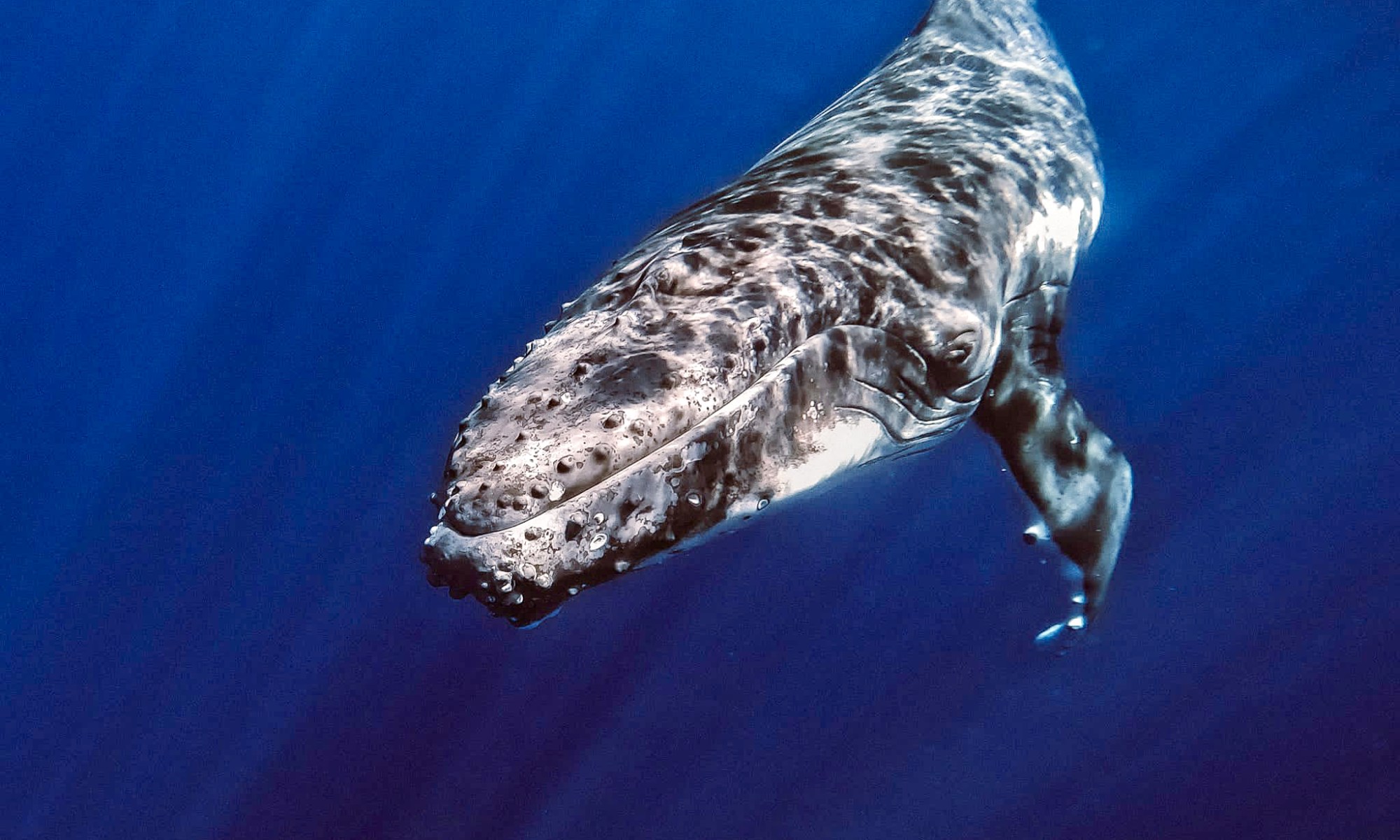
There is a small picturesque anchorage just inside the inner lagoon of Moorea’s second largest inlet, ‘Ōpūnohu Bay. With our anchor set in pure white sand and our boat bobbing in shallow water, we were only a short swim to a shaded local beach with the mountainous peaks of Moorea’s lush interior as our backdrop. We were in a place of tranquil beauty. It was humpback season and we spent our days watching their movements from the anchorage. The bay provided a safe haven from natural predators and a mother and calf pair were regularly playing nearby, rolling and tale-slapping in a frisky, playful display. Having watched them from above the surface, I couldn’t miss the opportunity to see them below the surface as well. Joining a whale tour allowed me that opportunity, and swimming alongside these gentle giants was an unforgettable experience. Having learned the safety guidelines from the tour guides, we continued to swim with them in the weeks that followed by taking our own dinghy out and abiding by the rules. The experience of interacting with them in the water and watching their movements up close provided us some of our best wildlife encounters. Diving to whale song completed the euphoric experience.

There was more to our time in Moorea than whales, though they did dominate our attention. We visited a rum distillery and a fruit packaging plant, hiked high peaks for areal views of the island, swam with timid sharks and curious rays who circled our feet in wait for the next tourist to feed them. We snorkelled the inner lagoon and found submerged tikis, set out in commemoration to earlier times when missionaries banned Polynesian custom, worship and gods, and Tahitians responded by hiding these sacred stone symbols in the sea for safekeeping. In the evenings, we rafted our dinghy’s up behind a yacht set up with microphone, speaker system and lead singer to belt out a melodic farewell to another day in paradise, Hinano in hand. Moorea was a wildlife wonderland, a scenic beauty, a cultural education and a social extravaganza. Weeks could have turned into months, but we still had half an ocean to cross before the end of the season.

Reluctantly, we weighed anchor and sailed west toward Huahine, Raiatea, and Taha’a, guided by more whales as we entered Huahine’s tranquil inner lagoon. Once inside, spent relaxed days playing on the beach, sailing small dinghies, snorkelling the reef, paddle-boarding over calm crystal waters and enjoying sunset cocktails at happy-hour prices. We visited pearl farms in Raiatea to purchase pearlescent sea orbs, visited the stone structures of Taputapuātea and drove our dinghy deep upriver into the lush interior. In Taha’a, we snorkelled a fabulous coral garden with winding alleys of hard and soft corals, densely populated by brightly coloured fish and snuck into an opulent $2500-a-night luxury hotel to sip bright blue cocktails to pink-hued sunsets. These last few islands seemed a proper send-off to a full French Polynesian experience. We would make a quick stop in Maupiti and Maupiha’a and then, finally, be on our way.

Again, our plan was misinformed and our expected timeframe of little consequence. We didn’t know at the time that our two favourite islands lay ahead of us. A few days, once again, would pass quickly into weeks. Maupiti and Maupiha’a sit on the western edge of the French Polynesian archipelago and are often bypassed because of their difficult pass entrances. Having spent months in the Tuamotus where entry into the various atolls is precisely timed by the outgoing tide, having this to consider wasn’t new to us. However, having successfully entered Maupiti and Maupiha’a, I can say the eastern atolls don’t light a match to the intensity of these western island passes. Maupiti is famous for being narrow and rough since it faces the prevailing wind and waves. It can be impassable for weeks at a time. Maupiha’a is sheltered, but the pass is a very narrow 50-meter ebbing tide that never stops. Once committed, there is no turning back. One requires a steady nerve and the other requires a steady engine, but once in, you’ve found safe haven in some of the most beautiful, non-assuming islands where the hospitality of the isolated community is a outpouring as the tide.

Once inside Maupiti, the eye is drawn up toward its magnificent central cone peak. As the westernmost volcanic island in the archipelago, it is a smaller version of Bora Bora without the tourists or the price tag. The true gift of Maupiti, however, is found hovering below the surface of the water rather than looming over it: The oceanic manta ray. After spending time in the village, we moved out to a shallow sand patch near the pass entrance to find a manta cleaning station — a large rock swarming with small wrasse that clean the parasites off the manta as they hover close by. Having discovered how easy it was to find them, I quickly established a morning routine that included a morning coffee and a swim with these agile giants in solitude before the tourist-filled local boats descended on the spot. By mid-morning they would swim off to other parts of the lagoon, but every dawn they would return to receive their symbiotic salon treatment, both of our rituals resumed.

The manta were a powerful magnet for me, however it was time to push on as we had been tasked with delivering fresh supplies to family living on the next stop on our itinerary. The atolls at the furthest western reaches of French Polynesia don’t receive a regular supply boat. In fact, Maupiha’a receives one every two years when the quota of copra from the island’s eight inhabitants has been filled, an impressive 50 tons of dried coconut meat. As such, the island is a prime example of complete self-sufficiency. We met one of the island’s long-term residents, Pierre — a single man with a split flipflop — at our first anchorage. I dug up a spare pair, however he declined the offer and opted for a soggy mismatch that had drifted in on the tide. The next time we met him he offered us a coconut crab caught earlier that day for our evening meal, and from that day forward Pierre became our constant companion. He fed us coconut crab, reef fish, tern eggs and freshly-grated coconut and an endless supply of fresh coconut water to fill our bellies. Within no time, Pierre had taught us essential island survival skills: We could shave the inside of a coconut to make milk, collect bird eggs for breakfast, capture coconut crabs for dinner and hook a fish with a rusty wire. In exchange, we topped him up on an endless supply of mayonnaise and coffee. Having hosted many yachties but never been on a yacht, we took Pierre sailing across the lagoon to explored the outer cays and bird hatcheries together, learning how to test the viability of an egg by cracking a few onto the ground to see its stage in development. If there were no foetus in the initial test, all the eggs in the hatchery were ready to be consumed.

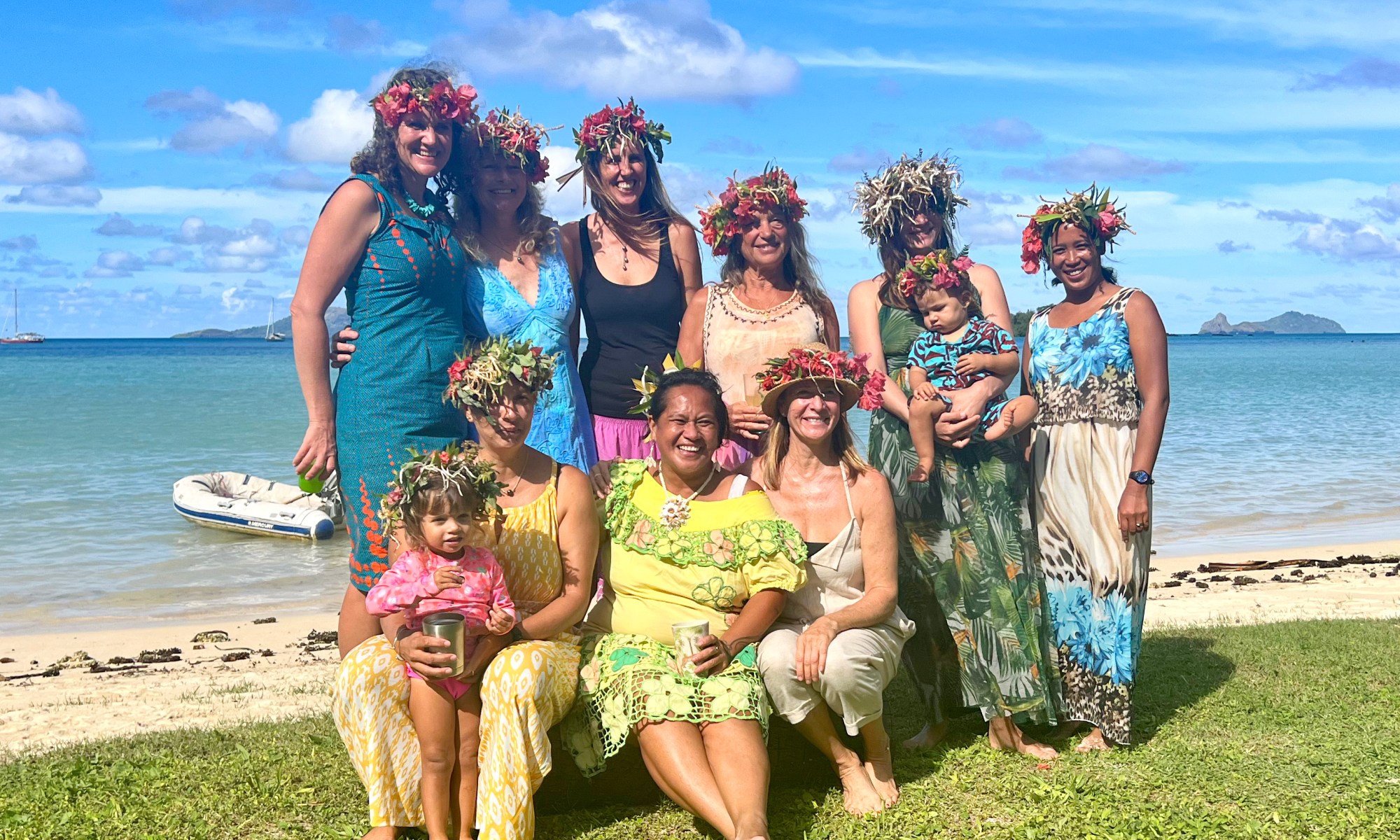
As the winds changed and made the other side of the atoll more comfortable, we said goodbye to our generous host and relocated to the other side of the atoll. Pierre’s hospitality was immediately matched by our new hostesses. We arrived to barking dogs, quacking ducks, grunting pigs and the offer of fresh fish from the mother and daughter who lived there. Once again, this kindly offer sealed a friendship and we enjoyed shared meals of fresh-caught fish, coconut crab, giant clam, green coconuts, chocolate cake. The laughter was hearty and the mood cheery, but I couldn’t help but feel we imposed on their time and generosity. A considerable amount of effort had been put forth at no cost to us, other than the reciprocal sharing of resources. In exchange for fuel and oil, Karina and Adrienne taught us how to rely on nature to survive. They took us to the smaller islets to walk among tern hatchlings perched in their nests, scavenge little brown-spotted eggs scattered in the sand and showed us how to hunt fierce coconut crab without loosing a digit. Having observed the mass graveyards of giant clams throughout the Atlantic and Pacific islands but never seen them being scavenged, Karina taught us how to pry the shell from the rock. I jammed a rod through the centre of a mollusc, damaging the foot to release its solid grip in the rock. I did this once for the experience but had no interest in removing any more of these beautiful creatures from the ocean. When Karina was done, I was quietly heartbroken to count forty lying at the bottom of the plastic tub, waiting to be served at the evening feast.

We passed our days in the generous and engaging company of Maupihaa’s tiny community. The eight inhabitants were spread out around the atoll, living an existence that is as isolated as it gets. The wreckage of the Seeadler, a WWI German sailing warship that grounded on the outer pass 100 years ago, is a reminder of this isolation. Snorkelling the scattered remains of the ship resting in 5 meters outside the pass, it is feasible to understand how the stranded crew were able to survive for months on this tiny atoll with the assistance of the three inhabitants that lived on the island at the time. To see its rusty bones scattered across the seafloor is a remarkable tribute to the fortitude and determination of the 111 sailors and the ingenuity and generosity of their local hosts who helped them survive on this mid-ocean oasis.

Departing Maupiha’a was our farewell to French Polynesia. Our aim had been to focus on areas we’d not previously explored, however revisiting previous destinations was just as rewarding, like an unexpected reunion with an old friend. Certainly, the welcome we received created an instant connection that is rare to receive amongst strangers. Perhaps it is the reason roughly 80 yachts visit Maupiha’a each season, bringing provisions from other islands when they come. In exchange, cruisers get to enjoy being a part of an established tradition of welcoming passing visitors with open arms. While no money is asked for, few take without reciprocating so the underlying dynamic is one of sharing what you have and accepting what is offered. Maupiha’a is the world’s best example of this genuine generosity. It is classic mid-western hospitality typical of close neighbours, offered to complete strangers. So, if sailing to the far reaches of an expansive ocean, don’t balk at the thought of the miles of solitude that lay ahead of you. Think of the friends waiting for you at the other end. When you get there, you will know you’ve arrived home.