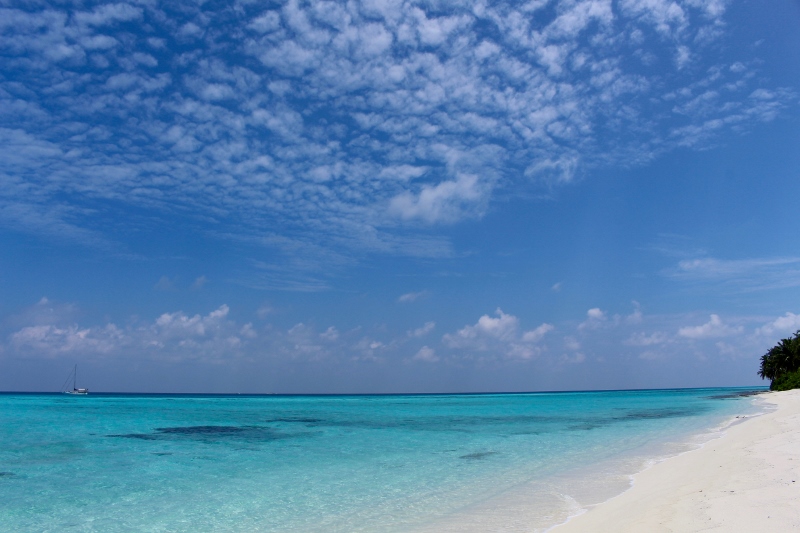
Final Boarding Call for Flight 680

Link to published article: Underwater Oasis

“Ladies and gentlemen, this is your captain speaking. We have begun our descent. For your safety and the safety of those around you, please remain seated with your seatbelt fastened until we are parked at the gate.” The excitement was mounting. We were bound for a mid-Pacific holiday typical of most sun-seekers, with little on the agenda but to dip our toes in crystal-clear water and watch a dusky sun set on an aquatic horizon, rum punch in hand, and we were almost there.

There was one problem: Our destination was entirely submerged under a foot of water. There would be no shimmering black tarmac to provide safe landing or receiving gate for our pilot to taxi up to. There were no baggage handlers to reunite us with our possessions nor steward to wish us on our merry way. To get to our chosen holiday spot, a plane wouldn’t cut it as our mode of transportation. There was only one way in and one way out, and that was by sea. I would have to be pilot, crew and passenger combined to reach my port of call.

Regardless of these obstacles, I was determined to get there. Very few patches of submerged land hold the reputation of Minerva Reef. For South Pacific cruisers, it is the perfect break in a 1,200 mile passage between New Zealand and Tonga. The novelty of setting anchor in the middle of the ocean and watching the seas roll by as your boat remains in a fixed position was something I wanted to experience. There wouldn’t be anything to do but rest and relax in a still pond inside a rolling sea. A day or two would be all we would need before continuing the voyage onward, or so I believed.

Minerva Reef is the modern day Atlantis, if you stretch the facts a little. Its history could almost be the script for Timaeu, if it wasn’t for the fact that Plato’s dialogues occurred over 2,000 years before the events that unfolded on Minerva to draw the parallel. Cut to 1972 and bring forward the libertarian character, Michael Oliver, an American millionaire who decided that Minerva was the perfect location to establish his own sovereign nation. Following Socrates’ ideals, Oliver wanted to create an ideologically structured society, though this could arguably sit within the framework of a self-serving ideology. There was, however, a small kink in his plan. Laws relating to disputed territories state that land cannot be claimed unless it is a foot above sea level at high tide; this was not the case for either North or South Minerva. To claim it, he would have to build it.

The plan Oliver devised was bold. He would take the six-mile wide atoll, dredge its neighbour and fill the inner lagoon until a flat pan of land arose from the sea. A flag was erected, a president elected and money for the Republic of Minvera coined. King Taufa’ahau Tupou IV, Tonga’s monarch at the time, had no interest in forfeiting their access to a territory that had been established fishing grounds for generations. The problem was, Tonga had never laid a claim to it and therefore had no legal rights. Until this point, Minerva was not on the main trade routes and the prevailing winds were unpredictable. The only traffic the atolls received were the unfortunate ships that got blown off course by storms. In fact, it is only due to the reliability of GPS that mariners have recently made Minerva a destination of choice rather than one of disaster. The scattered metal bones of deceased ships are reminders of the hazards of these submerged atolls. Prior to laying a claim, no one had interest in laying a claim. Within five months of its creation, King Taufa’ahau Tupou IV dispatched 90 prisoners to tear down all man-made structures and disperse its 42 inhabitants. The Republic was no more.

All efforts to raise the atoll from the sea only resulted in its ultimate return to the sea. It was the destruction of Atlantis, or so it appeared. One peek below the surface and it is evident that the fabled lost city exists. The termination of human habitation on the atoll is exactly what saved it. As a result of ending life above the water, life below the surface was allowed to flourish. Thick walls of hard coral protect a soft limestone core, and the graceful, swaying arms of soft coral reach up towards the light cast down from above. Swirling and dancing around these graceful technicolored tentacles is the seemingly endless gridlock of marine life that surrounds them: Crustaceans, osteichthyes, selachimorpha and testudines, each resident and migratory group as Greek-sounding as the Grecian fable itself.

When the opportunity came for us to sail to Minerva, we chose Plato’s version of Atlantis over Oliver’s Republic: Rather than raising the land to create a village above the sea, we chose to drop down into a city beneath the surface. We shared the reef with six other cruisers, all of us running around filling our days with aquatic activity and our nights in shared stories and laughter. What would we do the following day? The options were plentiful. Should we stay in our current spot close to the pass so we could dive at dawn and avoid a longer dingy ride to the outer reef? Should we move across the lagoon to the navigation light erected by the Tongan navy to claim Minerva as their own, demolished in 2010 by the Fijian navy, repaired by the Tongan navy and destroyed again by the Fiji navy in 2011 to be replaced by Tonga to reassert claim to the atoll one more. The ping pong between the two countries is dizzying, but the dispute has done no more harm to the island than the defamation of a single steel structure. Should we move to the northeast corner of the lagoon where the rusted wrecks of past ships provide a sanctuary for the lobster that hide within them, and rich hunting grounds for us? A meal as easy to pluck as a tin off the grocery shelf; dinner would be a feast that night. The entire lagoon was a relatively flat plateau of fine, white sand at a depth of 10-20 meters which provided good holding for yachts throughout. We moved because of wind or desire, changing our location to suit the activities of the day. Prior to our visit, I assumed an indistinctive sameness of Minerva, a featureless place where the only change to our scene would be reflected in the movement of the arms of our clock and the transit of the sun around the earth. None in the group expected more than a short stop that, at most, provided a quiet mid-ocean reprieve to store up on sleep before resuming our passage. This notion couldn’t have been further from the truth.

When I imagined my pitstop in Minerva, I expected a silent, remote beauty above water. I didn’t expect to be so exhilarated and consumed by all the splendour beneath. All I wanted of my time in Minerva was to slip below the surface and watch the throng of finned and gilled tenants race by me, caught up in their own slipstream of hyperactivity.  This aquatic metropolis was more densely-populated and multifarious than Tokyo or Mumbai combined. Pacing the walls with us was a heathy population of shark: Grey, lemon, whitetip and even the fear-inducing tiger. Turtles rose to the surface for a breath of air as we descended down the reef, a small shoal of squid performing synchronised movements an arms-length away and octopus cautiously receding into their holes as we poked our heads into cracks in the reef. Leave us on Atlantis much longer, and we’d sprout our own gills.

When we needed a rest from diving the outer reef, we’d pop the tanks off and snorkel around the inner lagoon. The scattered metal ribcages of wrecks provide hides-holes for resting reef shark, crammed nose-to-tail in an effort to seek a coveted spot in their own mini-sanctuary. When the tide pulled out, we had the opportunity to go for a walk on the top of the reef, a two-hour window to put foot on land. We would send relaxed schools of brightly-coloured parrotfish lying side-up in small pockets of inch-deep pools into a flurry of panic, franticly peddling fins sending them into bumping disorganised chaos as they swam furiously in sideways circles. The gaping mouths of giant clam would snap their hinged shell shut, sucking in their vibrant blue, green, purple and orange lips as we cast our shadows down on their rocky holding. In the distance, the small black tip of a fin would zip erratically through the surface of the water, the juvenile shark it belonged to hunting in the tidal traps. Occasionally, we would catch sight of the tip of an olive-green flipper or the flip of a charcoal fin as turtle or ray bolted from lagoon to deep water. Even on an exposed, barren surface, Minerva was teaming with life.

Our short layover quickly turned into an impromptu settlement, the modern-day version of Oliver’s ocean community finally realised amongst mariners. The atoll is completely uninhabited without any formal jurisdiction or official process to follow, so entry to Minerva is as simple as showing up. There are no immigration or customs officials on site, so there is no one to issue a visa or dictate the number of days you can stay. You choose, or the weather will choose for you. As the reef is submerged or exposed depending on the tide, your comfort ebbs and flows with the change in this cycle. In calm weather, high tide becomes a gentle, swaying roll. Sit inside Minerva in a storm, however, and you’ll be holding onto handrails to keep yourself upright. That said, holding tight in this isolated landing may be preferable to taking a beating under sail, so mind the weather and tuck in before the storm hits and Minerva stands up to its reputation as a mid-ocean haven.

As the weeks rolled on, recognition of an error in planning hit all of us in staggered waves: We’d provisioned for a fast passage rather than a long holiday. Had I known, I would have hit Costco with a thousand dollars in my pocket and spent it all on food. Now that rations were running low, I was kicking myself. Why leave if not forced, and the only thing forcing us were cupboards that were thinning out. Begrudgingly, it was time to roll out. We did so with our heads turned backwards, looking towards nothing but an open ocean with a few bobbing masts marking the spot of the vibrant wonderland we were leaving behind.

I could never imagine someone pitching the idea of heading to such a remote location to spend my hard-won holiday time. “This this the final boarding call for Flight 680 to Nowhere. Please proceed to Gate 23.” Yet after several weeks on a submerged atoll I can think of few places that I rank as highly. There are a few qualifiers, however, for anyone looking to do the same: You have to like boats, as there is no other way to get there; you have to like water, as it will surround you for the duration of your stay; and you have to like wet, as all the magic of Minerva lays under the surface. I’d heard from so many other cruisers that I should drop into Minerva on the way past, but no one told me to pack my bags and stay awhile. Let me change the rhetoric. If you are transiting an ocean and a submerged atoll lays in your path, take this advice: Stop, and Stay.

“Good morning ladies and gentlemen. On behalf of myself and the flight crew, I would like to welcome you aboard Navis Ōceanus flight 680 bound for Minerva Reef. It will be a bumpy ride and a bumpier landing, so please fasten your seatbelt at this time and secure all baggage underneath your seat or in the overhead compartment. I hope you enjoy your flight.” While your flight attendant can’t guarantee an enjoyable in-transit experience, one thing I can promise: You will love your destination.

A World of Wonder

Link to published article: Cruising French Polynesia

That I have more than a sentence to say about the Society Islands speaks of how plans are so easily discarded. Our intention for French Polynesia this year was to pass on the known for the unknown. Having been to the Marquesas and the Society Islands in previous seasons, we would spend our time in the Gambier Islands and the Tuamotus. It was a solid plan that suited our desire to explore new places. Solid, that is, until we changed our plan.

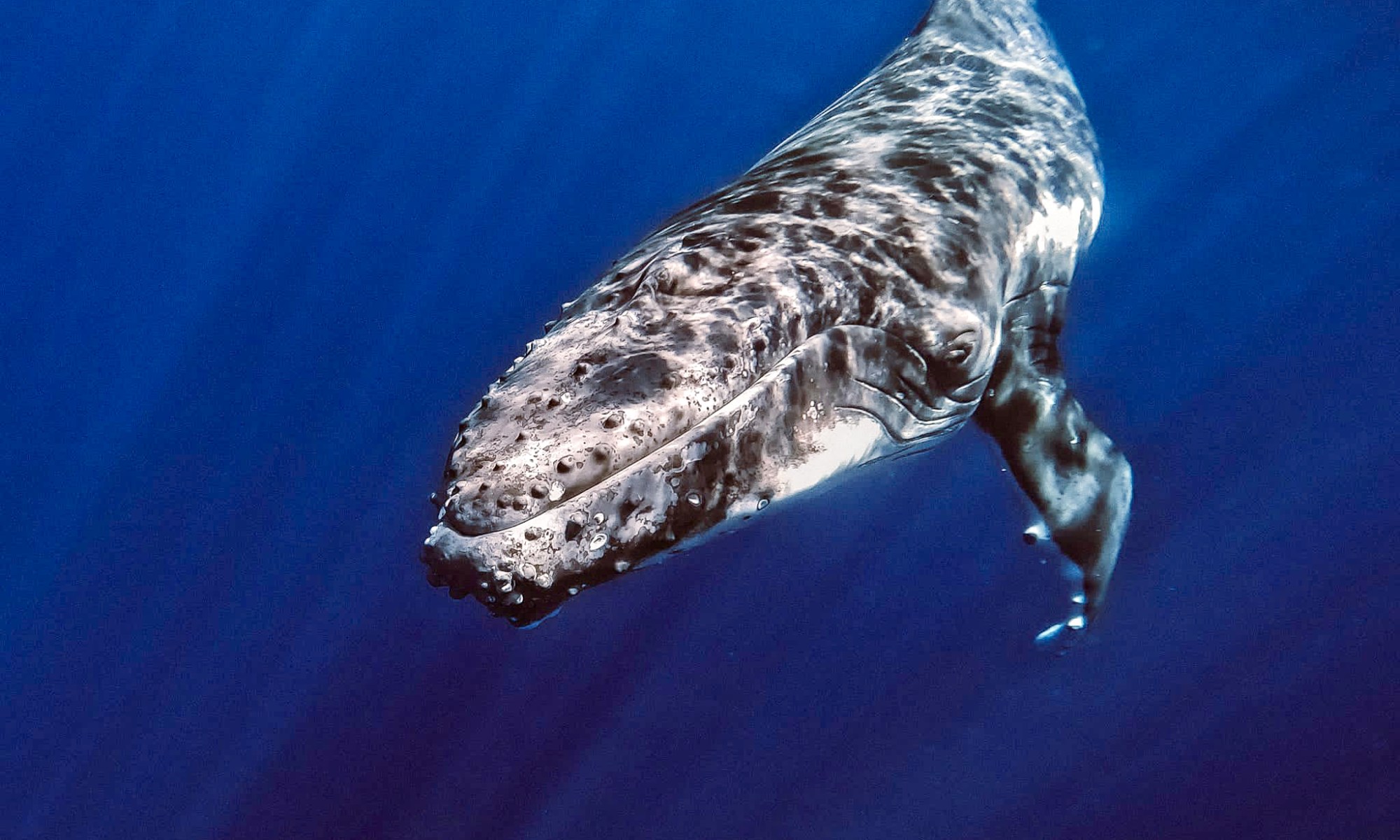
Having spent the majority of the season exploring eastern French Polynesia, we sailed into Tahiti for our final week in country. Our time as tourists went by in an endless blur of landmarks, sightseeing, organised tours, choreographed dancers and a constant flow of fruity cocktails. It was very different than our typical slow-paced cruising lifestyle, but we’d been here before and were keen to pack it in and push out. Burnt out from the fast-paced tourist mode, we sailed across to Tahiti’s sister island to slow down the pace. Moorea’s beauty captured and held us — far longer than we intended. Perhaps it was the company. As we sailed the short distance between the two islands, we watched the slow crest and spout of humpback whales making their own inter-island transit. We sailed alongside two large whales for awhile until they dove in union to break surface on the other side of our yacht. To be in their proximity was a rush, and I knew a few days in their company wouldn’t be enough to satisfy me. Our intended short stay turned into four adventure-packed weeks.

There is a small picturesque anchorage just inside the inner lagoon of Moorea’s second largest inlet, ‘Ōpūnohu Bay. With our anchor set in pure white sand and our boat bobbing in shallow water, we were only a short swim to a shaded local beach with the mountainous peaks of Moorea’s lush interior as our backdrop. We were in a place of tranquil beauty. It was humpback season and we spent our days watching their movements from the anchorage. The bay provided a safe haven from natural predators and a mother and calf pair were regularly playing nearby, rolling and tale-slapping in a frisky, playful display. Having watched them from above the surface, I couldn’t miss the opportunity to see them below the surface as well. Joining a whale tour allowed me that opportunity, and swimming alongside these gentle giants was an unforgettable experience. Having learned the safety guidelines from the tour guides, we continued to swim with them in the weeks that followed by taking our own dinghy out and abiding by the rules. The experience of interacting with them in the water and watching their movements up close provided us some of our best wildlife encounters. Diving to whale song completed the euphoric experience.

There was more to our time in Moorea than whales, though they did dominate our attention. We visited a rum distillery and a fruit packaging plant, hiked high peaks for areal views of the island, swam with timid sharks and curious rays who circled our feet in wait for the next tourist to feed them. We snorkelled the inner lagoon and found submerged tikis, set out in commemoration to earlier times when missionaries banned Polynesian custom, worship and gods, and Tahitians responded by hiding these sacred stone symbols in the sea for safekeeping. In the evenings, we rafted our dinghy’s up behind a yacht set up with microphone, speaker system and lead singer to belt out a melodic farewell to another day in paradise, Hinano in hand. Moorea was a wildlife wonderland, a scenic beauty, a cultural education and a social extravaganza. Weeks could have turned into months, but we still had half an ocean to cross before the end of the season.

Reluctantly, we weighed anchor and sailed west toward Huahine, Raiatea, and Taha’a, guided by more whales as we entered Huahine’s tranquil inner lagoon. Once inside, spent relaxed days playing on the beach, sailing small dinghies, snorkelling the reef, paddle-boarding over calm crystal waters and enjoying sunset cocktails at happy-hour prices. We visited pearl farms in Raiatea to purchase pearlescent sea orbs, visited the stone structures of Taputapuātea and drove our dinghy deep upriver into the lush interior. In Taha’a, we snorkelled a fabulous coral garden with winding alleys of hard and soft corals, densely populated by brightly coloured fish and snuck into an opulent $2500-a-night luxury hotel to sip bright blue cocktails to pink-hued sunsets. These last few islands seemed a proper send-off to a full French Polynesian experience. We would make a quick stop in Maupiti and Maupiha’a and then, finally, be on our way.

Again, our plan was misinformed and our expected timeframe of little consequence. We didn’t know at the time that our two favourite islands lay ahead of us. A few days, once again, would pass quickly into weeks. Maupiti and Maupiha’a sit on the western edge of the French Polynesian archipelago and are often bypassed because of their difficult pass entrances. Having spent months in the Tuamotus where entry into the various atolls is precisely timed by the outgoing tide, having this to consider wasn’t new to us. However, having successfully entered Maupiti and Maupiha’a, I can say the eastern atolls don’t light a match to the intensity of these western island passes. Maupiti is famous for being narrow and rough since it faces the prevailing wind and waves. It can be impassable for weeks at a time. Maupiha’a is sheltered, but the pass is a very narrow 50-meter ebbing tide that never stops. Once committed, there is no turning back. One requires a steady nerve and the other requires a steady engine, but once in, you’ve found safe haven in some of the most beautiful, non-assuming islands where the hospitality of the isolated community is a outpouring as the tide.

Once inside Maupiti, the eye is drawn up toward its magnificent central cone peak. As the westernmost volcanic island in the archipelago, it is a smaller version of Bora Bora without the tourists or the price tag. The true gift of Maupiti, however, is found hovering below the surface of the water rather than looming over it: The oceanic manta ray. After spending time in the village, we moved out to a shallow sand patch near the pass entrance to find a manta cleaning station — a large rock swarming with small wrasse that clean the parasites off the manta as they hover close by. Having discovered how easy it was to find them, I quickly established a morning routine that included a morning coffee and a swim with these agile giants in solitude before the tourist-filled local boats descended on the spot. By mid-morning they would swim off to other parts of the lagoon, but every dawn they would return to receive their symbiotic salon treatment, both of our rituals resumed.

The manta were a powerful magnet for me, however it was time to push on as we had been tasked with delivering fresh supplies to family living on the next stop on our itinerary. The atolls at the furthest western reaches of French Polynesia don’t receive a regular supply boat. In fact, Maupiha’a receives one every two years when the quota of copra from the island’s eight inhabitants has been filled, an impressive 50 tons of dried coconut meat. As such, the island is a prime example of complete self-sufficiency. We met one of the island’s long-term residents, Pierre — a single man with a split flipflop — at our first anchorage. I dug up a spare pair, however he declined the offer and opted for a soggy mismatch that had drifted in on the tide. The next time we met him he offered us a coconut crab caught earlier that day for our evening meal, and from that day forward Pierre became our constant companion. He fed us coconut crab, reef fish, tern eggs and freshly-grated coconut and an endless supply of fresh coconut water to fill our bellies. Within no time, Pierre had taught us essential island survival skills: We could shave the inside of a coconut to make milk, collect bird eggs for breakfast, capture coconut crabs for dinner and hook a fish with a rusty wire. In exchange, we topped him up on an endless supply of mayonnaise and coffee. Having hosted many yachties but never been on a yacht, we took Pierre sailing across the lagoon to explored the outer cays and bird hatcheries together, learning how to test the viability of an egg by cracking a few onto the ground to see its stage in development. If there were no foetus in the initial test, all the eggs in the hatchery were ready to be consumed.

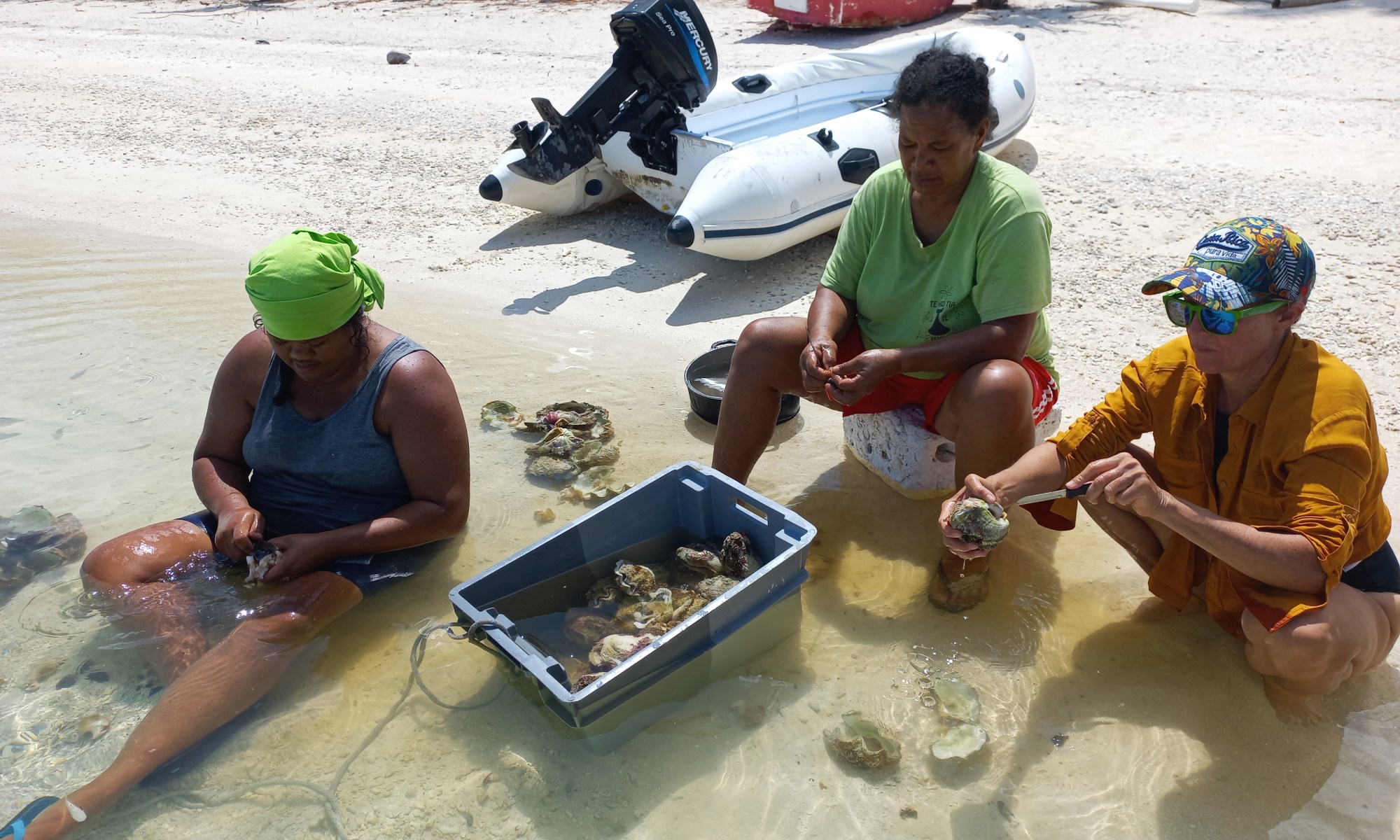
As the winds changed and made the other side of the atoll more comfortable, we said goodbye to our generous host and relocated to the other side of the atoll. Pierre’s hospitality was immediately matched by our new hostesses. We arrived to barking dogs, quacking ducks, grunting pigs and the offer of fresh fish from the mother and daughter who lived there. Once again, this kindly offer sealed a friendship and we enjoyed shared meals of fresh-caught fish, coconut crab, giant clam, green coconuts, chocolate cake. The laughter was hearty and the mood cheery, but I couldn’t help but feel we imposed on their time and generosity. A considerable amount of effort had been put forth at no cost to us, other than the reciprocal sharing of resources. In exchange for fuel and oil, Karina and Adrienne taught us how to rely on nature to survive. They took us to the smaller islets to walk among tern hatchlings perched in their nests, scavenge little brown-spotted eggs scattered in the sand and showed us how to hunt fierce coconut crab without loosing a digit. Having observed the mass graveyards of giant clams throughout the Atlantic and Pacific islands but never seen them being scavenged, Karina taught us how to pry the shell from the rock. I jammed a rod through the centre of a mollusc, damaging the foot to release its solid grip in the rock. I did this once for the experience but had no interest in removing any more of these beautiful creatures from the ocean. When Karina was done, I was quietly heartbroken to count forty lying at the bottom of the plastic tub, waiting to be served at the evening feast.

We passed our days in the generous and engaging company of Maupihaa’s tiny community. The eight inhabitants were spread out around the atoll, living an existence that is as isolated as it gets. The wreckage of the Seeadler, a WWI German sailing warship that grounded on the outer pass 100 years ago, is a reminder of this isolation. Snorkelling the scattered remains of the ship resting in 5 meters outside the pass, it is feasible to understand how the stranded crew were able to survive for months on this tiny atoll with the assistance of the three inhabitants that lived on the island at the time. To see its rusty bones scattered across the seafloor is a remarkable tribute to the fortitude and determination of the 111 sailors and the ingenuity and generosity of their local hosts who helped them survive on this mid-ocean oasis.

Departing Maupiha’a was our farewell to French Polynesia. Our aim had been to focus on areas we’d not previously explored, however revisiting previous destinations was just as rewarding, like an unexpected reunion with an old friend. Certainly, the welcome we received created an instant connection that is rare to receive amongst strangers. Perhaps it is the reason roughly 80 yachts visit Maupiha’a each season, bringing provisions from other islands when they come. In exchange, cruisers get to enjoy being a part of an established tradition of welcoming passing visitors with open arms. While no money is asked for, few take without reciprocating so the underlying dynamic is one of sharing what you have and accepting what is offered. Maupiha’a is the world’s best example of this genuine generosity. It is classic mid-western hospitality typical of close neighbours, offered to complete strangers. So, if sailing to the far reaches of an expansive ocean, don’t balk at the thought of the miles of solitude that lay ahead of you. Think of the friends waiting for you at the other end. When you get there, you will know you’ve arrived home. 

Pacific Panama: More Than You Expect

Follow link to read the published article: Cruising the Pacific Islands of Panama

Hamilton, New Zealand’s largest inland city, comes up short on creativity when choosing its town slogan, “Hamilton: More than You Expect!” It’s like laying a wet rag on a destination. Rather than boasting great claims to harbouring the country’s most pristine landscapes or its greatest historical landmarks, Hamilton’s “more than you expect” leaves a prospective visitor with very little to draw them in. We adopted Hamilton’s slogan for our time in Panama—a country which already holds a reputation for offering a lot. It offers the San Blas islands, home to one of the world’s most intact ancient cultures and it offers the Panama Canal, one of the Seven Wonder’s of the Modern World. My expectations were already sky high when arriving in country to see these famous sites myself. Panama, more than you expect… what “more” could there possibly be?

The San Blas islands had long been on my A-list of destinations. Who wouldn’t get that excited jittery buzz from the thought of transiting the Panama Canal? Cruisers we’d spoken to who had made the passage from the Atlantic to the Pacific all rated the canal as one of their top maritime experiences, and I was about to follow in their footsteps. We spent the majority of our time in the Caribbean, travelling up the coast from southeast to northwest through the San Blas islands. We soaked up the tropical sun on palm-fringed white sand cays, bought intricately-stitched molas from traditionally-dressed women with nose piercings and facial tattoos and traded for hand-lined fish caught by men in basic wooden canoes. Bellies full and molas stowed, we left the Caribbean Sea and passed through a succession of five locks spread across the Gatun Lake to pop out on the Pacific Ocean, the famous seventh wonder ticked off our list. When the last lock opened its gate and spat us out into Pacific waters, we felt our tour of Panama was complete. All we had left was to prep and provision for French Polynesia and we’d be on our way.

This was when I realised my naivety. Of expectations, mine had been firmly set: Panama was San Blas and the Canal. Nothing else registered. No one in the cruising circuit talked about the country in any other terms, so it was with great surprise that we discovered the sweet rewards that awaited us on Panama’s west coast. Names started to crop up: Tobago, Las Perlas, Coiba, Las Secas, not to mention Panama City itself. We were chanting, “Panama: More than You Expect” with each new place that cropped up. I had missed the obvious. Panama has a rich and fascinating history and a diverse and vibrant present that spans both sides of the country. I had blindly missed the fact that there was still so much left to see. 

We wouldn’t be looking at weather and we wouldn’t be stocking up on food for the boat. As soon as the obvious dawned on me, we shot out of the anchorage and headed out to explore. Our first stop was Tobago, a small island five miles from Panama City and historically a holiday destination for those in need of a weekend respite from the bustle of the big city. During the French and American canal years, foreign diplomats and expatriates would take a short ferry ride over to enjoy the clean water, white sand beaches and relaxed island vibe. It felt only suitable that we would follow this historical flow to Tobago to enjoy the same pleasures as all those that had gone before us. The small town reminded me of a sleepy Portuguese seaside village, as quaint as it is quiet. Christian shrines line doorways, curb-sides, backend alleyways, beaches and rocky outcrops in numbers to match the island’s resident population, denoting an island for the pious. A walk through town takes you up winding dirt tracks to views across the sea to Panama City’s dramatic skyline. A walk in the other direction takes you to a small sand-spit crowded with beach umbrellas and stalls selling rum-filled pineapples and spiked coconut concoctions. We enjoyed the quiet, relaxed isolation offered midweek. The serene atmosphere was obliterated on weekends when Tobago is transformed into a pumping party zone to rival Miami Beach on Cinco de Mayo, the statues of sainthood all but forgotten.

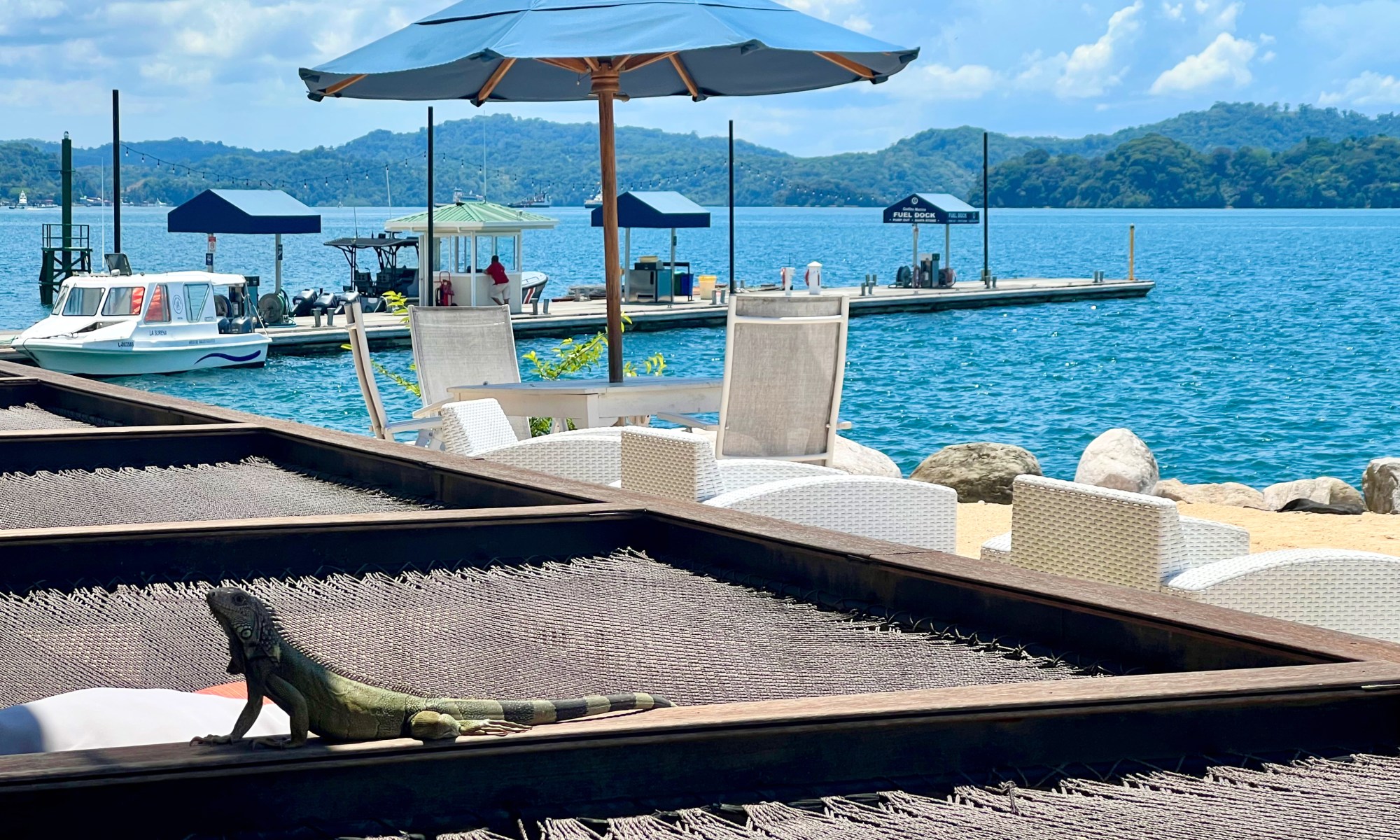
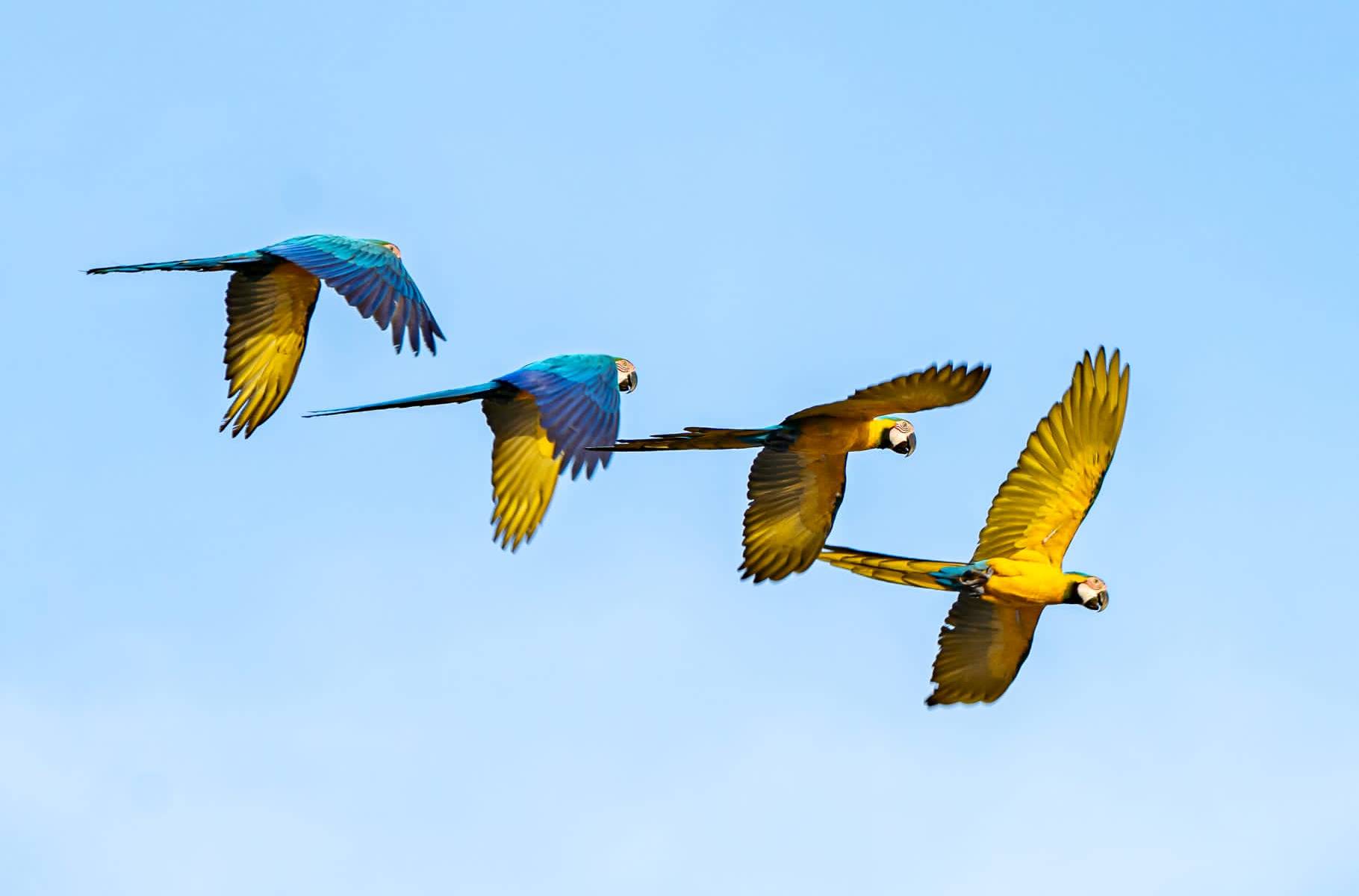
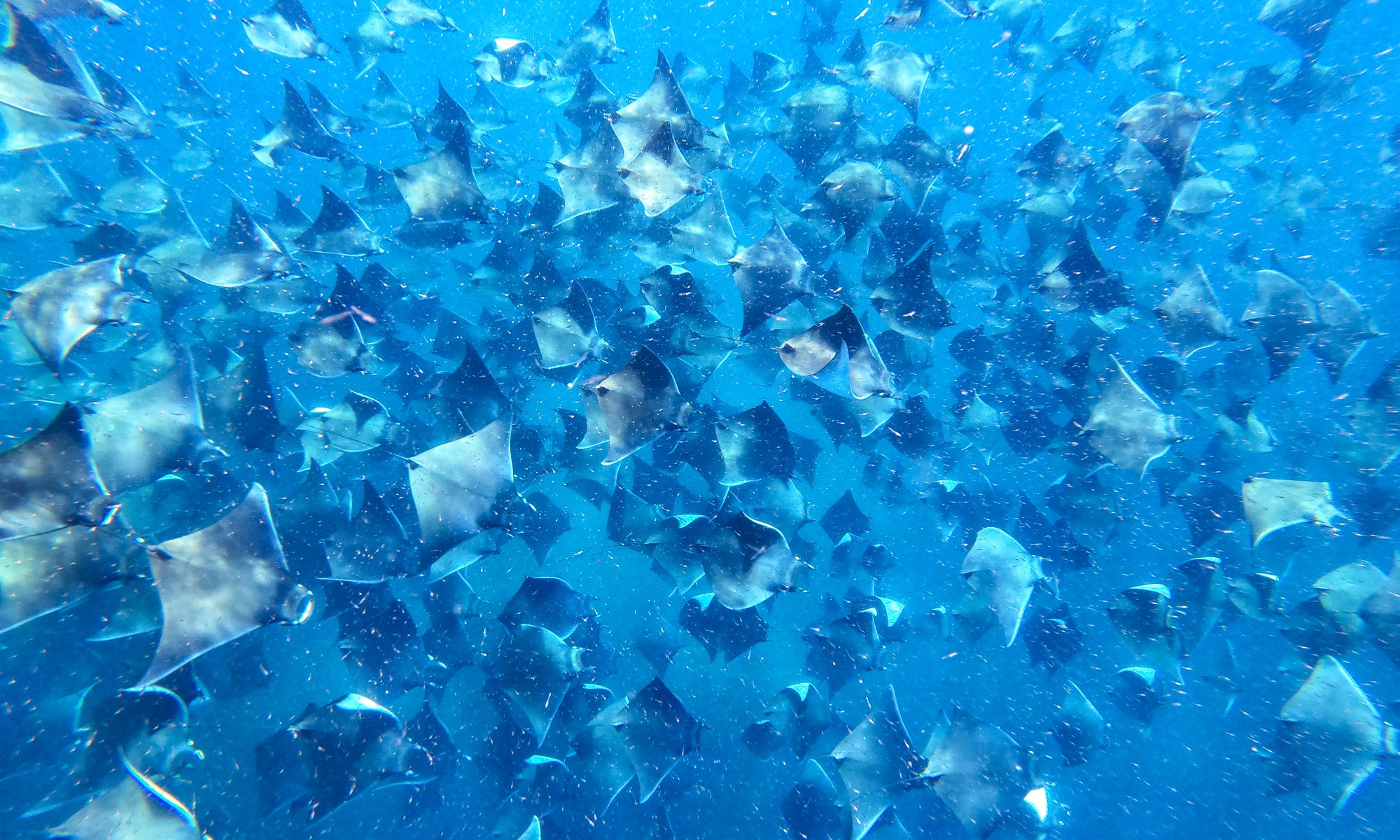
The cacophony of competing ghetto blasters, the moving mass of beach bums and the endless battle for a place in line for a rum cocktail were enough to turn us toward quieter anchorages. We sailed for Las Perlas, a collection of 200 predominately uninhabited islands located fifty miles south from Panama City in the Gulf of Panama. The distance brought us into a completely different side of Panama: Remote, isolated and pristine — weekends included. Rather than the palm-fringed white sand beaches on the Caribbean side, the islands off Panama’s Pacific coast are covered in dense jungle that crowded a shoreline of black sand beaches that offered an unparalleled rugged, wild beauty. As stunning the natural beauty was, there was nothing more splendid than sailing through the boiling water created by a frenzy of mobular rays with a sky full of swooping seabirds overhead. As we dropped anchor, a juvenile whale shark swam under our bowsprit and moments later we were in the water swimming alongside this gentle giant, the most memorable welcome to the beautiful Pearl Islands. We’d come at the right time as the bloom of plankton that filled our bay brought with it the animals that fed off them: Humpback whales, whale shark and rays. We spent our days in the water surrounded by large schools of mobula and cownose rays and the solitary whale shark or humpback that swam with them, our bodies wrapped up in the middle of their feeding frenzy, their dizzying speed and aerodynamic displays an amazing force to behold. When we finally turned our attention away from the sea we were spoiled by an equal beauty ashore. A copse of dead trees nestled into the dense jungle that lined the beachfront provided a perfect nook for a large flock of resident macaws. Their bright red, yellow and blue feathers were a stunning shock of colour against the bleached wood they were perched atop. Below, the beach was blackened by a thick cluster of cormorants, with no one other than ourselves to witness the amazing wildlife that surrounded us both on land and at sea. These islands were, without a doubt, true to their name: The Pearl of Panama.

It was near impossible to pull ourselves away from our secluded oasis and our indulgent self-sought isolation, but a cruising boat is always on a timeframe and it was time to un-velcro ourselves from the soft fuzzy hold that so effortlessly held us. We set our sights on our our next destination: Coiba Island, the largest island in Central America. Coiba fascinated us with its dark history. It had been a penal colony, akin to America’s Alcatraz or South Africa’s Robin Island, where the hardest criminals were vanquished between 1919 to 2004; a place of such harsh conditions that the guards of the time locked themselves in at night to keep themselves safe, rather than the other way around. Prior to that, the island’s last known inhabitants had been removed in the 1500s, leaving the island completely untouched by human interference for 700 years. Coiba is now an uninhabited marine reserve, having been declared a UNESCO World Heritage Site in 2005. With a scatter of buildings left to ruin and access to the island limited, the island and the ecosystem within and surrounding it holds some of the greatest biological diversity in the world. Going ashore is off-limits to visitors so we spent our time exploring its impressive biodiversity at depth. The coral reef is the second-largest in the eastern Pacific and supports a rich underwater biodiversity, and our dives brought us in close proximity to white-tip and hammerhead shark, eagle and devil rays, turtles and schools of jack, snapper and the illusive merlin. Coiba is the Galapagos of Central America’s underwater world and, true to reputation, has the best diving that Panama has to offer.

We continued north of Coiba to the small archipelago of Islas Secas with the best intentions of continuing our exploration of the Gulf of Chiriquí’s rich marine environment, but we were drawn to the raw, untouched natural beauty above sea instead. Of the 14 volcanic islands that make up this small island group, only one has been turned into a luxury 24-guest eco-adventure resort. Other than this single development, this small cluster of islands have been left uninhabited for over 600 years, allowing for the preservation of some of the most pristine conditions both ashore and under water. We stayed clear of the exclusive resort and visited a few of the smaller islets, enjoying the complete solitude. The soft rustle of dense, green bush and slow lap of rolling water was the only outside sound in our small universe, other than the occasional rumble of a passing fishing boat. Outside this periodic and distant disruption, the tranquility inside this serene, remote setting was absolute. We matched the pace of our days to nature’s slow, gentle melody and enjoyed the feeling that Las Secas was ours, and ours alone.

As we wound up our cruise through Panama’s Pacific islands, we grasped how extraordinary this corner of the world truly was. The adventures we’d had far surpassed our ability to count them on our collective fingers and toes and with each new island our chant, “Panama: More than you Expect“ grew louder and more earnest. Our time in country was closing down and we decided to pull out of our isolation and serenity to head for chaos and noise. We needed to move for practical reasons, such as provisioning and clearance, as well as for personal reasons and there was nowhere in Central America better suited to this than the bustle of Panama City.

Panama City was a relatively low-key central hub until the early 2000s when a development boom started transforming the older colonial homes into larger multi-story houses and high-rise condominiums. Trouble in the Middle East and strain on shipping through the Suez Canal led to an increased demand on the Panama Canal and port facilities in Balboa. As a result of the influx of shipping and trade and the resulting multibillion dollar expansion of the Canal, development boomed and the city expanded into what it is today: A vibrant “two-in-one” city that offers a perfect blend of quaint-old and glittery-new. Depending on where you are in the city, it can feel like you are either standing in the centre of a mini-Dubai or looking down the tunnel of time at a centuries-old seaside fishing village. The financial district, or Area Bancária, is built-up and gleaming, with skyscrapers crowding the skyline and the billowing puff and honk of a thousand cars jammed into a square-mile block. The area is filled with modern office towers and banks, high-end hotels, fancy restaurants and name-brand retail stores. Casco Viejo, on the other hand, is located in the historic district and offers a quaint pedestrian-only area filled with winding cobblestone streets flanked by 1600’s buildings-turned-trinket shops. Throughout the old quarter are sprawling plazas surrounded by numerous museums and churches, open to tourist throughout the day. We spent time wandering around the streets of the historic district, enjoying the bustle of activity. We spent hours getting history lessons on the building of the Panama Canal, of life during the Spanish colonial period, the impact of gold and the impact of money to the region. We spent our evenings in less educational but equally valuable ways, sipping margaritas on barstools in draughty rooftop bars and eating some of the the juiciest carne asada from the best restaurants in the city. We filled our time dancing between the new and the old, our days a flurry of activity that was juxtaposed to our relaxed Gulf of Chiriquí experience.

When reflecting on our Panamanian battlecry, there is no way I could have prepared myself for the amount of “more” we got. I assume many cruisers are like us, making the erroneous assumption that Panama is no more than a direct route from the Atlantic to the Pacific, a conduit for the adventure in one ocean to the adventure that lay ahead in the next. What I hadn’t expected was that the Pacific side of Panama is a rich destination in itself. The two sides of the country are dramatically different from each other, yet equally rewarding. When I reflect on our time in Panama, one word sums it up perfectly: More. San Blas is more, the Canal is more, and the Pacific side is far, far more. I’m not sure when the Hamilton theme popped into my head but the more we saw, the more “more than you expect” held true.

The Great Polynesian Gift

Link to published article: The Hidden Gift

There is a small island in French Polynesia that reminds me of that last gift left abandoned under the Christmas tree, passed over for all the other larger bow-tied, red-and-green wrapped packages. When the party is over and all the extended family have made their way home, a tired eye spots a small paper bag bound in scotch tape left half buried beneath the fallen pine needles and discarded wrapping paper. It is picked up, casually unwrapped and the holiday’s greatest surprise lays unexpectedly in hand.

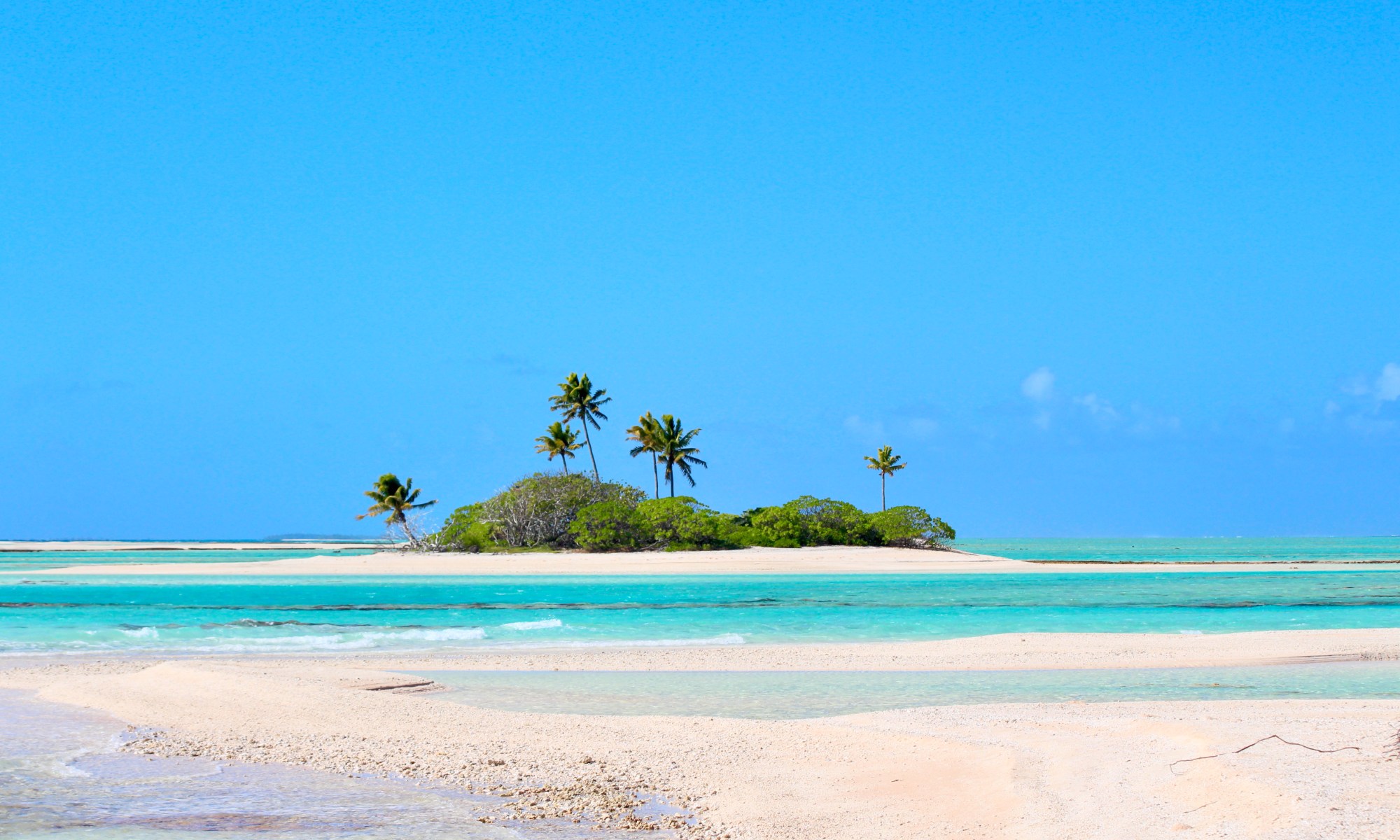
Maupiha’a is this modest little treasure. After spending time in French Polynesia’s larger, more well-known islands, few have time remaining on their visa or in the season to tuck into Maupiha’a on their way west. With a total landmass of 2km2, sailing right past is certainly an easy thing to do. For those who choose to visit, they may need to abort due to the small island’s even smaller pass. With a circular lagoon surrounded by one main islet, several smaller motus and a continuous outer reef, all the water that floods into the lagoon at high tide must exit through the single passage on the western side of the atoll. This fast out-flowing water can cause currents up to 9 knots, so timing entry is essential. The best time to enter is at high water with the engine at full speed. The current will still be against you at about 4 knots but you can at least make slow progress. Once committed, there is no turning around inside the narrow 18 meter-wide pass. Those who succeed, however, soon discover what a hidden gift Maupiha’a really is. Unassuming on the outside, a rare treasure on the inside: Maupiha’a is that lost gift hidden under the Christmas tree.

Located on the western edge of the French Polynesian archipelago, Maupiha’a is the epitome of isolation, its residents a model of self-sufficiency. It is 100 miles from its nearest populated neighbour and there is no supply ship that comes to deliver food and staples as exists in other French Polynesian islands. The locals on Maupiha’a raise pigs and chicken, collect tern and booby eggs and hunt for fish, shellfish and turtle. They maintain their own small gardens and drinking water is collected by catchment or cracked from a coconut. What isn’t grown, raised or hunted is brought in by a seasonal convoy of willing international cruisers who come laden with flour, rice, sugar, seasonal fruit and a myriad of other staples during the dry season. When the flow of cruisers ends, life returns to a self-sustaining isolation until the Pacific fleet resumes the following year.

I sailed into Maupiha’a in 2006 carrying fresh fruit and vegetables donated by family in distant islands, however this time we were behind a group that had already done the same. Back then the lagoon had been a minefield of oyster beds, but a hurricane wiped out the buoys and killed the industry since my last visit. While Maupiha’a had a short period in pearl farming, it has primarily been used over the past century as a copra plantation. Starting with a workforce of three in 1917, the influx of workers shifted from several hundred at the height of the industry to the handful that now remain. For a scheduled ship to make the trip to the island, the residents must collect a minimum of 50 tons of copra — an amount that takes the current eight inhabitants about two years to harvest. It is a long time to wait for a replenishment of supplies, so visiting yachts are both a welcome and necessary part of survival on the island.

As such, cruising boats are met with open arms when they enter this small mid-Pacific sanctuary. We sailed across the four-mile wide lagoon to the southern side of Motu Maupiha’a and dropped our anchor through crystal clear water into fine white sand, as picturesque as any holiday postcard. We wandered ashore to take a stroll on the palm-fringed beach and soon ran into one of the island’s locals. Pierre was warm and gregarious, inviting us to make ourselves at home on his island. I offered a pair of flip-flops to replace his broken one, but he insisted on scavenging a lone replacement from the windward side of the outer reef where the supply was plentiful. We passed him again the next day, and he waved us over and offered us fresh fish for our meal that night. I accepted on the agreement that he join us, and that first meal set the foundation for communal living for the rest of our time together. Pierre showed us how to live off the island’s resources, turning us into prime contestants for Survivor Island. He taught us how to hunt, kill and clean meat off a coconut crab, how to determine if a tern egg was embryo-free, how to pluck a coconut from a tree and make fresh milk, how to catch a fish on a un-baited lure (in 5 seconds, guaranteed). By the time he was finished with us, we could be cast ashore on any mid-Pacific island and feed like royalty if given a rubber band and a rusty hook. In exchange, we supplied Pierre with a regular dose of coffee, his drink of choice, and took him on his first sailing trip since his arrival seven years earlier. We also left him with a six month supply of mayonnaise, the “magic sauce” to accompany smoked coconut crab. Pierre was happy to live in the present and take each day as it comes — and that lesson was the greatest gift of all.

After a week of exploring Maupiha’a natural resources with Pierre, we departed with the change in wind to find a more settled holding on the northern side of the atoll. We reluctantly said our farewells, feeling we’d never find such unbridled generosity and hospitality anywhere else, only to find it replicated by our hosts in our new location. As soon as we landed our dinghy ashore, a mother-and-daughter pair came out to greet us.  They had been in the middle of burning coconut husks in a fire, and they took a break from this sweaty work to extended a warm welcome and escorted us around the area, showing us their small garden, a motley collection of animals, and their home. We were offered that day’s catch and I accepted on the grounds that we share the fresh-caught spoils. I came ashore that evening expecting to be given a fish that I would cook over an open fire, and packed a number of side dishes, plates, and a bottle of wine to accompany the meal. When we arrived, the table was set and a full five course meal was already prepared, a green coconut waiting on a plate for each of us. I offered the wine but it was rejected as a slightly fermented coconut was the “champagne” of choice. I humbly accepted the one-sided extravagance that was offered us, knowing that they put aside that day’s work to provide us with such a lavish meal: We had fresh grilled fish, tuna sashimi, coconut crab “pate,” stewed giant clam, and a freshly baked chocolate cake. The night was chatty and festive, and evenings of shared meals remained throughout the duration of our stay.

As with Pierre, Adrienne and Karina invited us to join them in their daily routines and taught us about life on the island, and how to survive on it. We were taken out out to one of the smaller islets to walk among booby hatchlings, their downy heads straining to get a look and size us up as a threat. We were shown how to hunt for coconut crab in the night, Karina’s strong, deft hands a stark contrast to my timid, blundering fingers. I would willingly survive on bird eggs, but only desperation would force me to tackle one of those Hulk-sized pinching terrors. Having witnessed the mass graveyards of giant clams throughout the Caribbean, we went on a snorkelling exhibition to learn how to pry the shell from the rock. I massacred one of these vibrant purple beauties with a flathead screwdriver but had no interest in removing any more of these vibrant creatures from the ocean. Forty clams were harvested for a single meal, served as a delicacy that night and it was, indeed, a tasty one. However, I felt guilty eating something that I know to be endangered. I was only playing “stranded” on the island for a short period of time, and with an estimated eighty boats passing through in a season there would be an incredible demand put on the clam population. Hopefully a balance is reached during the off-period to let the population recover in time for the next season’s fleet.

Karina also took us out to snorkel the pass, a popular gathering spot for grey, white and blacktip shark. The site was my only instance of aggression by shark on my earlier visit and I was nervous to get back into the water with an even larger group patrolling the seafloor. They were curious but not aggressive, so we enjoyed being swept along with their darting silver forms following underneath us through the pass. Laying in five meters of water outside the pass was the highlight of the tour: Seeing the scattered remains of the Seeadler, a WWI German sailing warship that had grounded on the outer pass 100 years ago, taking the island’s population of three and turning it into an instant settlement of 111. The mixed group of crew and prisoners of war were stranded on the island for several months, building the “Seeadlerburg Settlement” out of the broken wreckage of the ship. The history of the ship and the story of its crew is as rich following the wreck as before it grounded, and to see its rusty bones scattered across the scarred earth was a poignant moment for us all.

Little did we expect our days and nights to be so richly filled with new-found companionship when we drove our yacht through the daunting pass into this little mid-Pacific refuge. If there ever was a place that time forgot, it is Maupiha’a, where living off the land — and sea, for that matter — is true to the word. While the modern world has settled into much of French Polynesia, Maupiha’a remains a little slice of ancient Polynesian past. There is no bi-monthly supply ship, no church or school, no medical facility or governmental office. There isn’t an airport, cruise terminal or tourist centre. Definitely forget your Marriott or Four Seasons. Whoever visits, whether permanent or transient, must come fully self-sufficient. According to Pierre, this is part of the attraction: Life is simple, needs are basic and demands are minimal.

As an outsider, our hosts showed us that Maupiha’a is, above all, the epitome of selfless generosity. With copra to process, small livestock to raise, a garden and home to maintain and fish to hunt, life is not idle on this little island. But regardless of everything it takes to maintain an existence on the island, routines shifts when visitors come a’calling. Daily chores become tourist expeditions, meals become banquets, strangers become friends. We could not have guessed from the outside the treasures that lie within. Maupiha’a is that forgotten gift, which once unwrapped holds a value far greater than all the other presents put together. It is proof that, sometimes, the best things do come in the smallest packages.

The Trifecta

Link to published article: The Trifecta

After two months exploring the glorious Maldives archipelago, I’ve come full circle in appreciating what the country has to offer. We’d heard numerous accounts from cruisers before us; once in the Maldives, we would swim with manta, dive with whale shark and suffocate from the density of fish in the expansive live corals that surround an infinite string of tropical isles. The bar was set high. From the echo of their voices, I painted happy pictures in my head of the four of us in our Eden in the sea. Keeping the bar high, however, became a bit of a challenge as we discovered that our idyllic isles were either submerged under a thin layer of water or dominated by exclusive five-star resorts. It took us a few weeks, but after a bit of hit and miss we finally saw the side of the Maldives sold in all the tourist brochures, unraveled before us in a trio of delight.img_2075-800x533
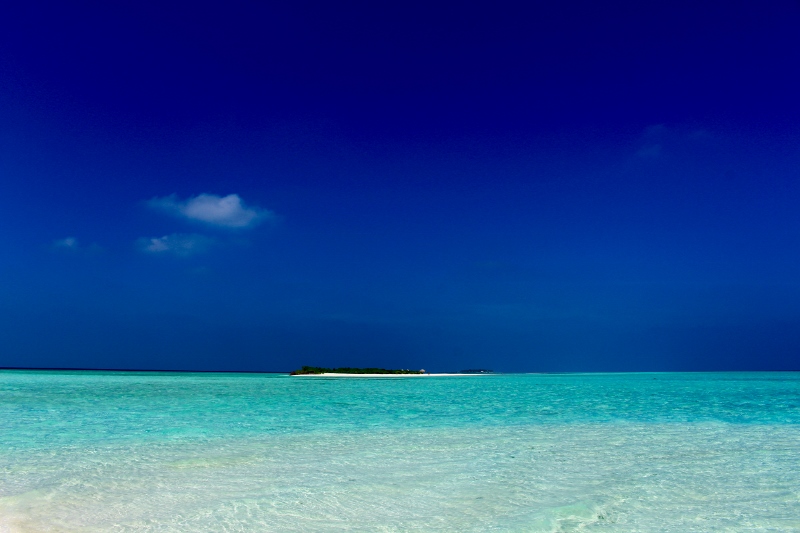
We tackled the country in a three-pronged approach in our newly enlightened state: One, uninhabited isles; two, remote villages; three, luxury resorts. Taking all these together, we realized we’d hit the trifecta. Our isolated islets offered not only pristine beauty, but also an opportunity to experience the rich underwater world void of a throng of tourists. Our sleepy villages offered all of us a social wonderland, and we met fast and dear friends in all of the villages we visited. And, at the few resorts that allow our salty paws to mire their impeccable paths, we got a taste of high-end luxury and the ultimate retreat.

Uninhabited Islets

The Maldives offers countless isles and at first the list of anchorages seemed infinite. As we traveled north, however, we found our planning complicated by the fact that the names were impossible to remember. On numerous occasions our conversation back on the boat went something like this: “What did that person tell us? Make sure you don’t miss out on Meeunthibeyhuttaa.” We’d pull the chart out onto the table and scour it for place names. “Here it is! Merengihuttaa. Oh. Look over here, was it Meyragilaa? Or here, Mariyamkoyyerataa. Or Mathikeranahuttaa or Magudhdhuvaa or Mudhimaahuttaa???” Eventually we gave up trying to organize a route and in typical Ātea fashion, we simply drifted northward with a vague agenda. The problem with a strategy based on ambiguity and spontaneity, as we quickly discovered, was the topography of the region didn’t lend itself to just hopping around. Let me explain.

Of the countless islands, they have been counted. One thousand one hundred and ninety, to be exact. To anyone with a few months to explore by yacht, this offers more than enough options. In fact, it was a bit daunting to think of navigating our way through the labyrinth, searching for the best that was on offer. But there are limits, as we soon found out. The depths are great and the drop-offs sheer, the result being that we often found ourselves completely cut off from the islands by design. The land does not gently slope off into deep water but quickly drops from one meter to fifty meters on a vertical wall, making anchoring impossible. We passed idyllic isle after idyllic isle, wishing to park and play. It was evident looking through the clear water what made the diving in the Maldives so extraordinary, with steep walls layered in beautiful coral and stripped and spotted fish, flashing the colours of the rainbow, dancing among the sweeping fans and crooked arms of hard corals. Instead, like a sick child watching out a bedroom window at the neighbourhood children at play, we were repeatedly denied access by depths too deep or shores too shallow.img_0922-800x533
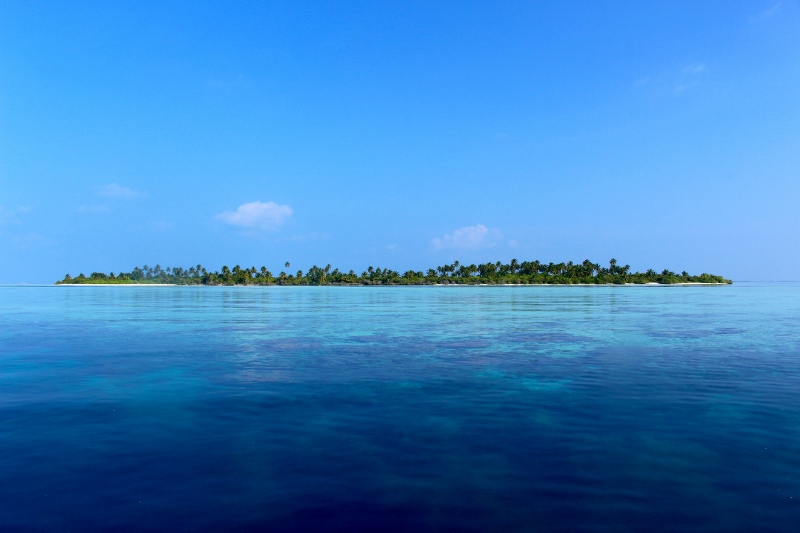
The Maldives consists entirely of islands, grouped in two chains of 26 atolls running parallel to each other. Inside the ring of islands that make up an atoll are numerous coral reefs that make movement through the atoll feasible only in good light and with reliable charts. As we searched within the atolls for an islet that offered a flat patch of sand, surrounded by a minefield of bommies in fading light, there was often the sense of urgency in the narrowing window of time. John spent considerable time prior to departure downloading Google Map images, providing us visual detail of the landscape. This is a process I highly recommend to any yacht destined for these waters. These images became invaluable to us on numerous occasions as our options for a suitable anchorage narrowed in the four-o’clock shadow of the waning sun.

Huvadhoo Atoll: The light is fading and I stand on the bow trying to spot white sand beneath the surface. We’ve sailed along the eastern fringe of the atoll for hours now but it seems the entire eastern side is a sheer drop off, thick in soft and hard corals seen easily through the clear water. I continue to scout ahead. We shared paths with dolphin and pilot whales, the first hunting sting ray and the latter on a slow migration east, but neither are what we search for. I call out for the umpteenth time: “There must be something on the next islet, because [insert new optimistic thought].” Finally, we concede defeat. John pulls up Google Map images of the area and we search the interior of the atoll for a submerged reef with enough depth to set our anchor. We look through the images for a shade of blue just the right hue: Too light and it is just knee deep, too dark and it is beyond the reach of our anchor windlass. Quickly, we find a spot two miles distant. It is this or we are in a serious pickle. Half an hour and we see a patch of sand that stands out like a halo. We made it. We sit on a submerged reef in the middle of the atoll completely surrounded by water. With the anchor set, we listen to the collective rush of a million little silver fish breaking the surface. Something larger hunts them. In the pastel tinted light of the setting sun, it is the only sound we hear as it punctuates the intense quiet that otherwise engulfs us. It is utterly, intensely serene.

We soon discovered that of the thousand islands that appear on our charts, many are submerged under a layer of water or are tiny spots of white sand poking out of the sea. An atoll that looked to be comprised of a dozen islets, two-thirds turn out to be sandbanks set on the outer fringing reef. On many occasions we set our sights on a seemingly suitable anchorage to find there wasn’t anything on the surface to explore or anywhere suitable to set our anchor. Our first few anchorages were no more than a submerged reef in the middle of the atoll, cut off from the beautiful islets that surrounded us. At first this offered seclusion we were keen to avoid, but after realizing the splendor below us we quickly turned our isolation into an opportunity.

Hadhdhunmathee Atoll: The water is crystal clear and the fans that wave just below the surface beckon us. At low tide, the small circle of reef is the size of a tennis court and breaks the surface at its highest peak at low tide. The tide is high now, however, and we have a 360-degree view of endless blue. The four of us leap off the side deck into the water, tog-free and fin-clad, and snorkel in the breaking morning light. From above it feels we are the only beings that exist, but seconds later we cannot see each other through the density of fish that engulf us: every sub-species of triggerfish, surgeonfish, wrasse, unicorn fish, sweetlips, butterfly fish, goby and tang is in attendance. It is like a scene in an animation film, though this isn’t an over-exaggeration of the reef. It exists true in life and in front, behind, below and above us.

Due to the extraordinary underwater scenery and clear water, the Maldives currently ranks among the best recreational dive destinations in the world. As such, charter boats and dive tours abound. Divers flock to the Maldives year-round for the chance to dive with whale sharks, manta ray, and a variety of shark that are well known to the region; for many, live-aboard dive boats offer a great way to explore the area. As an independent “live aboard,” however, we have one complication to our set up: Two dependents too young to dive with us and too young to be left on their own. John and I finally settle on a compromise: Three above and one below.

Felidhe Atoll: We’ve settled into a one up/one down pattern and it is John’s turn on the wall. While John dives, the kids and I tag alongside a mammoth moray eel. Normally they are tucked in deep in a crevice, head wagging in territorial warning. Today we were invited as guests on the hunt. Large, outstretched body gracefully navigates the nooks of the reef while we keep pace alongside as silent partners. Eventually he catches his meal. Eventually we wander our separate ways.

North Ari Atoll: Never before have I watch a reef shark hunt. Usually they swim with slow grace, but today this white tip is agitated, darting erratically beneath me. I hover on the wall, pulling in shallow steady breaths on my regulator hose and watch the shark directly below me. In a flash the shark sinks his head into a hole in the reef and retracts it wildly, thrashing his head like a starved dog with a bone. He caught his meal. I caught my breath.

Rasdhoo Atoll: I’ve often been a pest to the fish but rarely have the fish been a pest to me. Throughout my dive today I had a redtooth triggerfish trying to mate with my head and for forty minutes I tried, unsuccessfully, to shake him. It was quite the distraction as it was a dive brimming with fish life – so thick that at times it was impossible to focus in a specific direction as I tried to capture it all then finally relaxed into the pleasure of being overwhelmed – then suddenly my face was dive-bombed by a sudden flash of blue that blocked everything else from view. A drunk in a bar has never been as indiscrete or persistent. I would have been flattered had it not been for the fact that I was being courted by a fish.

It is a pity I can’t share any of this with you, visually, as John and I jointly destroyed all evidence in a joint venture of camera sabotage.

Inhabited Islands

Back to expectations set, we were told our highlights would come from the water and not from the land. The first was quickly confirmed, the second we were curious to verify. Accounts reported indifference from the local population and to expect a cold eye and frozen glare when going ashore. “The women,” I was told, “are generally reluctant to engage. You’ll make more friends with the fish.” I was disappointed to hear this. After several months of solitude I was excited for time with womenfolk, but no account indicated I’d be making very many friends. “The men are hard, and the women are harder.” Another comment that did not encourage expectations of communal afternoons filled with light banter. My internal social butterfly was going to wilt.

Regardless, I ventured ashore with eyes wide open and was quickly reminded that what you hear is often not what you get. Contrary to reports, the warmth we found from the villagers has been a defining feature of our trip. There hasn’t been a village visited that we’ve not been invited in as guests. We’ve been hosted and we’ve hosted, our social custom and their social custom being traded like much-valued secrets. We’ve learned to accept a type of local hospitality that is very different from our own: guests are fed first and the hosts second. We’ve been taught the secrets of the kitchen: which leaves are eaten fresh for health benefits and which are added to the pot to add flavour. We’ve been offered veggies out of gardens, coconuts from the trees, gifts from the shops and guidance in the streets. The kids have been invited into classrooms and into homes, they’ve been asked on play dates and on picnics, they’ve been included in family excursions to parks and beaches, and they’ve been offered endless tokens of friendship: lollies, presents, toys, cards.

I’ve found in many countries a social barrier that is hard to bridge, no matter how furious the smiles and or generous the gestures. It is most often the result of language barriers and sometimes the result of cultural differences that are too diverse. I’ve felt none of this in my interactions with the Maldivians. I appreciate where words of caution have come from as we experienced some of the less friendly stare-downs that some of the other cruisers encountered. But for the majority, we’ve experienced a warmth and inclusion, not as spectacles but as equals. There is genuineness in the encounters and authenticity to the friendships created and I treasure what they’ve added to our trip.

For the Maldivians, if you aren’t pulling in fish you are courting tourists. There isn’t much otherwise on offer in regard to earning potential in the in the outer islands. The pace of life is slow, a result of both the afternoon heat and a lack of industry. The coral-brick homes are surrounded by compound walls, set on neat sandy streets. Each building houses several generations and provides a gathering area for the constant ebb and flow of family, friends and neighbours that flow through the front door. When we wander ashore in the middle of the afternoon, we wander alone. A few men linger in the teashops and cafés or rest under the shade of a breadfruit tree but otherwise all activity happens indoors. Around four-thirty the streets start to fill and the community socializes from about five to seven, returning to their homes at suppertime.

Kolhumadulu Atoll: We are asked to sit, following a tour of the house and a tour of the gardens. The four of us are seated at the table, with a bustle of activity in the kitchen and a flurry of dishes presented in quick succession. A cat is under the table, a bird in a cage to my back, a parrot presented on outstretched finger. No dog, of course. An old man sits outside on the jollie and somewhere an old woman shuffles about. Mother, sister, and sister-in-law clatter about busily at the stove, the two daughters deliver plate after plate piled high with local fare. My stomach bulges. More food is delivered. At the end of the meal my contribution, a flan, is served to us. So far, no one else has eaten unless in stealth behind the door. No one sits at the table with us and no one other than ourselves appears to eat. We are introduced to visitors that appear in the doorway, a steady stream of neighborly curiosity. At the end of the meal mother, sister, sister-in-law, and the two daughters pull up chairs and sit with us, full of chatter. At the end of the evening we are presented a package, a gift of pre-purchased treats and an odd assortment of vegetables from the garden, and escort us back to our dinghy. It was our first introduction to local hospitality.

This type of evening would be repeated in a variety of homes throughout our journey. Most often men not present, often a bird on a perch, and always several generation of women and children surrounding us.

With a population of 373,000 spread across 200 inhabited islands, each averaging one to two kilometers in size, it might be easy to expect the villages to be a collection of overcrowded townships. This is not the case, particularly as 50% of the population reside in the capital city of Malé. At an expansive 5.8 square kilometers, Malé is conceivably the most densely populated city outside of the Vatican. Furthermore its size is constricted by height. Malé is constructed one meter above sea level with half of its land base coming from the dredged sand of nearby islets. It is incredible to think that in a thousand islands that average 1.8 meters, the natural geography of the entire archipelago is lower than the aft deck of Atea. We sit on our perch like little seabirds and look down at the islands that surround us.

Speaking of birds…

Malé Atoll: I look ahead and my heart skips a beat. For some unaccountable reason the sight makes me think of a mob scene. The quiet street we are wandering down is congested ahead with a haphazard patchwork of steel. A few dozen scooters and half a dozen cars blocked the road, none moving and all piled tailpipe to fender. All heads tilt skyward. Not one person speaks. Finally I notice a man in a tree with a thirty-foot pole and a large bird being poked at the end of it. Why did this random event catch such attention? To all present, it appeared to be a spellbinding event. I walk up to the first bystander and break the silence:

Me: “What’s going on?”
Guy, matter-of-factly: “A bird.”
Me, no more enlightened. The bird was a clear and obvious fact: “Yes, but what is he trying to do with the bird?”
Guy, a shrug and silence. Eyes never stray from the scene above.

I roll through several of these hushed, identical conversations before giving up on my quest for understanding, and patiently join the rest of the crowd in silent observation of the scene above. Finally, the eagle at the top of the tree flies off after being poked one time too many. Poking Guy descends from the tree. Everyone starts the engines and drive off without another word. I walk up to the man and ask the obvious:

Me: “What are you doing?”
Guy, in a tone suggesting I am short a few IQ: “Catching a bird.”
I refrain from the obvious question, “How do you catch a large bird of prey with a thin wooden stick?” Instead, in a quick study of local custom, I simply shrug.

Clearly quite pleased, the man smiles and drives off in hot pursuit of the winged, and to my eye quite vanished, bird. We shake our heads and laugh at the bizarre and unique cultural experience. These interactions are part of what I love about traveling: Things so different to us are just part of everyday activity, no questions asked, to the people around us.

Malé is the jumping off point for all foreign tourists heading to the islands as it has the only international airport in the Maldives (a second is under construction in the Addoo Atoll which will open up the southern atolls to tourism and development). Currently, most of the tourism centers around the atolls that surround Malé. The closer we got to Malé, the more we were confined. In fact, I’m sure that I am close to the mark when I say every speck of surfaced land within 50 miles of Malé supports an exclusive, high-end resort… a fact that burdened us given the inhospitality of staff to non-guests. We wanted to go ashore, explore, play on the beach, stretch our legs but the majority of resorts denied ad hoc guests. On the few attempts made, we were stopped by hotel security and escorted to reception where we were told in curt refrain, “Of course you can use the facilities, for the day, for the cost of renting a room.” At USD150 per person we thought a free swim in the ocean beat an expensive dip in the pool.

Nilandhe Atoll: We are anchored off a resort, though we cannot get near. We were about-faced by security on approach to the jetty and not-so-courteously asked to leave. I would mind, but not twenty minutes after returning to Atea we sight twin tips break the surface of the water around us. Manta. In a breath we are side-to-side with these graceful giants. A hundred red-and-white striped tourists ashore and not a single one out in the water. What they paid so dearly to get sight of we were close to for free; take that, Mr. Security Man, we don’t need your stinkin’ resort anyway! The mantas casually glide around us, unbothered by our invasion of their space. For two days, we jump in at random to swim by their side and watch them, mantles curled and pointed, uncurl. Braca is at my side as one sweeps past us in a silent arc, his brown eye looking into our blue, curious. Finally, on the third day, they leave. Having shared the anchorage together, their departure signals our own time to leave; we’ve gotten the best that the resort had to offer without ever stepping foot on the beach.

Resorts

Regardless of continuous rebuff, we wormed our way into the grace of a few sympathetic managers and invariably spent the equivalent rate. Rather than paying the no-room room charge, we paid our dues in meals and cocktails, salons and shops – the cocktails being an extravagant treat as there is no alcohol sold anywhere outside the resorts throughout the country. A loophole exists for resorts catering to international guests and we made the most of it: Mai tai’s poolside, red wine at dinner, sparkling with the setting sun. We tip our glasses and share the facilities with Chinese, Germans, English and Russians, the bulk of foreign visitors to the Maldives, and a scattering of other nationalities for the day. Couples steeped in love hold hands and wander down the soft sand beach or lounge on sundecks overhang the reef. It would appear that Cupid had taken residence, flinging haphazard arrows at all the guests but apparently not. The Maldives is ranked at the world’s most desired honeymoon destination and by the proliferation of luxury resorts it is no wonder.

Baa Atoll: Okay, I’m getting the hang of this: Dinghy ashore, a hand on the scruff of the neck and a complimentary ride to reception, get told to take a room or beat it, receive a second complimentary ride on the golf cart, and back to the boat. Regardless, I’m dogged. I still have hope. I persuade John to join me in my fruitless pursuit of five-star luxury. We are herded to reception and recited what we now can quote verbatim. Before the golf cart pulls up for our return trip to the dingy, I grab the kids and wander off to watch the shark feeding. The only shark I run into, however, is the manager rocking her baby at the end of the jetty. I coo, ask to cradle. Pretty soon we have a fake guest room, an open tab, and all amenities at our disposal. We spend the next few days livin’ large resort-style, hand-in-hand (when not hand-on-cocktail) and Cupid-struck. Ahh… the pleasure of success!

Oddly enough, a UN mission in the 1960s deemed the Maldives unsuitable for tourism, a misguided analysis as tourism boomed after the first mission in 1972. Over the next twenty-eight years multinationals had exclusive rights on tourist development and resorts sprang up all over the central atolls, gradually extending outward. The regulation prohibited the local population from drawing on the countries biggest economic asset, with the majority of revenue only minimally going to the local economy. Each resort consisted of an exclusive hotel on its own island with a population based entirely on tourists and staff. For the majority, they were managed by foreign multinationals with all services offered within the island and no contact with the local community. Foreigners were not allowed to visit any of the inhabited islands with tourists restricted to the resorts and cruisers banned from anchoring off any populated islands. There was no interaction between local Maldivian and tourist. The authorities did not welcome independent travelers, which included yachts, and as a result very few boats visited the region.

Within the past eight years the government has eased restrictions and the small towns sprinkled throughout the archipelago now cater to international clientele. This is the result of a change in regulation in 2009 that legalized the development of tourism on a local level, allowing tourists to stay among the local population rather than solely on privately owned resort islands. Tourism had become the number one economy in the Maldives and locals were finally able to profit from the industry. Guesthouses, cafes, dive shops and souvenir shops burgeoned throughout the local villages and more than a million tourists currently visit the country each year. Still, particularly in the south where tourism has been slower to develop, a foreigner can still seen as an anomaly:

Foammulah Atoll: We are in the southern atolls and we’ve not seen a single foreigner since our arrival in the Maldives two weeks prior. We’ve passed a few scattered resorts so clearly they come, but rarely stray from dive boat or resort. We’ve been at anchor for four days now, our arrival mere hours before a big storm, gusts up to 55 knots and rain tossed at us like needles. The village, blinded from view through the storm, finally emerges. We finally leave the boat for a much-needed stretch of the legs and play on the tiny islet we are anchored off of. On the main island, I see four bodies marching in line out to sea. Arm-in-arm, they head our way. The water is deep in places, the current strong. Each supporting each other and dragging one another along, progress is slow. As they near I make out four women in full dress. I wade out as they finally reach us to greet them, smiling as they puff from the exertion. They’ve crossed four islets to reach us.

There is no conclusion to this story, for it is not yet concluded. We are en route to India but will be returning to the Maldives mid-January for another shot at the trifecta. After all, of one thousand one hundred and ninety islets, we’ve still a few yet left to get through… so, I’ll leave this on pause, to continue early next year. In the meantime, our sleepy little lives are about to get a serious shot of south Indian adrenaline.
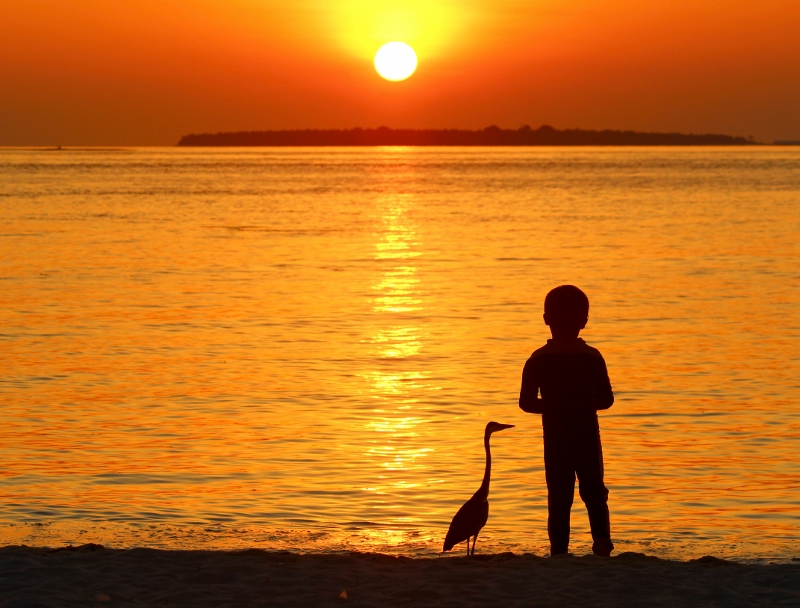
IMG_2575 (800x608).jpgClick here for more images of Our Time in the Maldives.
1500 MILES TO NOWHERE

A mariner’s equation: VOYAGE DURATION = DISTANCE TRAVELLED / SPEED OVER GROUND 

Ātea’s statistics: 300 HOURS (12.5 DAYS) = 1500 NAUTICAL MILES / 5 KNOTS

Moving at five knots over a distance of 1500 miles feels like you are on the long haul to nowhere. There is no dramatic change of scenery to occupy the eye, no pit stop to pull off at for a panoramic view and a stretch of leg, no store clerk at the petrol station for a moment of dull banter. There are no mountains that turn to valleys that turn to plains to mark the passage of time. Here there is blue if you look up, there is blue if you look down, and there is blue if you look 360° around you. Tomorrow comes but time loses definition as the days roll into each other. I can’t say that is has been a long trip, or a short one. It isn’t time that seems to matter so much out here – a week at sea or a month makes no difference. It will all be wrapped up into a whole experience rather than cut up into segments of time. The crossing of an ocean: Done and delivered as a neatly packaged moment in time.

That said this has been a passage of sameness. Our northwestern crawl from the sou’eastern corner of the Indian Ocean to the center of it has been a classic trade wind passage. Sails set wing-on-wing and our nose pointed west, we’ve had twenty-knot winds blowing up our lady’s bum at a continuous 180° for the duration of our passage. We‘ve had twelve days of an empty ocean, consistent winds, rolling seas, and blue, blue skies. Today seems no different than yesterday or the day before. Only our instruments clock the passage of time, and it isn’t until the end of the tenth day that I dare to count the miles we have left to travel. It was sight of another ship that roused my curiosity; we’d sighted our first ship with 1200 miles clocked behind us and a mere 55 hours to go. Clearly, we’d hit the shipping lanes as three other tankers crossed our path within ten miles over the course of the following 24-hours. It was a quick shift from feeling like we owned the ocean to becoming a tiny speck of flotsam drifting under the bulbous nose of those titanic giants. It is impossible to look at those big hunks of floating steel, 300 meters stem to stern moving at a clip of 20 knots, and not wonder what they might think at the sight of our tiny dot on the horizon, bopping in the breeze with our rags billowing in the wind out in the middle of this expansive sea. They may wonder where we were headed – other than a small, uninhabited archipelago there were still a lot of miles to go to get anywhere. With over one thousand miles behind us, it did feel like we were on the long haul to nowhere.

PASSAGE NOTES 21/9/16: Unlike the solid mass of the passing ships, Ātea rolls like a super-sized balloon tumbling haphazardly on a disturbed lake. I took Braca to an entertainment park in Langkawi and paid $5 for 15 minutes to tumble about on the inside of a human-size plastic bubble in an artificial lake and at that was more than enough time to frazzle the brain. Ātea provides us that same bubble to do our somersaults and cartwheels in 24-hours a day without an exit option.

While the sailing had been easy, a downwind run meant that the boat constantly rolled from side to side, knocking us about like a handful of dice mid-roll. The wind remained a constant 20-25 knots for the duration of the trip, but the big waves that defined the first four days settled into lazy rolling seas. Regardless of this shift, we spent our days like trapped animals at the zoo.

PASSAGE NOTES 15/9/16: We stand with all four limbs spread, the four of us as long-legged giraffes taking a drink at the watering hole; we piss like starfish in strong current, limbs splayed and grasping onto any surface that’ll hold; we sleep like small lizards latched onto a cement wall, fingers and toes seized in a death-grip on each corner of the bed. We somehow manage to cook on a swinging stove with bouncing pots and open the fridge with juggling skills honed to catch Tupperware as it tumbles out the door. In this undulating chaos, the kids, as always, seem unperturbed.

Again and again the children remind me of the value of living in the moment; regardless of living on the back of a bucking bull, life through two- and four-year old eyes is pretty good out on the high seas.

A change on Ātea is the ability to communicate with the outside world with ease.  Due to our need for emergency cover for Braca’s diabetes and an appreciation of the complexities of the Indian Ocean weather patterns, we finally decided that a satellite phone was justified. In previous years, John would sit hunched over the long-range radio with ears strained to catch the best signal through atmospheric static and hiss. Our batteries drained as we tried to connect again and again, myself at the helm for the duration as the radio sent our autopilot in circles. Sending a single email used to be a task to consume everyone for the whole morning. Now, at the click of a button, we can send a few emails and download the weather charts, with a computer-optimized route taking the weather variance into account. Reams of data appear predicting our course, speed, position and weather for days in advance. And yet, we are more accustomed to the time trusted mariners laws. Despite computerized weather predictions, our departure date from Cocos was determined by the availability of fresh eggs at the local store. Despite the daily digital updates of subtle wind variances, our track was largely known to us months in advance, and set by historical averages and sailing ship passage notes contained in Admiralty Pilot Charts.

While certain systems on Ātea had been updated, there is still much in our world that is hard won – and lost – the old fashioned way. Take fishing for example. We have a rusty old rod and sun-bleached fishing line that we were using to try and pull dinner from the sea. After five lost catches in succession, tension started to mount with every fish caught and – unwillingly – released. We might as well have been tossing our tackle into the deep blue for the effectiveness of our fishing. The quick ziiiiippp – snap! lasted mere seconds before all was silent onboard again. We were feeling like the largest failures in the world of fishing until we realized what we were up against – big, fast offshore game fish. These weren’t two-kilo snapper or foot-long trevally – we were hunting hunters – and losing. Our last catch was our only battle, man dulling beast over an intense 45 minutes rather than our standard 30-second defeat. When we saw the long, dark shadow and a sharp, pointed tailfin of a marlin hauled up under our stern, we knew we were fighting a battle we’d never win with our crappy second-rate gear. We were up for smaller fry, and in that we were proficient; at least we could say that catching fish hadn’t totally eluded us.

Flying fish were bedecking our topsides nightly by the dozen. While our catch didn’t overwhelm John or I, the little winged fish mesmerized Braca and Ayla. And so, with shrunken eyes and crisp folded wings, these little lifeless creatures became endless playthings for the kids. So much so that when dolphin came to play under our bows, the kids would turn their backs on our mammalian guests and continue their fantasy discourse with their 3-inch scaled friends. Fortunately, we were able to replace the dead creatures nightly before the smell of dead fish overtook our senses. If not engaged with their newly adopted phantom friends, the kids would run amok with clothes pegs transformed in their imagination to batfish and butterfly fish, “fishing them out of the sea” on a length of twine, or dodge tea towels flicked wildly around the salon as stand-in’s for “baby manta ray” and “brother sailfish.” Clearly, creativity runs paramount in our world at the moment and dead fish and housewares beat Tonka toys every time.

PASSAGE NOTES 20/9/16: The kids seem to have never-ending energy and ever-changing ideas for filling their days. For me, I am enjoying some quiet time to relax, read a book, idly watch the sky and the sea, and let my mind drift in the quiet. I love night watch with the black ocean surrounding us, brilliant sparkling stars above, and the boat forging ahead at a fast clip. The boat lifts and drops to the movement of the waves; we are now seven days out and we’ve learned the sway of her dance. At first a racy tango, now a slow waltz. The wind is behind us at 140-160 degrees – there is no sail change, no tacking, no weather or wind shift. I look to the horizon and know that we are alone out here; the feeling is akin to a complete state of bliss.

My notes on that day make me think of a quote by Herman Melville: “Meditation and water are wedded forever.” Not that this feeling of peace hasn’t allowed us our wilder moments; there have been a few social engagements to attend along the way. On the 19th of September with 750 miles behind us, we celebrated “half-way day” with much fanfare. On the 20th of September we celebrated John’s 49th birthday, having decorated the interior of the boat as a box to be opened and the kids and I on the inside as individually wrapped gifts. On the 23th of September we celebrated “Rain Forest” day, where we pretended that the inside of the boat was a vast forest and on the 26th of September, our final day, we all put hand to brow and “land ho’ed” together at the first sight of land.

However we planned events to occupy the passage, our greatest surprise came the night before landfall when a Booby bird came calling. It was nighttime and I presume the bird was attracted to the lights; she flapped onboard then knocked on our windows with her pretty blue beak. I assumed she was injured as I don’t have experience of a wild animal volunteering close contact, but that wasn’t the case. I kept retreating to give her space to recuperate and fly, and she kept advancing toward me, inquisitive and confident. She waddled from the side gunnel to the aft deck, then from the helm to the cockpit floor. After wandering around and exploring her new surroundings, the pretty little bird finally settled into a nest of ropes in the bottom of the cockpit and tucked her head in to sleep. I sat in a corner watching in amazement: Is this what Chagos will be like, filled with wildlife completely unfazed by human contact? After several hours and several pounds of guano later, I decided it was time for our feathered friend to fly. I wasn’t entirely sure that she was onboard by her own intention and I was afraid that she was unwittingly trapped, so I covered her with a hand towel and freed her. I half expected my limbs to be pecked apart but she calmly let me collect her and set her out on deck, only for her to immediately return to her spot in the cockpit. Was it really her choice to keep our company? I put her back out again and she settled down on our railing where she remained through the night.

Our Booby-friend flapped off at daybreak as the dolphins rolled in, escorting us along the outer edge of the reef. I couldn’t help but feel that they were the keepers of the lagoon and our acceptance into the atoll rested on their judgement. As they rolled onto their sides to look at us, would they see our sails as a white flag and our curious faces as un-hostile company? Would they understand that we came on a peace mission and that their sanctuary would be remain undisturbed by us? They swam the arc of the reef at our side and finally bid us our welcome and their farewell as we took a tentative approach toward the pass. We picked a line through the narrow weaving channel with its harrowing four-meter depth, and rode the rolling surf into the sanctity of the lagoon.

Chagos at Last! We treated that evening as a true celebration. After a few significant setbacks, we’d finally realized our goal: time in a totally remote, uninhabited atoll un-tampered by human interference over the past several decades. We are completely alone except for the birds and the sea life, and the nearest human contact is over two hundred miles away. The isolation is absolute. We expect no outside contact over the next four weeks and for us this is the quintessence of what Chagos offers. Set three hundred miles south of the equator in the middle of the Indian Ocean, Chagos is the Shangri-La of the Sea. Chagos is the X marked on a pirate’s treasure map. It is the illusive gold of every panhandling miner, the gem of the seven seas. It is the epitome of every cruiser’s dream when they cast their lines and head off to sea in search of nirvana, the bonus being very few seek these atolls out as few are aware of their existence.

After almost two weeks of all-encompassing blue, I sat in the hammock at anchor that evening and watched the sky turn a radiant scarlet red. It was as if we’d raced to the finish line and, with the ribbon still draped across our heaving chests, the world stood up and applauded us. “I am happy to my core,” I said as I swung in the hammock to the setting sun with a flute of champagne in my hand, completely enfolded in a feeling of total Zen. No matter what the next month in Chagos holds for us, I have no doubt the reward will far outweigh the effort it has taken us to get here. After a myriad of setbacks, we’ve just traveled 1500 miles to nowhere, and there is nowhere I rather be.


To view corresponding photo album, go to: 1500 Photos of Nowhere

The Cocomo

Link to published article: The Kocomo

Aruba, Jamaica, ohh I want to take ya,
Bermuda, Bahama, come on pretty mama,
Key Largo, Montigo, baby why don’t we go to the Cocomo…

The Beach Boy’s 1970s lyrics were what put Cocos Keeling in our sights. As we sailed south towards the small island dependency of Australia, I kept singing the song and imagining us bound for the kind of island that songs and dreams are made of. “Ohh I wanna take you down to Cocomo. We’ll get there fast and then we’ll take it slow…” and that’s exactly what we intended for our two weeks in paradise.

That said, I know the actual song had nothing to do with Cocos Keeling per say, and I’ve yet to find out what the Cocomo actually is. Regardless, heading for an island oasis in the middle of a large ocean was enough of a similarity; the palm trees would sway under white sand beaches, the waters would shimmer cool and invitingly, and I could almost taste the rum on my lips. What I didn’t foresee was the gale that preceded us that cast the island in a blanket of grey, but even the regional storm that typically shrouds everything in muted colours couldn’t dampen the vibrancy that defines this idyllic tropical island getaway. In all the damp greyness that surrounded us, even the deepest shadow cast by the clouds wasn’t enough to dampen the hues of bright blue that reflected off the water. As soon as the clouds moved past this place would pop in electric layers of colour and I knew that we’d landed what many cruisers seek out in their travels: A slice of island heaven.

Of course, history tells that we aren’t the only ones who have chosen this place as a sailor’s Mecca. The islands earliest history is the stuff cartoons are made from, though perhaps only appreciated by those with a twisted sense of humour. Cocos Keeling was first settled by an Englishman by the name of John Hare in 1826, who visited earlier in his career and determined it was prime real estate. On retirement he returned with a harem of forty women to see out his final years in the uninhabited and unclaimed island oasis. His plans were thwarted a few years later with the arrival of John Clunies-Ross and his motley crew. It took little time for the women to see the opportunity, and defect. Tensions ran high between the two former associates and Clunies-Ross, wielding more manpower, banished Hare to an adjacent islet shortly thereafter. Marooned and abandoned, Hare managed to escape and fled back to civilization but died several years later dejected and alone. Clearly, the Cocomo eluded him. Cocos Keeling did not provide John Hare the stuff songs and dreams are made of after all; the same was almost said of us.

Like John Hare, our decision to come to Cocos Keeling held its own comedies and dramas. Coming in between squalls, we found it difficult to find the entrance to the small lagoon off Direction Island, the designated anchorage for visiting yachts. After struggling over the previous 24-hours to make any headway, we finally reached the island only to be cut off from our anchorage by a line of coral that stretched across the lagoon. The entrance was marked by directional marker buoys, but it was hard to see any way over the reef. After scratching our heads and spinning Ātea in circles for half an hour, the threat of another squall pushed us to make a decision. I donned mask and snorkel, jumped in with a splash, and guided us over the reef by sight. The anchor was finally laid out and we breathed a sigh of relief. We were in, unscathed. I jumped around deck, counting the black tip sharks that patrolled beneath our hull and the yachts that joined us in the marina: six. Having neighbours was totally unexpected. Coming from Asia we were well behind any of the yachts transiting the Indian Ocean this year. We soon realized we’d hit a totally different cycle of cruiser: Those crossing due west on a southern route on a shorter timeframe.

About half an hour after arrival the police called us on the radio signaling they wanted to come alongside to clear us in, making protocol easy by coming to us directly. Relief. We would be spared the hassle of tramping around an unknown country trying to find the officials to clear in. They promptly pulled up and tied off our port side, but with difficulty. The squall had brought strong winds that churned up the sea and the vessels jostled against each other. I stated my concern about two steel hinges on the rib but the captain and police official dismissed my apprehension. This was standard procedure. What standard procedure didn’t protect us against, to our dismay, was pilot error and atypical sea conditions. Half way through clearance the vessels turned side on to the waves and a gut-wrenching BANG! BANG! BANG! rang through our ship. We were left with two softball-sized dents in the side of our hull. Lesson number one: always listen to your instinct, regardless of the size of the badge on someone’s hip.

Lesson number two: Always follow protocol when entering a country. Particularly if that country is Australia, and double that if this is your second offense. Unfortunately, I’d forgotten that 1) I’m not a New Zealand citizen and permanent residency in this case doesn’t count, 2) I ‘m travelling on an American passport and needed a visa to enter Australia, 3) I have memory failure at the least opportune moments, and the fact that I’d overstayed my visa once before was a distant, forgotten memory. But we didn’t’ know any of this yet. We found out about lesson two a week later, with the threat of a $5000 fine.

There is nothing quite like an unexpected visit from the Australian police. It is not an experience I’d recommend, and not one I’d like to repeat. A few days after arrival we were called on the radio by the police and asked if all parties were onboard with passports on hand. An odd enquiry; I couldn’t imagine what they were interested in but nonetheless the question left me feeling uncomfortable. An hour later we were boarded and I was asked if I could be spoken to in private, and that the conversation would be videotaped and my statement recorded. I managed to squeak out my consent.

Police: “Excuse me ma’am, you are in violation of Australian border security on a visa infringement. Are you aware of this?”My pulse quickened: “What?”
Police: “Headquarters in Canberra have informed me that you have entered the country without a valid permit and are currently being investigated for violation of boarder security. Are you Kia Koropp and can you confirm that this your passport?”
You find it hard to think, let alone speak, in moments like these and so one word answered was all I could manage. “Yes. Yes.”
Police: “Is this an American passport?”
Feebly, “Yes.”
Police: “Do you have a visa to enter Australia or an Australian territory in this passport?”
At this, I started to sweat. “No…?”
Police: Have you ever been questioned about a violation of border security in the past?
Memory and eyes go blank. “What?! Definitely NOT.”

With my nerves shaken and eyes flickering between video recorder and clean-shaven cop, my shaky interrogation continued. While the Australian police have a fierce reputation, the kind who opts for a cushy job in a small island community and rides around on a bicycle to keep a paternal eye on a benign, close-knit community doesn’t fit the mold. Guided through the remainder of the interrogation with winks and soft suggestive prods, the rest of the conversation went something like this:

Police, out of sight of the camera eye: “Yes. Well I understand you left Sumatra without adequate provisions for the duration of your stay in Chagos.” Wink wink. “And you may have been concerned with the welfare of your child and, being in need of medical facilities, had to unexpectedly reroute to Cocos.” Wink wink. “And that storm… Whoa. That storm was fierce. There is no way you could continue on your course to Chagos AS INTENDED.” Wink wink.

In a moment like this you want to smile and cry and reach out to hug this random warm-hearted stranger offering salvation and unbridled kindness. Continuing our empathetic exchange with an air of formality, I was told that while he believed in my innocence and would request that a formal warning be issued, he could only provide a recommendation and the offence could warrant a $5,000 fine. The decision would happen by an official removed from the scene in faraway Canberra, sitting behind a desk flicking through incoming emails in what I hoped would be a very good mood. For the moment we were told to sit tight, relax and enjoy our time in paradise.

This was certainly NOT turning out to be the Cocomo we were expecting. Had Aruba and Jamaica been on this side of the world, we would have taken our entourage and our dreams elsewhere, but like John Hare we were temporarily marooned; it had taken us a week to get here and our next destination was two weeks away. Besides, what we needed next was a clinic and this was something Cocos Keeling could offer us. Ayla had picked up a rash on passage and some of the red spots had turned into welts that were spreading. Fortunately, the diagnosis was a benign skin infection called impetigo and curable with a week of medication. We also got Braca’s HBA1C test done, indicating his blood sugar control over a three-month period, which gave us reassurance we were managing his diabetes responsibly. Unbeknownst to us at the time, record of our clinic visit would provide us a significant lifeline when it came to dealing with Australian immigration over my visa infringement.

Fortunately we’d already gotten a glimpse of what Cocos had to offer and we were charmed, so hightailing it out of the country was not under consideration. Regardless of a string of upsets, this was going to be a fantastic destination and it didn’t take me long to put my infringement concerns on the sidelines. We’d found what the Beach Boys promised us and we were going to live the lyrics:

That’s where you wanna go to get away from it all, Cocomo
Bodies in the sand
Tropical drink melting in the hand
We’ll be falling in love to the rhythm of the steel drum band
Down in Cocomo…

We spent our days counting the black tip reef shark that made a daily pilgrimage around our boat, watching the dolphins spin under the spread of midafternoon rainbows and smiling at the large sea turtles that lazily idled by.  Social engagements with other cruisers included sundowners and rowdy, raucous games in the cockpit. We built bonfires on the beach at sunset, shared meals on the spit ashore with an island-style fare of barracuda and mahi-mahi thrown on the barbeque served with heart of palm torn from the root of fledgling palm trees, and we washed it all down with the rich water from freshly cracked coconuts. We were living the Cocomo, Keeling-style. We had it all, ukulele and percussions included. All we were missing was the steel drums. Every day was marked with an afternoon snorkel, a swim off the beach and the slow pace of island living.

It didn’t take us long to register that we had changed cruising seasons with the transit between the northern and southern hemisphere, and in doing so we’d hooked into a completely different pattern of climate, of environment, and of cruiser. Instead of being hot, humid and windless as it was in Asia, the climate here is slightly cooler with constant trade winds. The water temperature dropped from 32°C to 25°C and the air temperature dropped with it. We started wearing clothes onboard again and sleeping under sheets, a novel change brought by the cool breezes of the southern trade winds. The environment is now cleaner and less spoilt, and more protected. This is a function of the Australian enforcement, which has with strict regulations in place to protect the environment. This is evident in the clarity of water, the cleanliness of the shores and the prevalence of shark and large schools of reef fish. While debris that flows south from Asia does filter through, the difference in the quality of the environment both above and below the water is dramatic and so very rare to see.

Two weeks of livin’ the Cocomo and I was back in front of the friendly police officer who, after inviting me to his wife’s playgroup and offering to collect and deliver me in his golf cart, broke the news: I’d received a slap on a hand, a warning. It seemed that my Canberra savior had woken in tussled bedcovers, had her morning coffee made by a particularly charming barista delivered especially strong and hot, and walked into the office that day with a spring in her step and a whistle on her lips… or something like that. I was not going to be $5000 in debt, I was not going to be herded out of the island by a bicycle-peddling policeman and I would not be barred by force in any future entry down unda. We were now OFFICIALLY welcome guests of this beautiful Australian dependency.

And so, we OFFICIALLY started to explore beyond the captivating confines of the lagoon in which we perched. The islands are positioned into two main groups: North Keeling is an atoll with a continuous coral reef enclosing a lagoon, South Keeling consists of an atoll with a reef connecting the various main islands around a large lagoon. Yachts have one designated anchorage in the lagoon at the northern entrance of South Keeling. It is here on Direction Island that the cruising yachts are based and where most of the yachtie activity is centered. The cruising guide states, “this is the only island in the world that is completely dedicated to cruisers.” In fact, the island is dedicated to the locals and holidaymakers that come from the inhabited islands surrounding it and not the cruisers specifically; however, all visitors are free to use the amenities as long as resources are used responsibly. Ashore there is a water tank for rainwater catchment, covered picnic benches and  tables scattered along the beachfront, swings and hammocks hanging from trees, bonfire pits and barbeque facilities, coconut trees inscribed with toilet signs to direct the user to their perch, complete with long drop and a stash of abandoned beach chairs. There is even the convenience of Wi-Fi and a telephone booth offering free calls to anyone in the islands. All this is on offer for the nominal fee of $50 per week, and while some would complain at paying for a yacht swinging on her own anchor, who could complain about paying for a place with free local calls?!

It was at this random payphone, placed conspicuously between palm trees, that I met Flo. Between tears and phone calls, I scraped together the unfortunate situation that this single Italian cruiser had gotten herself into. Joining as temporary crew on a Chilean yacht, she’d developed a hostile relationship with the captain who’d threatened to throw her from the ship mid-passage. Clearly not an ideal situation as she and the skipper were looking at 1,700 miles to the Maldives in front of them. She was frantic to find accommodation ashore but none was available, and I took the opportunity to repay earlier kindnesses extended to me by strangers: I offered a safe haven. She packed her bags and by morning we’d acquired a new crewmember on Atea. It was a change of scene having someone onboard and we enjoyed the company, although it was a reminder of how tight a space our floating home becomes in the company of strangers. Regardless, a beautiful friendship was made through an unexpected encounter, thanks to a random telephone booth tucked up in the oddest, most unlikely spot on Earth.

While Direction Island offers a cushy gig for the cruiser, the quaintness of Cocos stands out with its matching cookie-cutter houses and complimentary golf cart that line the identical cobbled brick streets of the five by five block town of nearby Home Island. Even the police station is quaint, with its single desk and single fan in a small one-room office with an officer offering us cookies from the small fridge that sits in the corner next to a bicycle and the police-marked golf-cart parked out front. Better still, we made our fee payment at the Shires office, which can only make one think of a sweet pointy-eared, hairy three-toed hobbit greeting you warmly with a lop-sided smile. I’ve come to think of it as the Leave It To Beaver Island of the modern day world, a reference to the popular 1960’s American sitcom where everything is conventional in ordered suburbia. Home Island is about as quaint as a place can get.

Muslim descendants from Malaysia predominantly inhabit Home Island, with about two thousand residents on the small island. On the other hand West Island – the only other island with a town to offer –has a few hundred Australian residents, most of whom are on two- to three-year governmental contracts. The ethnic separation between the two islands is distinct, and clearly there are large subsidies going to support the island group from Australia. Not only is this evident in the two quaint provincial towns with identical houses lined like rows of Crayola pencils down neat cobbled streets, or the state-compensated golf-carts, the library or local school. On an island with little industry, it is hard to think of anyone being able to support himself or herself regardless of additional funding. Take shopping at the one-and-only grocery store on the island, with goods that arrive by plane twice a month and sold at exorbitant prices. Fresh fruit and vegetables arrive every other Friday by plane from Australia, and the villagers stand in a long line at the single cash register at daybreak Saturday morning for first opportunity to get fresh produce. If you aren’t there early, you’ve two weeks to go before you get the next chance to stock your cupboards. If it isn’t there, good luck finding it at one of the three tiny one-room shops, all offering the same collection of cheap plastic toys and the same dusty tins shipped from India.

If you do happen to be first in line that second Saturday, you better be prepared with your monthly wage, to offer up your firstborn or to take out a mortgage against your house: It is strategically impossible to leaving with a good supply of food and money in your bank account. A small box of basics runs no less than $400, and that doesn’t include wine and cheese. In fact, all the cheese in the chiller expired months ago and the only wine offered on the island is alcohol-free, so when I speak of a box of basics that’s exactly what I mean: A handful of onions, a box of crackers, powdered milk and a packet of noodles. The basics. Now, come that second Friday, there is the option of fresh greens, but that’ll cost you. In fact, in two weeks it cost us $1000 AND we came to the island fully provisioned.

What I was able to acquire cost us dearly: $30 for a dozen tomatoes, $25 for a handful of carrots, $40 for five cartons of eggs. Unfortunately the $16 for two head of lettuce, $6 per capsicum, $10 for a small Ziploc bag of green beans, $15 for half a small broccoli and half a cauliflower had to be left behind as the solar-run Wi-Fi was down for the week and we couldn’t transfer any money into our account. We shopped in Sumatra for a two-month provisioning at a fraction of the cost and left fully stored with every fruit and vegetable imaginable. We were going to eat like royalty in the uninhabited archipelago, sipping our passion fruit-pineapple piña coladas at sundown, crunching through our Cobb salad for lunch and enjoying a fresh fruit medley for breakfast. With the extension of the additional weeks in Cocos and restrictions on re-provisioning, our dial may be pushed toward empty during our time in Chagos. Fingers crossed, we learn to fish.

One trademark of Cocos comes from her position on the map. At 12S latitude, the little island group sits in the middle of the southeast trade winds, receiving strong consistent winds and thereby making it an ideal destination for those addicted to wind-on-water sports. For us, that means kite surfing. That is, it SHOULD have meant kite surfing had our kit not been curled up to melt in their bags during our last few seasons in the sweltering tropical heat of windless Asia. As a result, our kites couldn’t offer us a play in the 20-knot wind that beckoned us. Each day John sat under the palms swaying in the breeze hunched over tubes and pumps and repair kits, attempt after failed attempt to repair each split seam. I looked on towards the picturesque horizon as our French sailing mates soared backward and forwards under the spread of their leak-less kite, hearing our old chant of “if only we could find a spot where the water was warm, the breeze steady, and the lagoon flat and empty…” and kicked myself for, yet again, equipment failure at the least opportune moment.

Since we couldn’t play on top of the water, we spent our days in it. Given the health and richness of the underwater environment, protected as a marine reserve, there was little for us to complain about. The snorkeling was superb for the clarity, the corals and the life. Gray, black and white tip reef shark abound and proved reliable swimming companions, as did the large schools of hump-head wrasse and parrotfish, so thick in number that I could dive down and reach out to tickle their underbellies. There were grouper the size of my four-year old son, butterfly, trumpet and clown fish, flirtatious rather than shy, snapper and trevally for hook and sinker and an afternoon braai and large-mouthed clams and umpteen spongy sea cucumbers to serve on the side. Dolphin often came into the lagoon to swim around the resting yachts and several sea turtles poked around inquisitively. The kids leaped forward in their swimming skills; with Braca and Ayla swimming underwater unassisted by parent or float and both finding a newfound love of snorkelling, we would poke around the reef each day curious and playful in the rich aquatic wonderland. There was a rip that we often returned to with current running through it at three knots. We’d take the dingy with the outboard full tilt up to the top of the channel and jump in holding onto the painter and drift through the pass, our mouths agape and eyes batting around wildly trying to take it all in. Braca and Ayla kicked alongside us, no idea how truly spectacular the experience was but excited all the same about the sharks resting under the ledges and the myriad of fish that surrounded us.

For such a small, isolated spot on the world map, Cocos Keeling has delivered us an extraordinary time full of new charms and unexpected surprises, and it is hard to say goodbye to this uniquely charming atoll. From here, we resume our thrice-revised itinerary and head for Chagos where I expect to find a myriad of new delights. However, regardless of the new adventures that lay ahead, it is hard pull our bodies from the sand, leave behind the steel drum band and put down the tropical drink melting in my hand…

That said, perhaps a similar Cocomo lay waiting for us:

We’ll put out to sea and we’ll perfect our chemistry
By and by we’ll defy a little bit of gravity
Afternoon delight, cocktails and moonlit nights,
That dreamy look in your eye, give me a tropical contact high
Way down in Cocomo…
NOTE: If you are the Australian police, boarder control or, for that matter, any governmental agency, this essay is for entertainment purposes only. No passage is to be taken literally, and no statement can be used against me in a court of law. If in the future I should be under investigation for any reason involving entering or leaving the country, I would like to officially state that IN ROUTE TO CHAGOS there were three crucial and unforeseeable reasons to divert: 1) the weather was Gale Force 8, 2) both Ayla and Braca are on record at the clinic on Home Island, and 3) we were desperate for a few blocks of Cocos expired cheese.
If you are a close mate or family member, interpret as you wish. You know me well… does this sound like a scenario I could POSSIBLY get myself into?

Twenty-four Seven

DAY 1: 20.8.2016 00:20 S 1°10.311 E 98°19.685
Winds: 10-15 knots from 150° averaging 3 knots SOG

So, here we are – day one – our first day at sea behind us! It is funny to realize the awesome power of your own mind to control your thoughts and emotions; as our days counted down to our “big ocean crossing” – 1800 miles due west from Sumatra to Chagos – I kept ruminating about how difficult it was going to be for me to be confined to the boat for fourteen days. I know from experience that Ayla and Braca do fine onboard with their imagination and their toys to entertain them, and John loves the sailing aspect of cruising so he was looking forward to a long offshore passage. I do this for the cultural experience: the travel, the day-to-day interactions with the locals, and the pleasure of discovering of new places. However, within the last few days my excitement for the coming passage started to mount and my attitude shifted from one of tolerance to one of anticipation. It has been a long time since I’ve done an extended ocean passage but I’ve done it enough times to know that it becomes an adventure in itself; life onboard takes a shape and soon enough a routine is established and the days tick by with a unique flavour. What was going to confine me has changed now to an exciting experience ahead of us! Let’s just hope we get enough southerly to avoid too many squalls – the other hit us unexpectedly at 40 knots and laid Atea down for her first time – more excitement than I am looking for though a good test that she – and we – are prepared for some rough weather should it come.

Today we pulled anchor from yet another of the many amazing islands off the west coast of Sumatra. We knew so little prior to pulling onto her shores and now realize what a hidden gem it is; I wish our two months could have been six – a cruiser can easily spend the time there dancing down her western shore, dodging in and out of the islands that run down the coast. A quick goodbye coffee with Isobel from SV Manta and a trip shore to part ways with our resident pet hermit crabs, Water Liver and Water Maker, come to us by way of a local at Asu who watched Ayla and Braca on the beach for us during our stay there – and refused to be paid – so that we could dive in the afternoons. It was fun to have a pet onboard for a short while, albeit a non-cuddly one, though the obligation of keeping them alive during our long passage was not a pressure I was willing to take on. We will find new friends in Chagos when we get there.

Which brings to mind an exciting turn of events and a prime example of the freedom we have in the lifestyle that we live. Our revised cruising plans for the year, made by necessity after our ordeal with Braca’s diabetes, is that we would sail from Malaysia to Sumatra, west to Chagos and north to the Maldives this year. This was still the plan when clearing customs and immigration in Sumatra. In fact, this was still our plan until a day ago when we left mainland to the Telos island group to prepare Atea for passage. In route on night passage, a thought popped up that intrigued me… we might want to consider a trip to Cocos Keeling in route… which is not so much in route as it is 700 miles in the wrong direction. John and I talked about it in the morning and after checking some details decided it would be a good idea – the addition of Cocos would add an extra 700 sea miles and we would need to delay our Chagos permit but it was otherwise a worthwhile detour. After committing to this new plan it dawned on me how very lucky we are: We’d planned a westward sail months in advance and at the last moment we decide to point our bows south and head for an entirely different country on a whim. At my desk in the city in my old life it would have blown my mind to know that I could have such freedom; in this one, it is barely worth a shrug. One day Plan A, Plan B the next, and in the end we follow a course we never even envisioned.

Today has been a good one. How many times have I watched land recede behind us as we look to the horizon with all its water and unknown conditions in front of us? This afternoon brought dolphins off our port side, jumping and diving in a pod of fifteen. What a sweet parting to our two months in Sumatra. We expect a few days of light winds and squalls before he hit the trades, then with luck we have the wind on a beam reach to Cocos. That’s our hope after receiving our grib weather files for our new route – next we wait and see what presents.

DAY 2: 21.8.16 21:56 S 2°44.3 078 E 98°36.373
Winds: 5-10 knots from 05° averaging 4 knots SOG

Today has been one of settling into routine, and tucking up tight from the weather. Winds have been light all day, forcing us to listen to the drone of the engine rather than the slap of water rushing down the hull – both sounds an integral part of life onboard though one sings so sweetly and the other grates on the nerves. The combination of light winds and rolling seas leaves us all feeling like we’ve saddled a bull for the past 24 hours, a family rodeo act. Squalls roll past us throughout the day, breaking up the humdrum with short interludes of chaos.

One of the things I love about cruising is that it allows us to live a life that is outside the routine that settles like a film on life, the slow thickening of layers so subtle that it takes a while to realize how clockwork life has become. Many people find solace in the knowledge that days have set routines and few surprises; for me that regularity becomes an itch that turns to a boil. Time slips by and weeks become indistinguishable, one month the same as the next. While life inside the boat does weave on its own pattern – particularly with young children onboard – life outside is a constant kaleidoscope of colours. The cruisers you meet come from a wide variety of countries and histories, so your peer group is a true melting pot of personalities; you get the constant exposure to the traditions and cultures of the locals in whichever country you are visiting; your territory is in constant shift. Usually even the best spots hold our grasp for no more than a week before the anchor is pulled up and the ship heads for new territory. So, while days may start with the same cup of coffee and hard boiled egg, the minute you pop your head up through the hatch you breathe in the fresh air of change, of surprises and discoveries awaiting you.

It is easy to think that the days become mundane on a long ocean passage when the countries and culture and people and noise slips away and you are left to your own isolation, and this can be true. Weather becomes the trump card, and depending on conditions you can have a relaxed passage drifting with the trade winds, your movements as slow and carefree as a sloth, or you spend your days engaged in a harrowing battle against Neptune and the seven seas all thrown at you at once. Regardless, we are not in the roaring 40s but at zero degrees, smack on the equator, and storms would come as a big surprise here. We cope with squalls now as we inch our way toward the trade winds and the constant easterlies that come with them.

To break any monotony that might sneak up on us, god forbid, we’ve instituted a passage present for the kids, a gift which marks our first full day at sea. On the first day of any passage the kids are allowed to plunk their hands into a surprise box (a bag full of wrapped gifts) and pull out a new toy for the passage. Today it was Lego, and we spent our day putting together the miniscule pieces and playing to a two- and four-year old imagination. Tomorrow we will surprise them with an equatorial crossing ceremony.  We crossed the equator a few days ago however we were smacked by a squall when we hit zero degree latitude and decided to delay the shot of whisky and the dunking of a child’s head for a more settled moment; it is a tradition we like to keep onboard Atea and so tomorrow should hold a little festivity for us all.

DAY 3: 8.22.16 22:07 S 4°21.312 E 98°47.491
Winds: 3 knots; TRIP: 259 DTD: 489

Night watch brings the hours of quiet solitude, time I claim to myself. The night is filled with blackness tonight and the seas are calm. It is too early for the night sky to be riddled with stars, so only the nearest and brightest are visible at the moment. There has been little wind today and we would have been becalmed if not for the engine, but the gray skies have given way to the brightest blues that are only seen mid-ocean. It has been a glorious day.

John and I have fallen into a pattern of me first on watch as I am the night owl and waste early evening hours tossing and turning while trying to force sleep. John can set his head on the pillow and be out in five, and so by natural inclination we’ve split our watch. After spending our last few seasons in the Asian cruising hub, it is such simple pleasure to be out in the open ocean again. There are no vessels to keep constant surveillance on and there isn’t the constant zigzagging through the fishing fleets that crowd the coastline off Thailand and Malaysia. It is just us, and the elements. It is the first time in years where my eyes are not glued to the horizon and the flashing lights of oncoming traffic; my attention is focused on conditions and any weather that lay ahead; I check the wind speed and direction, I check our course. I look at the lights – all twinkling above and not blinking ahead anymore. Tonight I’ve come inside to drink a tea, put my feet up and gossip in text about the day. It is the first time since leaving New Zealand shores that I can remember sitting below deck on while on watch.

While I built up apprehension of going offshore and the restrictions I felt I would struggle through, we are now one third of the way to our destination and the trip has been such a pleasure. Of course, we now head for Cocos Keeling rather than Chagos reducing our distance by 700 miles, but it was my attitude that changed before leaving that turned apprehension into excitement. There is something quite special about being out in the open and away from it all, your secret capsule becoming your entire world. There are no distractions, outside demands or pressures. All the busyness that defines the days prior to departure abruptly end when the anchor is raised and life turns inward like the focusing of a telephoto lens. I feel at peace out here and content.

We had a guest appearance today when King Neptune crawled up on deck and graced us with his presence. Ayla, age two, crossed the equator for the first time and Braca, age four, his second time. To honour the king, we dropped sails and tied a rope that dragged astern, and plonked the kids into the ocean for a quick swim.  We followed this by a dash of rum on the deck (for Atea), a drop in the ocean (for Neptune), and a quick swig for John and myself; the children got a bar of chocolate and a scroll read to them stating the time, date and year of this historical event. Ayla almost threw the ceremony by a rush of tears at the sight of Neptune’s, but Braca was in stitches over the sight of his dad in costume and the mood quickly turned celebratory.

While the event, unbeknown to the kids, was planned by us, we were all in for a wonderful surprise when a pod of merry dolphins raced us to the setting sun; while always a delight to see dolphins dash and play in the boat’s wake, the bigger thrill was to see a large sea snake swim past the boat. Two hundred and forty miles off the coast and a sea snake appears – just what it was doing this distance out is a mystery to us. Neither John nor I had ever had the experience prior and we end the day with unsuspected surprises for us all.

DAY 4: 23.8.16 12:00 S 5°11.13 E 98°45.4
Winds: 3 knots; TRIP 438: DTD: 310

The pistons of the engine drummed though the night, and the morning brought overcast skies back to us again. At midmorning the dolphins returned and brought the wind with them. They spun in front of our bowsprit and danced around the boat as we raised our sails and silenced the engine. Ah… such sweet simple moments. But the dolphins took the wind with them on departure; we continued the day walking the tightrope between sailing to light headwinds and running the engine on a sailable breeze.

Yesterday was spent in the cruiser’s ritual of coddling the pantry. Given a small fridge onboard, most produce must survive in room temperatures – and in tropical heat it doesn’t do this without the constant affections of its consumer. I rolled 150 eggs to lubricate the insides, I dusted the mold off 5 kilos of carrot, I rummaged through bins of potatoes and tossed a few bug-harbouring offenders overboard, I pulled the outer leaves off bruised cabbage and sniffed and rubbed all the fruit for signs of rot. I find the bond that is created between purchase and consumption comical; a love affair created to extend the life of what we eat.

Outside of the shuffle of sail trimming, furling and unfurling, yesterday was a relaxed and quiet day. The cloud covering tempered the spirits and we slumbered through a sleepy kind of day. Last night brought our half way mark as we clocked 350 miles behind us, 350 miles to go. John and I are both hoping that our last-minute rerouting decision won’t burn us. We knew a southerly passage to Cocos Keeling would have us sailing to windward, but we were hoping that we would fall into trade winds today and we could maintain a beam reach. Atea will struggle if we have winds any forward of 40 degrees, which unfortunately is what was delivered to us most of the day. With light winds it has been slow progress; hitting the half way mark is a good reminder that we are progressing forward, albeit at a snails pace.

DAY 5: 24.8.16 12:00 S 6°50.1 E 98°30.9
Winds: SE17; TRIP:569 DTD: 179
91 miles in 24 hours, average 3.8 knots

We finally got it! A day of wind, 10-15 knots on a beam reach. The engine has been off all day, the sails filled, and the hull rocks through some sizable waves. We celebrated “Half Way Day” with the kids and spent most of the afternoon on the saloon floor playing Lego; John and I designing them and Braca and Ayla demolishing them. We were once again outsmarted by our daily catch, though by the pull on the line I like to think it was a Great White on the end of the line. Given our boat speed, it was more likely an undersized trevally but with a two- and four-year old on board, who’s around to challenge me?!

Last night we turned off all the interior lights and with a moonless midnight sky, we handed the kids torches and we ran around playing games to the eerie glow of the torch beams. The kids were thrilled by the simple game, and both John and I loved their exuberance as we raced around the boat flashing light and hiding in shadows.

Yet again, time amazes me. I doesn’t seem like we’ve been onboard long enough to reach the half way mark yet here we are, ticking through the days like we are crossing them off with a pen on a wall-mounted calendar. The entire trip should take us six days, a suitable amount of time for a passage: Not too much and not too little. Too little means you aren’t set up for a passage, and things onboard can be much more difficult. We readied ourselves for this journey in food preparation, stowage, and our mental headspace. Too much is when life ticks on automatic too long and you start to feel that you are trapped in Groundhogs Day and can’t break free of the cycle. A week means you’re in, you get in the groove and then before you know it, you are out.

Day 6: 25.8.16 23:30 S 10°10.5 E 97°45.3
Winds: 20-30 knots at 60-90° TRIP: 619 DTD: 126

We have now sailed for 24 hours on a beam reach with an average wind speed of 15 knots, the boat clipping through the water at an average of 7 knots. While the engine has finally gotten her rest, the sails have been in constant play as they are reefed in and out to maximize presenting conditions.  The day has been clouded and the skies gray-blue, and we’ve avoided the few rain-filled clouds that have dotted the horizon.

Throughout the night torrential rain poured down on us, as we could not avoid what we could not see, and squall after squall rushing over the boat in succession. We tend to set a conservative sail configuration so squalls are easily managed as the winds quickly beat up to 20-30 knot speeds. Regardless, squalls present themselves quickly and settled conditions can turn ravaging in a matter of minutes; it is impossible to see the weather ahead on a dark, moonless night and so you rely on your only indicator of the weather ahead: Your instruments. You watch for a turn in the wind direction or the quickening of wind speed, the increase of boat speed, and you reef your sails or change your configuration set accordingly.

Last night the lights of a tanker dotted the horizon, and it amazed me to know that we were not alone out here. As the tanker grew closer, I had the feeling that I was growing bigger. Here, the expanse of ocean makes you feel like an atom a vast, endless space. Having pulled out a chart the day prior to show Braca and Ayla where we were going, it amazed me to look at the Indian Ocean and know we weren’t even the size of a pixel on the map. It amazed me even more to know we would get somewhere on it. In a week we would cross from the shores of one country to the shores of another. In two weeks we would travel from the eastern fringe of the Indian Ocean to an archipelago smack dab in the middle of it. With the tanker on sight I felt myself grow from that infinitesimal speck to an oversized version of me. The fact that there are other people tucked into the same spot of ocean seems so surprising, yet in a day this secluded world of ours will expand as we will step off the boat the same size as every other person around us. Our solitude will vaporize the instance we step foot to earth and we will merge into the busyness of society… or, perhaps in this instance, the slow-paced existence of island living.

Speaking of isolation and boat life, we do attempt to keep ourselves entertained. Today we amused ourselves with a “Snow Day” onboard. We pulled out bed sheets and cloaked the cabin in white and we dressed in rudimentary snowsuits and caps. It was a stretch to call them winter gear, but perfect for our tropical snowstorm onboard Atea: white knickers and a handkerchief tied around our heads, the first article of clothing the kids have worn since we left Sumatra. We built a snowman (a teddy bear with a carrot strapped onto its face), we had snowball fights and licked icicles that stuck to our tongues (toilet squares scrunched up into balls or strung from the handrails in long sections), and we played in our imaginary artic wonderland. Our imaginations took us about as far as we could get from the equatorial line we’d crossed only a few days before.

And tonight we continue to scream along in 25-30 knot winds, averaging 7-8 knots. It is so dark outside that you can’t see the set of the sails or the roll of the waves, and the drizzle that comes is light.  At this rate we can hope to see landtomorrow, but the winds will have to maintain for us to do so. We have just over a hundred miles left to go and it will be a push for us but if these winds remain we will be able to pull in just before sunset.

DAY 8: 27.8.16 03:20 S 11°159.8 E 96°47.0
Winds: averaging 20 knots at 30-40°
TRIP: 460.9 DTD: 10.5

Last night saw us screaming along in 20-knot winds on a beam reach, rainsqualls periodically whipping up the winds and waves continually awash across our deck.  The winds eased when dawn broke and we had a few hours of motoring to keep up our pace. The winds returned to 20 knots around X o’clock and maintained the rest of the day, but moved forward onto the nose making our pace infuriatingly slow. We’ve been looking at the sluggish countdown of miles all day – 30 miles to go at 11 o’clock should have seemed the end of the journey, but with headwinds abeam at 30 degrees it has been very slow progress. What should have been six hours turned into a twenty-four hour slog.

Gray skies all day, as has been the consistent colour of the sky all week… how I look forward to blue skies again! This weather would be one thing tucked onboard at anchor, another to be entertaining kids, cooking meals, and continuing our daily routines with the constant jostling about. It could be worse, but all the same I am looking forward to putting all five of us – Atea included – to rest in Cocos. Fortunately, it is 3:00AM I see lights on the horizon. We should finally get our hard-earned rest at some point midmorning.

DAY 9: 28.8.16 03:20 S 12°03.2 E 96°51.6
Winds: averaging 20 knots at 180° TRIP: 773 DTD: 2

The kids woke half an hour ago and rushed up on deck to check our progress. The deal we made yesterday was the first to see land and say, “Land Ho!” got a treat. Braca pressed his hand over brow and said the mariner’s line first, and Ayla followed with, “Ho Ho!” A green stretch of land surrounded by gray skies and gray sees lay before us – not the bright pristine colours you imagine of an island in the tropics, but land couldn’t look sweeter regardless.

9:30AM:

That’s it – we’ve made it! The past seven days and 722 ocean miles ticked by with relative speed. It would have been faster by airplane and more enjoyable being served gin and tonic, but our spirits remained high and we end the trip with a feeling of accomplishment, something I don’t feel when Air New Zealand does all the work. We didn’t have ideal conditions – the weather could have delivered us fewer squalls, we would have enjoyed more blue in the skies, the waves could have been a foot or two smaller, but the wish list becomes instantly obsolete at the end of a journey. A country with a comical and blasphemous history lies before us, waiting to be explored; an island whose only identity I hold comes from the lyrics of a song.

It is like magic how our world can stay a constant onboard yet everything on the other side of our rails shifts so quickly. A week ago I was learning to fit into the cultural norms of Sumatran society and a day ago I was a miniature version of me surrounded by isolation and the expanse of the sea. Tomorrow I will explore this little-known Australian outpost at the eastern edge of the Indian Ocean and at the end of the month I will explore a deserted archipelago in the middle of the Indian Ocean. There is no rat wheel in this world; while it may seem that life onboard a 44’ sailboat would feel confined and stagnant, I find the pace of change akin to having an air-freshener shoved up the nose – a revitalizing jolt to the senses.

11:00AM:

Anchor up to anchor down it has been six days, twenty hours and 778 ocean miles. We’ve spent the last hour circling outside the lagoon, trying to find an entrance through the coral. There are markers to indicate safe water but the passage looked too shallow to our eyes. The water is so clear that the depths are deceptive. With sight of another squall on the horizon, I jumped overboard with mask and snorkel and was greeted by a large Napoleon wrasse; together we guided Atea through the reef to the lagoon on the other size.

On first sight I know we’ve landed paradise… and so have seven other cruising yachts. We expected that we would be too late in the season for company as yachts headed across the Indian Ocean from Asia are well on their way west, but three French flags, one German, one Australian, one Chillan and one American flag flutter in the breeze. We’ve not see so many boats in one anchorage since leaving Langkawi in early June – what a surprise to find such a mariner’s metropolis on a small island in the middle of the southern Indian Ocean! Looking around at the dense palm-covered island with aquamarine blues ahead of a fringing reef, I smile with certainty that our detour to Cocos Keeling was a worthwhile change of plan. We look forward to the two weeks to come.